Discover Gustav Klimt (1862-1918), the Austrian Symbolist master of Art Nouveau! Explore his iconic 'Golden Phase,' sensual portraits, and masterpieces like *The Kiss*. Learn about his life, influences & legacy.
Explore art history's treasures at the Albertina Museum in Vienna! Discover stunning prints, drawings & masterpieces spanning centuries within its unique architectural spaces.
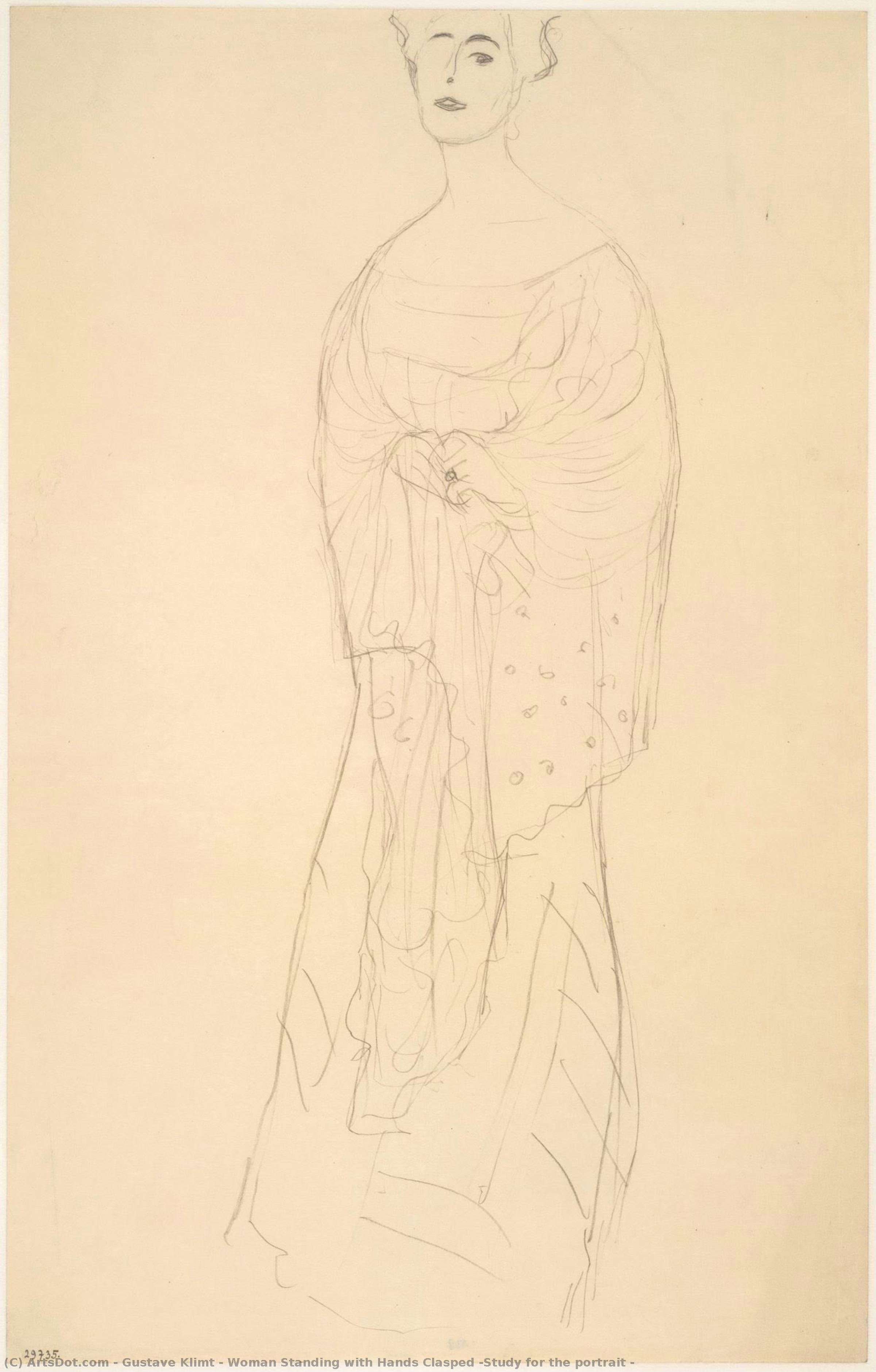
Woman Standing with Hands Clasped (Study for the portrait Margarethe Stonborough-Wittgenstein) – Gustav Klimt
Gustav Klimt’s “Woman Standing with Hands Clasped” stands as a poignant testament to the artist's exploration of form and emotion during his formative years. Created in 1904, this charcoal sketch serves not merely as an image but as a crucial preparatory study for a larger portrait commissioned by Margarethe Stonborough-Wittgenstein, a prominent Austrian feminist and intellectual.
- Subject Matter: The artwork depicts a female figure—likely Stonborough-Wittgenstein herself—rendered in a three-quarter pose. Klimt’s focus is on capturing the essence of her presence rather than striving for photographic accuracy; instead, he prioritizes conveying inner stillness and contemplative reflection.
- Style & Technique: Characteristic of Klimt's burgeoning Art Nouveau style, “Woman Standing” eschews elaborate ornamentation in favor of a deceptively simple approach. The artist employs loose, gestural charcoal strokes—a technique favored by Impressionists—to build up the figure’s silhouette and drapery. Varying pressure creates subtle tonal shifts that delineate volume and suggest movement despite the static pose.
- Historical Context: Klimt was deeply engaged with Symbolist ideas prevalent in Vienna at the time, reflecting a broader artistic preoccupation with psychological depth and spiritual resonance. The sketch anticipates Klimt’s later monumental canvases adorned with gold leaf—a stylistic hallmark that would solidify his reputation as one of Austria's most celebrated artists.
- Symbolism: The clasped hands symbolize unity, connection, and perhaps a gesture of quiet strength – mirroring Stonborough-Wittgenstein’s unwavering advocacy for women’s rights. Klimt’s masterful use of line weight contributes to this symbolic interpretation, emphasizing the figure's inner life.
- Emotional Impact: “Woman Standing” exudes an aura of serene contemplation. The artist skillfully captures a moment of introspection—a visual embodiment of stillness and thoughtful observation that speaks to the viewer’s own capacity for quiet reflection.
As evidenced by Google Arts & Culture's detailed analysis (Explore Klimt’s Study), this sketch exemplifies Klimt's innovative approach to portraiture—a departure from academic conventions and a commitment to conveying psychological nuance. Its understated elegance and expressive line work continue to inspire admiration among art historians and collectors alike.
Furthermore, Klimt’s exploration of female figures aligns with the broader artistic currents of his era, mirroring similar investigations into femininity and spirituality undertaken by artists like Courbet (Gustave Courbet’s Portrait) who similarly sought to capture the inner spirit of his subjects.