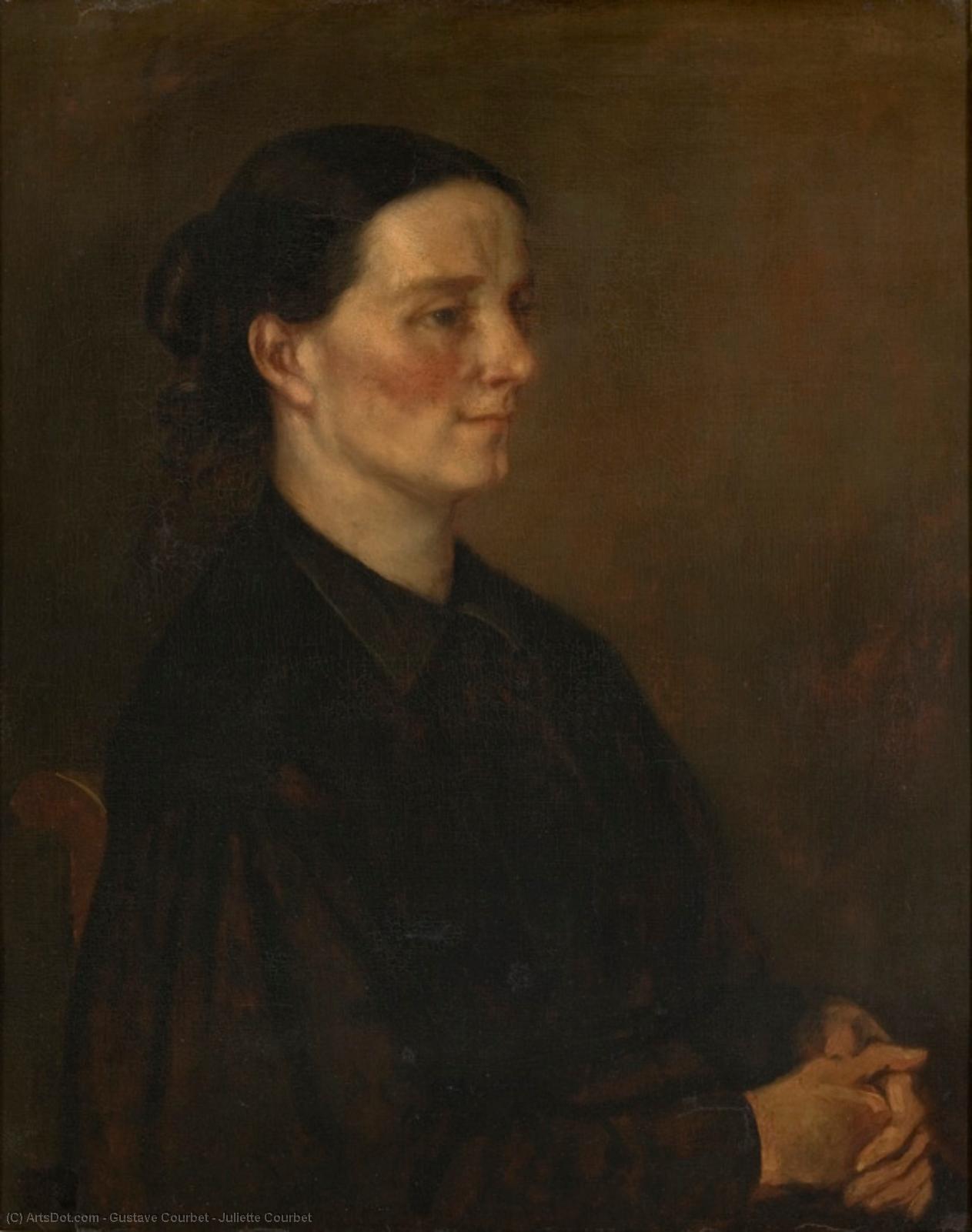
Captured in Gustave Courbet’s masterful realism during the Impressionist era, Juliette Courbet portrays a contemplative woman seated before a chair—a bold depiction of everyday life reflecting Courbet's revolutionary approach to art. Explore this evocative painting and bring its timeless beauty into your home.
A Portrait of Quiet Reflection: Gustave Courbet’s Juliette Courbet
The painting “Juliette Courbet,” executed in 1874 by Gustave Courbet, transcends mere representation; it embodies a profound statement about artistic integrity and the artist's unwavering dedication to portraying life as he perceives it. More than just a depiction of a woman seated before a chair, this artwork is a window into the spirit of Impressionism’s burgeoning rebellion against academic tradition—a movement that sought to capture fleeting moments of experience rather than grand narratives.
- Subject Matter: The portrait focuses on Juliette Courbet, Gustave Courbet's wife, presenting her in an intimate setting. This deliberate choice underscores Courbet’s commitment to portraying ordinary subjects with unflinching honesty—a radical departure from the idealized figures favored by earlier artistic movements.
- Style & Technique: Courbet’s signature style is characterized by its earthy palette and textured brushstrokes, hallmarks of his Realist approach. Unlike the polished surfaces of academic painting, “Juliette Courbet” showcases a palpable physicality—the canvas itself seems to breathe with the artist's hand.
The historical context surrounding this piece is crucial to understanding its significance. Impressionism emerged in France during a period of significant social and intellectual upheaval. Artists like Courbet challenged the established order, rejecting the constraints imposed by the Salon—the official art exhibition controlled by the Académie Royale des Beaux-Arts—and advocating for artistic freedom. This refusal to conform fueled debates about what constituted “true” art and paved the way for a new aesthetic sensibility that prioritized sensory experience over intellectual speculation. Courbet’s insistence on capturing the immediacy of observation aligns perfectly with this broader cultural shift.
Symbolism & Emotional Impact:
The woman's gaze directly at the viewer is particularly noteworthy. It isn’t a passive acceptance of beauty but an assertive engagement—a challenge to the traditional role of the female subject in art, where women were often depicted as decorative objects rather than individuals with inner lives. Her hands clasped together convey a sense of serenity and contemplation, suggesting a quiet interiority that speaks volumes about Courbet's desire to explore psychological depth.
The simple chair serves as a grounding element, anchoring the figure within her environment yet simultaneously emphasizing her solitude. It’s a subtle visual metaphor for introspection—the act of turning inward and confronting one's own thoughts and feelings.
“Juliette Courbet” remains an enduring testament to Courbet’s artistic vision. Its textured surface invites viewers to linger, prompting reflection on themes of domestic life, female subjectivity, and the transformative power of observation. Reproductions offer a remarkable opportunity to experience this seminal artwork firsthand, bringing its understated beauty and intellectual resonance into any interior space—a celebration of art that dares to confront reality with courage and conviction.