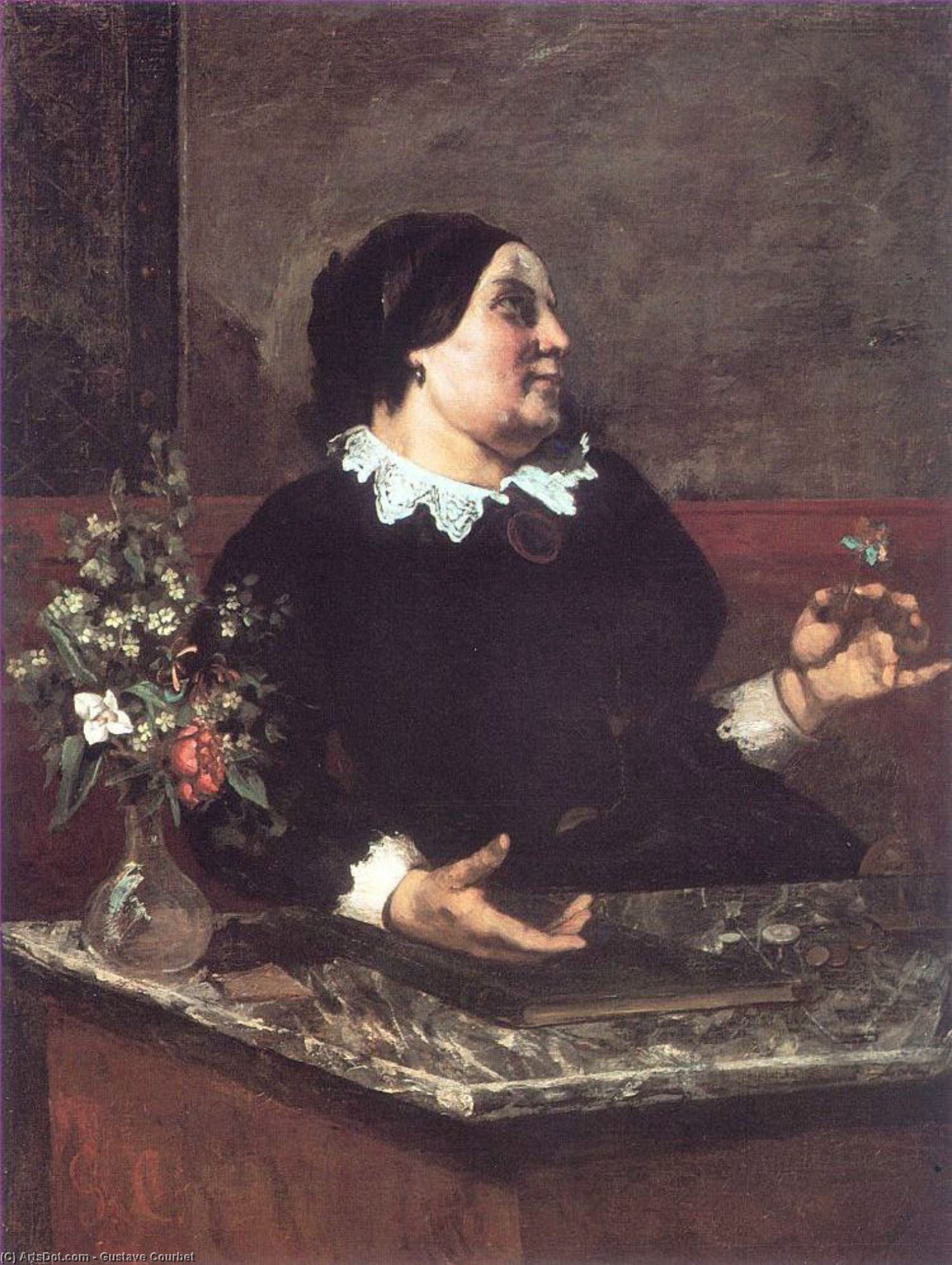
The painting depicts a woman seated on a bench with clasped hands, accompanied by a flower arrangement and butterflies against a vibrant red backdrop. A vase adds to the serene atmosphere as she contemplates her surroundings.
Gustave Courbet (1819-1877): Pioneer of Realism. Explore paintings depicting everyday life & working class subjects like 'A Burial at Ornans'. Discover his revolutionary impact on 19th-century art.
A Portrait of Quiet Contemplation: Gustave Courbet’s “Mere Grégoire”
The painting "Mere Grégoire" by Gustave Courbet stands as a testament to the artist's unwavering dedication to portraying reality without embellishment—a cornerstone principle of Realism that irrevocably altered the course of 19th-century art. Executed in 1862, this seemingly simple depiction of a woman seated on a bench transcends mere visual representation; it embodies a profound exploration of human emotion and social observation.
Subject Matter and Composition
At its core, “Mere Grégoire” presents a portrait of an unnamed peasant woman—a deliberate choice by Courbet to champion the dignity and complexity of ordinary life. The composition is carefully balanced, emphasizing stillness and introspection. The woman occupies the central space on the bench, her posture conveying repose and thoughtfulness. Her hands clasped together before her chest subtly communicate vulnerability and inner reflection – a gesture that speaks volumes about the anxieties and aspirations inherent in human experience. Beside her rests a vase containing flowers—a traditional symbol of beauty and remembrance—and two butterflies fluttering delicately around the scene. These elements contribute to an atmosphere of serenity, inviting viewers to contemplate the quiet joys of everyday existence.
Technique and Style: The Power of Observation
Courbet’s masterful technique exemplifies his commitment to direct observation. He eschewed idealized forms and theatrical poses favored by Romantic artists, opting instead for a realistic depiction informed by meticulous study. The painting utilizes thick impasto—a technique where pigment is applied in textured layers—creating palpable physicality and capturing the nuances of light and shadow with remarkable accuracy. Courbet’s palette leans towards muted earthy tones—ochres, browns, and reds—reflecting the materiality of the subject matter and grounding the image in a tangible reality. This deliberate rejection of artistic convention signaled a decisive break from Romantic idealism and established Realism as a dominant force in French painting.
Historical Context: Challenging Academic Conventions
“Mere Grégoire” emerged during a period of significant social upheaval in France—the Second Industrial Revolution was reshaping the nation’s economy and society, prompting artists to confront pressing issues of poverty and inequality. Courbet actively challenged the restrictive dogma of the École des Beaux-Arts, which demanded adherence to classical ideals and prioritized historical narratives over personal expression. His refusal to conform to academic standards fueled a fervent debate about the role of art in reflecting and shaping societal values. By depicting a woman from humble origins with unflinching honesty, Courbet asserted that beauty could be found not only in grand monuments but also in the everyday lives of ordinary people—a radical notion that resonated deeply with audiences eager for artistic innovation.
Symbolism and Emotional Impact
Beyond its formal qualities, “Mere Grégoire” is laden with symbolic significance. The flowers represent remembrance and gratitude – perhaps a gesture of appreciation for the woman’s resilience and dignity. The butterflies symbolize transformation and hope—suggesting that even amidst hardship, beauty and renewal persist. Most importantly, however, the painting evokes an emotional response rooted in empathy and contemplation. It invites viewers to consider questions of identity, vulnerability, and the enduring human capacity for inner peace – prompting a profound engagement with themes of compassion and self-awareness.
Conclusion: An Enduring Legacy
“Mere Grégoire” remains a powerfully evocative artwork—a testament to Courbet’s artistic vision and his unwavering belief in the transformative potential of realism. Its enduring legacy lies not merely in its technical brilliance but also in its courageous assertion that art should serve as a mirror reflecting the complexities of human experience, fostering understanding and inspiring appreciation for the beauty inherent in all facets of life.