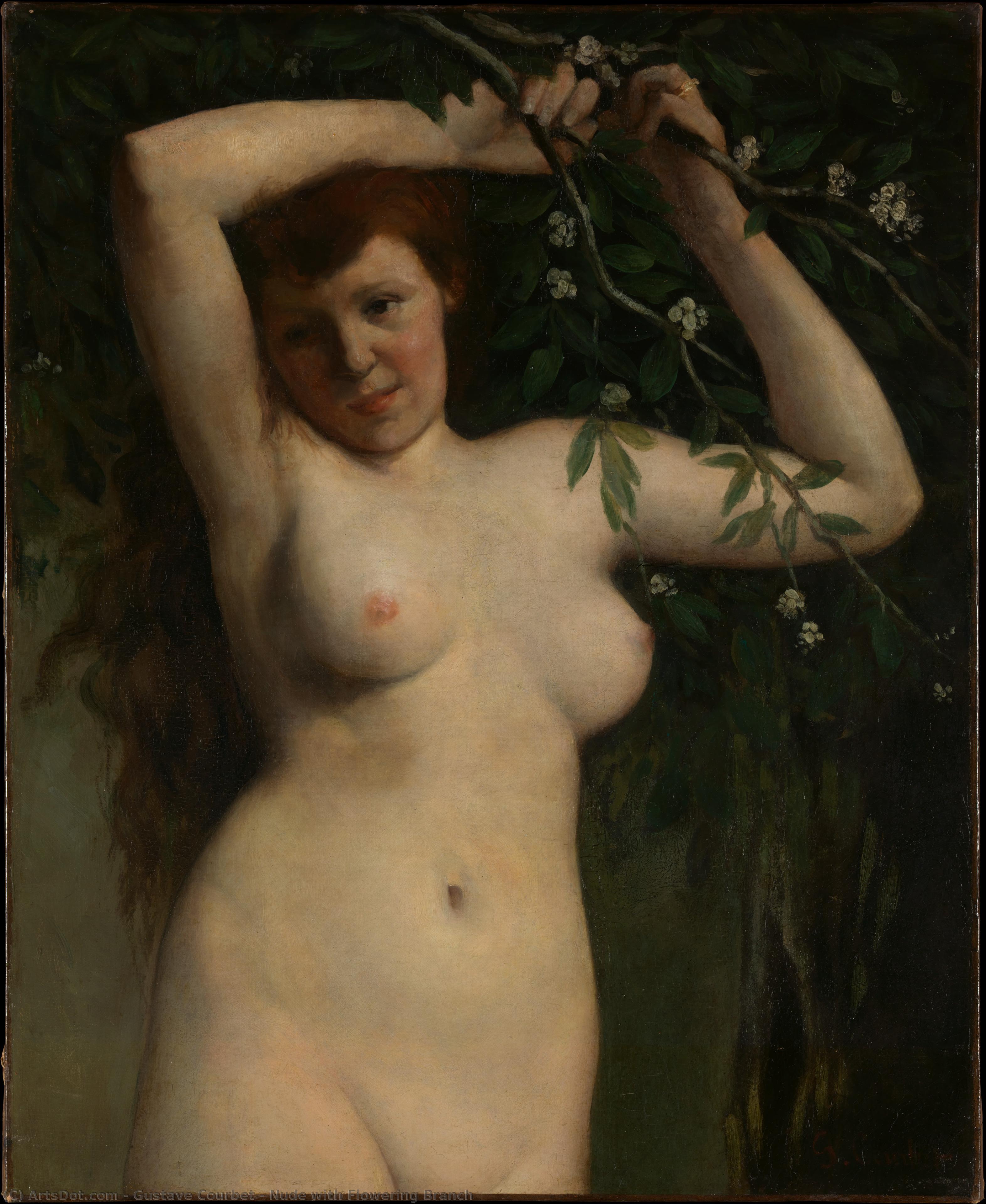
Discover Gustave Courbet’s ‘Nude with Flowering Branch.’ A revolutionary realist masterpiece blending naturalism & Impressionistic touches. Explore its symbolism, technique & historical significance – perfect for discerning collectors.
Gustave Courbet (1819-1877): Pioneer of Realism. Explore paintings depicting everyday life & working class subjects like 'A Burial at Ornans'. Discover his revolutionary impact on 19th-century art.
Explore The Metropolitan Museum of Art: 5,000 years of art from around the world! Discover masterpieces, ancient artifacts & immersive exhibitions – a global art destination awaits.
A Vision of Naturalism & Introspection
Gustave Courbet’s 1863 masterpiece offers a compelling study in naturalism and emotional depth. This captivating work presents a nude female figure gracefully positioned within a verdant landscape, embodying the artist's commitment to depicting reality without idealization. More than simply a depiction of the human form, it is an exploration of vulnerability, contemplation, and the fleeting beauty of nature.
Realist Roots & Impressionistic Touches
Courbet was a pivotal figure in the Realist movement, rejecting academic conventions in favor of portraying everyday life with unflinching honesty. While firmly rooted in this tradition – evident in his meticulous attention to anatomical detail and grounded composition – this painting also reveals subtle influences of emerging Impressionism. Notice the looser brushwork, particularly in the foliage, which anticipates the broken color techniques favored by later artists like Monet and Renoir. This blend creates a dynamic tension between precise observation and expressive freedom.
Technique & Materiality
Executed with oil paints on canvas, Courbet masterfully employs layering and blending to achieve a remarkable sense of form and texture. The skin tones are rendered with subtle variations in shading, creating a lifelike quality without resorting to excessive polish. Conversely, the foliage is built up through layered brushstrokes, conveying depth and density. The artist’s skillful handling of light – diffused and indirect as if filtered through overcast skies – further enhances the painting's atmospheric effect.
Historical Context & Artistic Rebellion
In an era dominated by historical and mythological subjects, Courbet’s focus on the nude figure within a contemporary setting was deliberately provocative. He challenged societal norms by presenting the female form not as an idealized goddess but as a natural being, deserving of respect and dignity. This radical approach cemented his reputation as a revolutionary artist who paved the way for modern art. His rejection of academic constraints directly influenced subsequent generations of artists seeking to break free from tradition.
Symbolism & Emotional Resonance
The flowering branch held by the figure is rich with symbolic potential – representing fertility, renewal, and the ephemeral nature of beauty. The delicate white blossoms offer a poignant contrast against the darker foliage, drawing the eye and inviting contemplation. A subtle ring on her finger hints at themes of love or commitment, adding another layer of narrative complexity. However, it’s the figure's introspective gaze and slightly melancholic expression that truly captivate, evoking a sense of quiet vulnerability and emotional depth.
A Statement Piece for Discerning Collectors
This artwork is more than just a beautiful image; it’s a powerful statement about art, nature, and the human condition. Its nuanced palette, masterful technique, and profound symbolism make it an exceptional addition to any collection. Whether displayed in a modern loft or a classic interior, this reproduction will undoubtedly become a focal point, sparking conversation and inspiring contemplation for years to come. It’s ideal for those seeking artwork that combines historical significance with enduring aesthetic appeal.