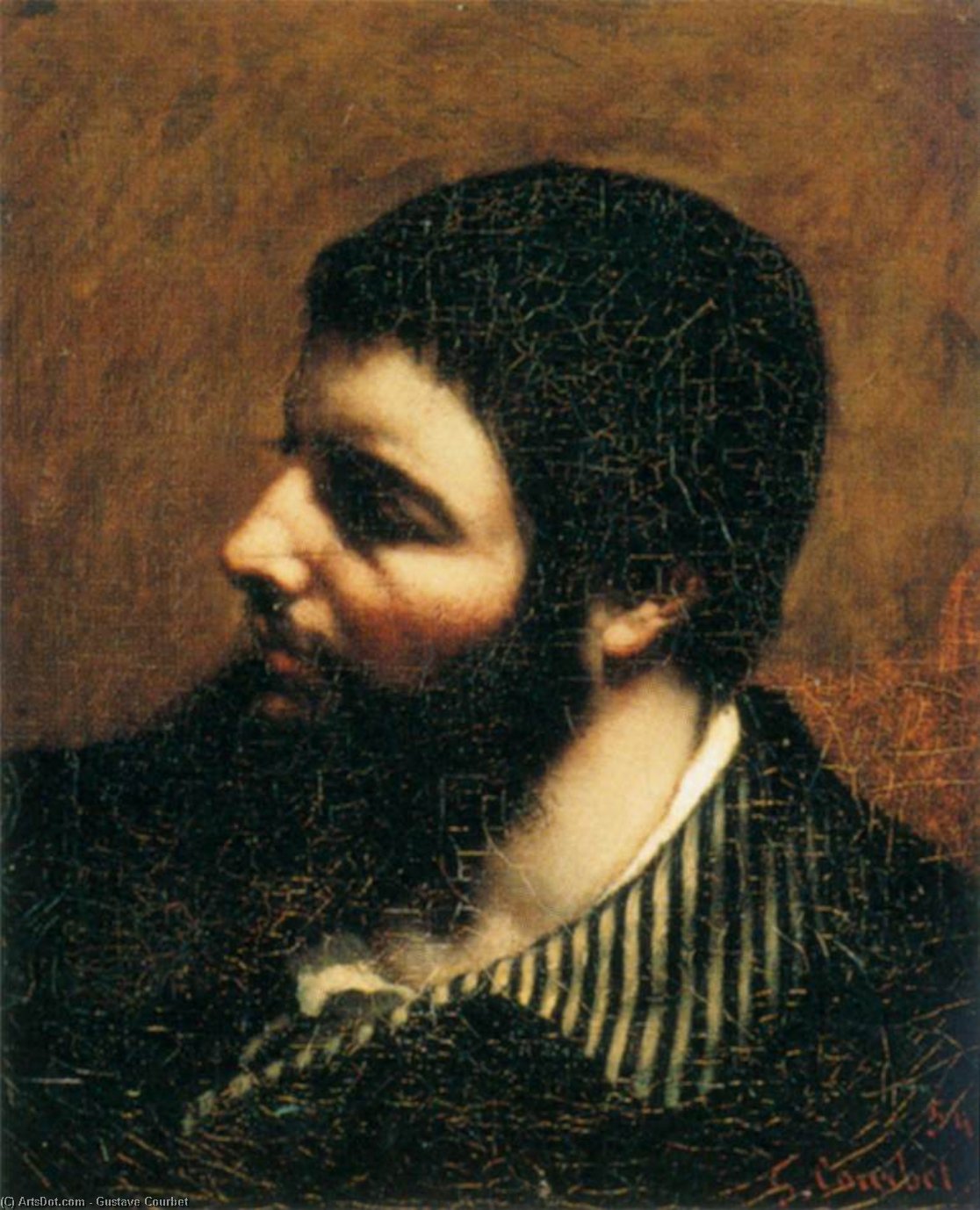
Self-Portrait with Striped Collar: A Glimpse into Courbet's Soul
Gustave Courbet’s Self-Portrait with Striped Collar, painted in 1854, is a pivotal work within the Realism movement. Housed at the Musée Fabre in Montpellier, France, this oil on canvas (measuring 46 x 37 cm) offers an intimate and introspective portrayal of the artist himself. It stands as a testament to Courbet’s commitment to depicting reality without idealization, challenging the conventions of academic art prevalent during his time.
The Essence of Realism: Technique and Style
Courbet's artistic approach in this self-portrait is firmly rooted in Realism. He eschewed the dramatic flourishes and romanticized narratives favored by earlier artists, opting instead for a direct and honest representation of his own likeness. The brushwork is deliberate yet not overly refined, conveying a sense of immediacy and authenticity. The color palette is relatively subdued, dominated by earthy tones that contribute to the painting's overall mood of quiet contemplation. Courbet’s mastery lies in capturing the subtle nuances of light and shadow, lending depth and volume to his features. The striped collar, a fashionable detail of the era, adds a touch of modernity while also serving as a visual focal point.
Historical Context: A Revolutionary Stance
Created during a period of significant social and political change in France, Self-Portrait with Striped Collar reflects the burgeoning Realist movement. Courbet’s decision to depict himself—a working artist—in a formal setting was itself a statement against the established art world's preference for historical or mythological subjects. The painting emerged during a time when artists were increasingly questioning traditional artistic norms and seeking to portray everyday life with greater accuracy. The Realist movement aimed to break away from idealized representations, focusing instead on depicting the realities of contemporary society—including its struggles and complexities.
Symbolism and Emotional Impact
Beyond its technical merits, Self-Portrait with Striped Collar carries a subtle symbolic weight. The downward gaze suggests introspection and perhaps even a hint of melancholy. The formal attire indicates Courbet’s ambition and his place within the artistic community, yet the overall impression is one of quiet reserve rather than overt self-promotion. The painting evokes a sense of thoughtful solitude, inviting viewers to contemplate the artist's inner world. It is not a triumphant declaration but a nuanced exploration of identity and artistic purpose.
A Lasting Legacy
Self-Portrait with Striped Collar remains an important work in art history, exemplifying Courbet’s commitment to Realism and his profound influence on subsequent generations of artists. It serves as a powerful reminder of the importance of authenticity and direct observation in artistic expression.