A Symphony of Stone and Stream
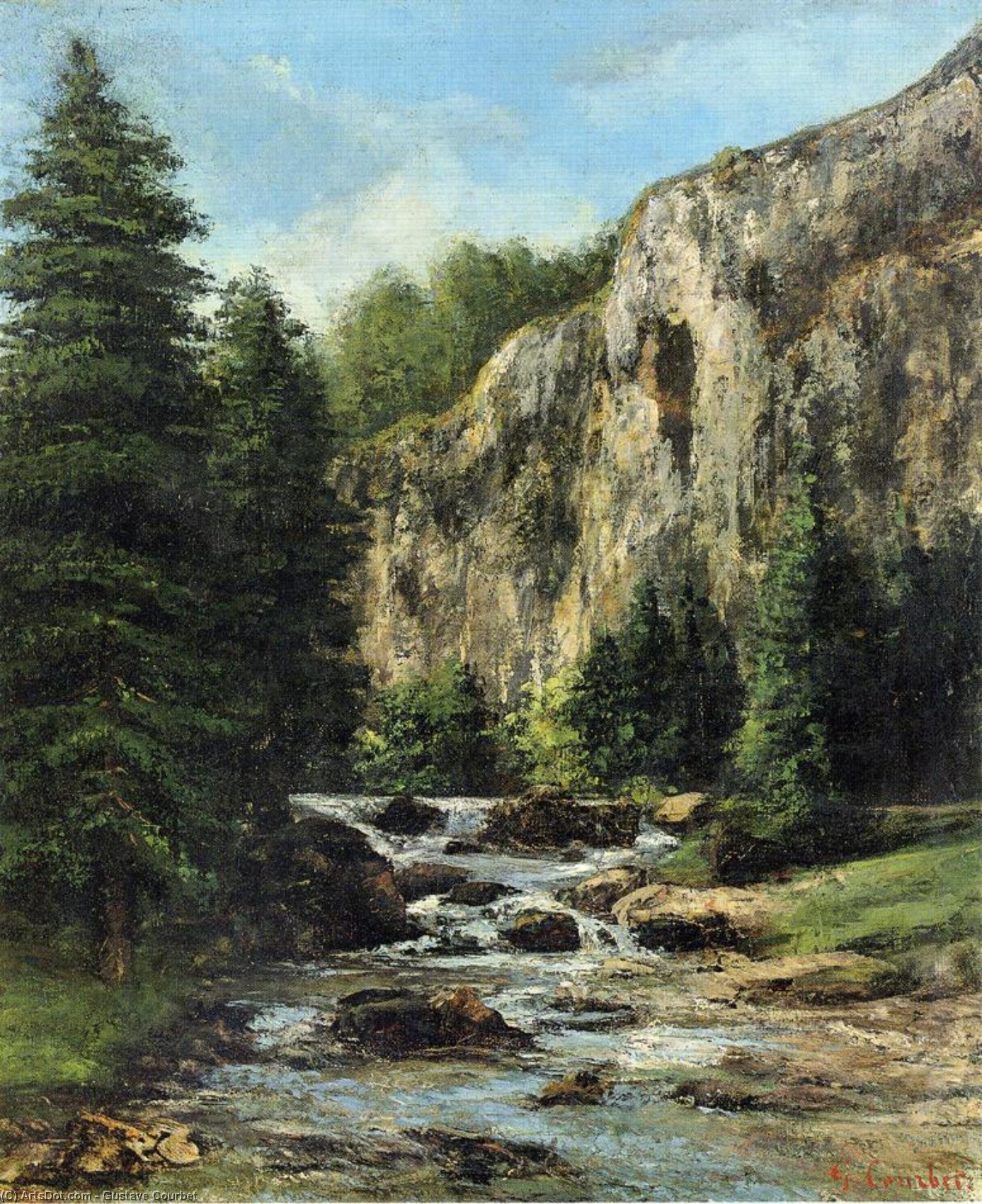
In the quiet intensity of Gustave Courbet's Study for Landscape with Waterfall, we find ourselves standing on the precipice of a world where nature speaks in whispers and roars alike. This captivating work is far more than a mere topographical record; it is a profound meditation on the raw, unyielding majesty of the natural landscape. The composition is masterfully anchored by the vertical drama of rugged cliffs and towering trees, which command the viewer's gaze before leading it downward along the cascading white veil of the waterfall. A winding stream meanders through a tranquil meadow, its horizontal flow providing a serene counterpoint to the imposing geological structures. It is a scene that invites deep contemplation, drawing the observer into the very heart of an untamed wilderness that feels both ancient and immediate.
As a pioneer of the Realism movement, Courbet utilized this study to bridge the gap between the emotional grandeur of Romanticism and his own revolutionary commitment to truth. While the painting retains the atmospheric soul of the preceding era, it rejects the polished, idealized landscapes of the Academy in favor of something far more visceral. There is no attempt to beautify the ruggedness; instead, Courbet celebrates the honest texture of the earth. This piece served as a vital preparatory step for his larger-scale works, acting as a laboratory where he could experiment with the interplay of light and shadow, ensuring that when he finally approached a grand canvas, the essence of the terrain was already etched into his mind.
The Mastery of Texture and Light
To gaze upon this oil on canvas is to witness a masterclass in tactile painting. Courbet’s technique is remarkably physical, employing visible, purposeful brushstrokes that breathe life into the inanimate. One can almost feel the abrasive grit of the rocky precipices and the dense, damp weight of the forest foliage through his skillful use of impasto and layering. He employs atmospheric perspective with great subtlety, allowing colors to soften and details to blur in the distance, which creates a breathtaking sense of depth and vastness. This technique ensures that the viewer does not merely look at a flat surface but feels transported into a three-dimensional space where the air itself seems heavy with mist.
The color palette is a sophisticated arrangement of cool tones—deep blues, mossy greens, and slate grays—all grounded by warm, earthy undertones. This selection creates a mood that is simultaneously serene and dramatic, reminiscent of the soft, diffused light found during an overcast morning or the golden hush of twilight. The lighting does not strike the scene with harshness but rather bathes it in a gentle glow, highlighting the fluidity of the water and the permanence of the stone. For the discerning collector or interior designer, this painting offers a versatile emotional anchor; its muted yet rich tones provide a sense of calm sophistication that can elevate a room, offering a window into a world of enduring natural beauty.
Symbolism and Lasting Resonance
Beyond its physical attributes, the work carries a subtle layer of symbolic resonance that speaks to the human condition. The waterfall, in its eternal descent, serves as a powerful metaphor for flow, renewal, and the unstoppable passage of time. In contrast, the massive cliffs stand as symbols of strength, resilience, and permanence against the elements. This duality—the ephemeral movement of water against the enduring weight of rock—creates a tension that is both intellectually stimulating and emotionally grounding. It is this very balance that makes Courbet's work so enduringly relevant to modern spaces.
For those seeking to incorporate fine art into their surroundings, a high-quality reproduction of this study offers more than just decoration; it offers an experience. Whether placed in a sunlit library or a contemporary living space, the painting acts as a focal point of quiet strength. It brings the restorative power of the outdoors inside, reminding us of the beauty found in the unadorned and the real. To own such a piece is to possess a fragment of art history's great rebellion, a testament to the moment when artists decided to stop dreaming of perfection and start painting the magnificent truth of the world around them.