A Moment of Tranquility: Unveiling Gustave Courbet’s “The Source”
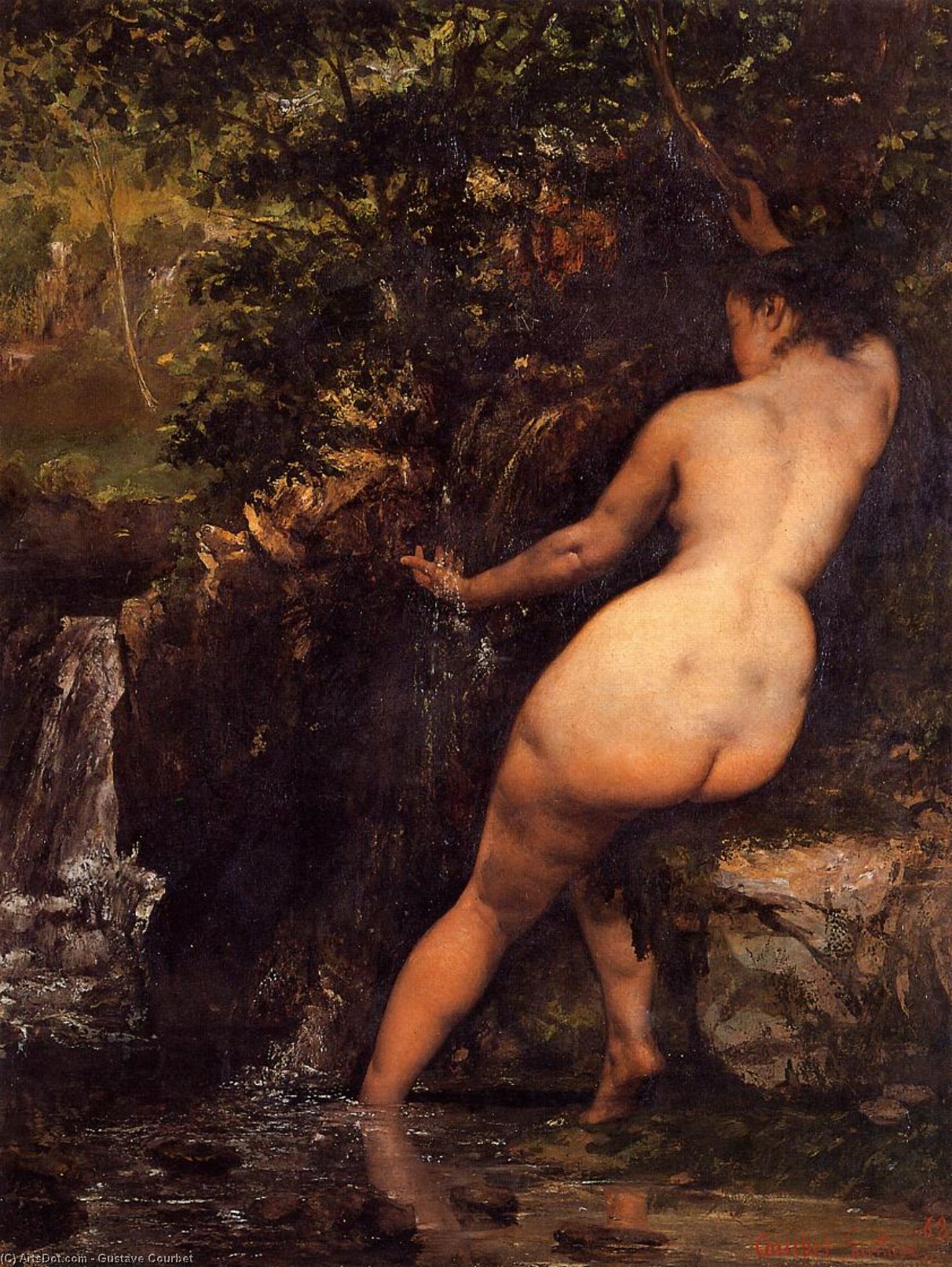
Gustave Courbet's "The Source (Bather at the Source)," painted in 1868, isn’t merely a depiction of a woman enjoying a stream; it’s a profound statement about Realism and the artist’s relationship with nature. This oil on canvas, measuring 128 x 97 cm, transcends simple landscape painting to become a meditation on human experience within the natural world – a quiet rebellion against the idealized forms favored by previous generations of artists. The scene unfolds with an almost startling immediacy: a woman, her back turned to the viewer, leans casually against a rock beside a cascading waterfall, seemingly lost in blissful contemplation. This isn’t a mythological nymph or a classical beauty; she's a contemporary figure, grounded and unpretentious, inviting us into her private moment of serenity.
Courbet deliberately eschewed the romanticized narratives and elaborate compositions prevalent at the time. Instead, he presented a raw, honest portrayal of a woman in nature, stripped of artifice. The muted color palette – earthy browns, greens, and blues – reinforces this sense of realism, mirroring the tones of the surrounding landscape. The artist’s masterful use of brushstrokes creates a tangible texture, allowing us to almost feel the cool spray of the water and the rough surface of the rock beneath her hand. Notice how Courbet subtly incorporates other elements into the scene: a second figure glimpsed on the left, adding a layer of narrative without disrupting the primary focus; a potted plant near the center, grounding the image in the immediate reality of the setting. These details aren’t merely decorative; they contribute to the painting's overall sense of authenticity and observation.
The Roots of Realism: Courbet’s Artistic Vision
Courbet was a pivotal figure in the Realist movement, rejecting the academic conventions that dominated French art. He sought to capture the world as he saw it – unvarnished and without embellishment. “The Source” exemplifies this commitment. Unlike the idealized figures of Romanticism or the carefully constructed scenes of Neoclassicism, Courbet presents a woman in a natural setting with an unwavering gaze on reality. The painting’s composition is deliberately simple, prioritizing direct observation over dramatic gesture or elaborate symbolism. This approach was revolutionary for its time, challenging the established norms of the art world and paving the way for future artistic movements like Impressionism.
The technique itself is crucial to understanding Courbet's vision. He employed a thick impasto – applying paint in heavy layers – to build up texture and create a sense of physicality. This tactile quality invites us to engage with the painting on a sensory level, emphasizing the materiality of the subject matter. Furthermore, Courbet’s meticulous attention to detail—the way the light catches the water, the folds of the woman's clothing—demonstrates his deep understanding of both nature and human form.
A Legacy of Observation: Context and Influence
Courbet’s “The Source” wasn’t created in a vacuum. It emerged during a period of significant social and political upheaval in France, following the revolutions of 1848. His work reflected a growing interest in depicting everyday life and challenging traditional hierarchies. The painting can be seen as a commentary on the relationship between humanity and nature – a celebration of the simple pleasures of existence. It also foreshadows later artistic movements by prioritizing direct observation and rejecting idealized representations.
Interestingly, “The Source” shares thematic resonances with Ingres’s “The Source,” painted several years earlier. While Ingres depicted a mythological scene—a nymph pouring water from a jar—Courbet presents a more grounded, contemporary image of a woman enjoying the natural world. This subtle shift in perspective highlights Courbet's commitment to realism and his rejection of traditional allegorical narratives. Furthermore, “The Source” influenced artists like Paul Cézanne, who admired Courbet’s emphasis on capturing the essence of nature through direct observation.
Bringing "The Source" Home: A Reproduction for Your Space
ArtsDot offers meticulously crafted, hand-painted oil painting reproductions of Gustave Courbet's “The Source (Bather at the Source).” Each reproduction is created by skilled artisans using archival-quality materials and techniques, ensuring that it faithfully captures the original’s beauty and detail. Whether you’re an art enthusiast, a collector, or simply seeking to add a touch of timeless elegance to your home, our reproductions provide a stunning way to experience this iconic masterpiece. Explore our collection today and discover the perfect “The Source” for your space – a testament to Courbet's legacy and a celebration of the beauty of nature.