A Sanctuary of Verdant Silence
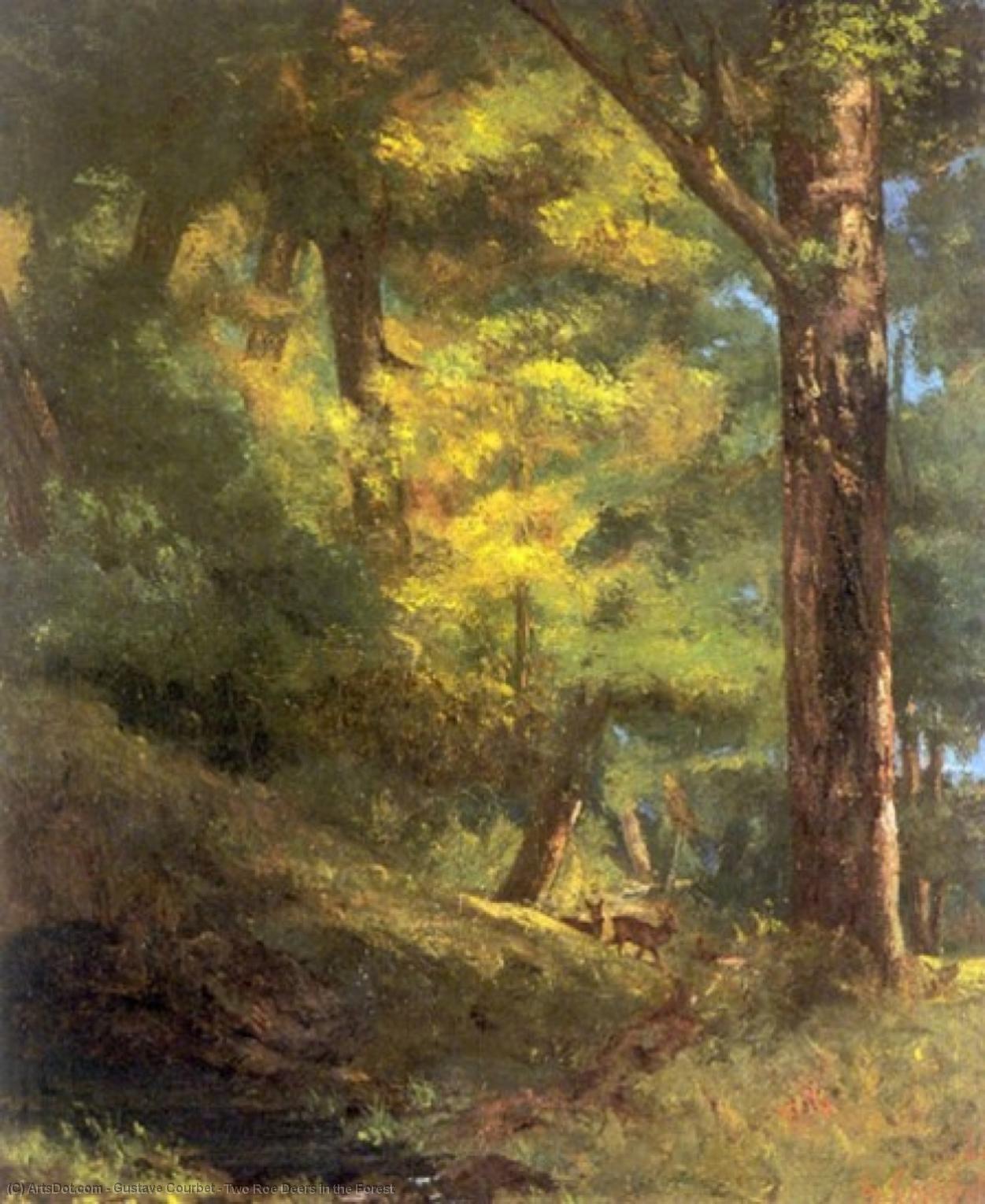
In the heart of a dense, untamed woodland, Gustave Courbet’s “Two Roe Deers in the Forest” invites the viewer into a moment of profound stillness. This masterpiece of Romantic Realism does not merely depict a landscape; it captures an atmosphere of breathing tranquility. As one gazes upon the canvas, the eye is immediately drawn to two roe deer, positioned with a graceful, quiet dignity amidst a labyrinth of lush foliage. Unlike the dramatic, often staged landscapes of the preceding era, Courbet presents a scene that feels discovered rather than composed, offering a window into a world where nature exists in its most honest and undisturbed state. For the collector or designer, this piece serves as a soulful anchor, bringing the restorative power of the wild into any interior space.
The brilliance of this work lies in Courbet’s revolutionary approach to technique, where the physical substance of the paint mirrors the rugged textures of the earth itself. Utilizing a masterful impasto technique, the artist applied thick, deliberate layers of oil paint to recreate the tactile reality of the forest floor. One can almost feel the rough, weathered bark of the vertical tree trunks and the damp, soft carpet of the undergrowth. This heavy application of pigment creates a sculptural depth, allowing light to play across the surface of the canvas. Through the skillful manipulation of shadow and highlight, Courbet directs our gaze through a winding path that suggests an invitation to wander, leading the viewer deeper into the emerald shadows of the woods.
The Harmony of Light and Earth
Color and light serve as the emotional heartbeat of this composition. The palette is a sophisticated symphony of deep forest greens, rich umbers, and earthy browns, grounding the artwork in a sense of organic permanence. However, it is the subtle intervention of light that elevates the scene from a mere study of nature to a poetic experience. Dappled sunlight filters through the dense canopy, casting soft, golden patches upon the leaves—a visual metaphor for hope and enlightenment piercing through the darkness. Occasional hints of warm red in the scattered autumn foliage provide a delicate rhythmic contrast, signaling the inevitable cycle of seasonal change and adding a layer of temporal beauty to the eternal stillness of the deer.
Beyond its visual splendor, the painting carries a weight of historical significance that resonates with those who appreciate the evolution of modern art. Created around 1865, this work represents Courbet’s defiant departure from the idealized, mythological landscapes of Romanticism. By choosing to focus on the unvarnished truth of the natural world—the grit, the texture, and the raw presence of wildlife—Courbet paved the way for the Impressionist movement. To possess a reproduction of this work is to hold a piece of art history that celebrates authenticity. It is an evocative choice for any curated collection, offering a timeless sense of peace, a connection to the sublime power of nature, and an enduring elegance that transcends the boundaries of time.