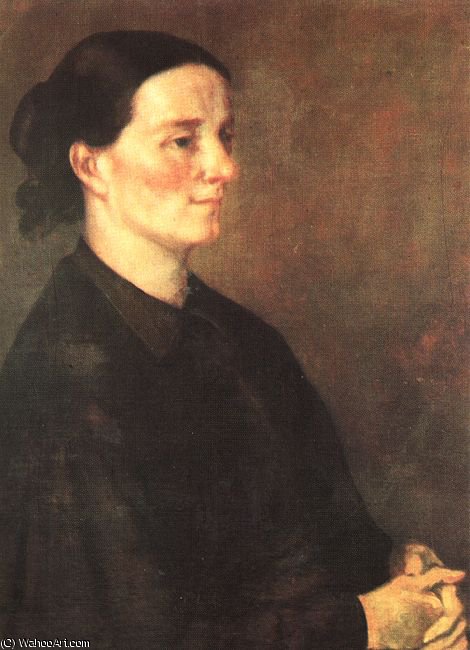
A Portrait of Quiet Resolve: Examining Gustave Courbet’s “Zélie Courbet”
Gustave Courbet's "Zélie Courbet," housed in the Museum of Art, S., stands as a cornerstone of Realism—a movement that vehemently rejected Romantic idealism and championed unflinching observation of everyday life. Painted in 1846, this portrait transcends mere likeness; it’s an embodiment of Courbet’s artistic philosophy and offers a profound glimpse into the social landscape of mid-Victorian France.
Subject Matter & Composition: Capturing Domestic Tranquility
The painting depicts Zélie Courbet—likely Gustave Courbet's wife—seated in a dimly lit interior. Her gaze is direct, unwavering, confronting the viewer with an expression of serene contemplation mingled with subtle seriousness. The artist meticulously rendered her posture and attire, prioritizing accuracy over embellishment. The composition favors horizontal lines, creating a sense of stability and grounding the figure within its environment.
Realist Technique: Texture & Color as Narrative Devices
Courbet’s masterful technique exemplifies Realism's commitment to portraying subjects truthfully. He employed thick impasto—heavy application of paint—to build up textural surfaces that mimic the materiality of fabric and skin. This tactile approach wasn’t merely decorative; it served to convey depth and dimensionality, immersing the viewer in the scene. Courbet utilized a muted palette dominated by earthy tones – browns, ochres, and greys – reflecting the subdued lighting conditions and emphasizing the understated beauty of domestic life.
Historical Context: Challenging Artistic Conventions
"Zélie Courbet" emerged during a period of significant artistic upheaval. The École des Beaux-Arts’ rigid academic standards demanded idealized depictions of mythological or historical subjects, stifling artistic innovation. Courbet deliberately defied these conventions by focusing on ordinary individuals and scenes—a bold assertion of artistic freedom and a rejection of societal expectations. This painting represents a pivotal moment in art history, signaling the ascendancy of Realism as a dominant aesthetic.
Symbolic Resonance & Emotional Impact: Beyond Surface Appearance
While seemingly simple in its depiction, “Zélie Courbet” resonates with deeper symbolic meanings. The woman’s gaze embodies resilience and inner strength—a quiet defiance against societal pressures. Her stillness speaks volumes about the dignity of everyday existence and the importance of confronting life's challenges with composure. Courbet’s work invites contemplation on themes of domestic harmony, female subjectivity, and the artist’s unwavering dedication to portraying reality without embellishment. It remains a powerful testament to the transformative potential of observation and artistic conviction.