A Vision of Eternal Vigil: The Ethereal Essence of Gustave Moreau
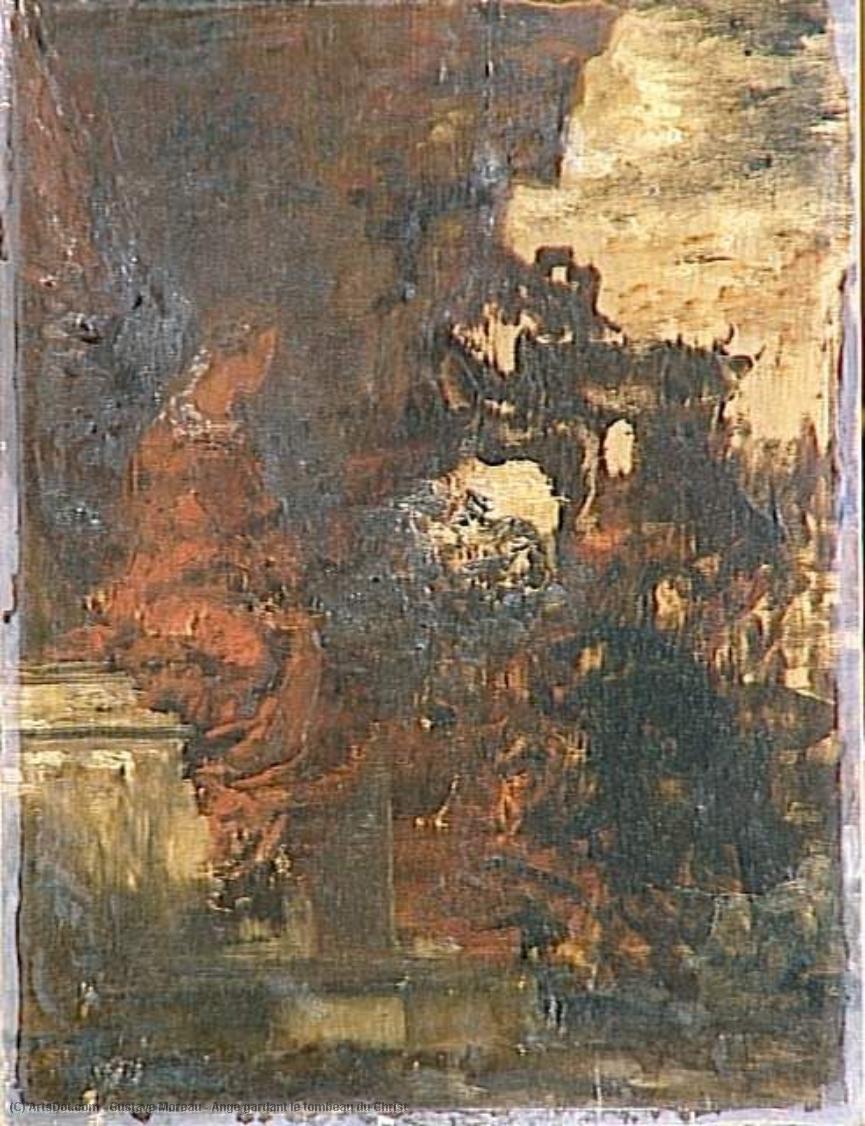
To encounter Ange gardant le tombeau du Christ is to step away from the tangible world and enter a realm where the boundaries between reality and dream dissolve into a haze of shadow and light. This evocative work by the master of Symbolism, Gustave Moreau, does not offer a literal or photographic depiction of a biblical scene; instead, it presents a profound impression of mourning and spiritual vigil. The title suggests a sacred guardianship, yet the visual experience is one of deep abstraction. We are invited to gaze upon a surface that feels less like a window and more like a weathered relic, where earthy tones and textured layers suggest the very passage of time and the weight of grief itself.
In this masterpiece, Moreau rejects the objective clarity of Realism in favor of a subjective emotional truth. The composition deliberately avoids sharp definitions, allowing forms to bleed into one another in an atmospheric dance of ambiguity. For the discerning collector or interior designer, this piece offers a unique sensory experience; it does not demand attention through loud colors, but rather commands it through a quiet, haunting presence that transforms any space into a sanctuary for contemplation.
The Alchemy of Texture and Symbolism
The technique employed in this work is nothing short of masterful, showcasing the thick impasto application of oil paint that characterizes Moreau’s most expressive periods. The surface is rich and tactile, with visible layers that build a sense of physical history. One can almost feel the grain of the underlying support, as if the art itself is emerging from the earth. This heavy texture serves a vital symbolic purpose: the cracks, peeling pigments, and weathered discolorations act as metaphors for mortality, decay, and the inevitable erosion of the material world.
As a pivotal figure in the Symbolist movement, Moreau used these textures to convey what words often fail to capture. The decay evident throughout the artwork is powerful, representing the ephemeral nature of life while simultaneously hinting at the eternal nature of the spirit. For those seeking to incorporate art into a sophisticated interior, this piece provides a profound layer of depth. It functions as an anchor of melancholy and nostalgia, offering a textured focal point that resonates with themes of history and quiet endurance.
A Legacy of Spiritual Longing
Born in Paris in 1826, Gustave Moreau lived through an era of intense intellectual upheaval, where traditional religious certainties were being challenged by scientific advancement. His art became a refuge for the soul, a way to explore the hidden corridors of the human psyche and the mysteries of faith. While his work is rooted in biblical narratives, his interpretation is deeply personal. He was not interested in illustrating scripture for the sake of instruction; he aimed to capture the feeling of spiritual longing—the ache of loss and the hope of a divine presence watching over the darkness.
Owning a high-quality reproduction of such a significant work allows one to bring this atmosphere of sacred mystery into the modern home. Whether placed in a quiet study or a grand living space, Ange gardant le tombeau du Christ serves as a portal to the subconscious. It is an invitation to slow down, to look beneath the surface, and to find beauty in the weathered, the aged, and the enigmatic. It remains a timeless testament to Moreau's ability to weave tapestries of legend and spiritual truth into a single, unforgettable visual experience.