A Vision of Mythic Reverence
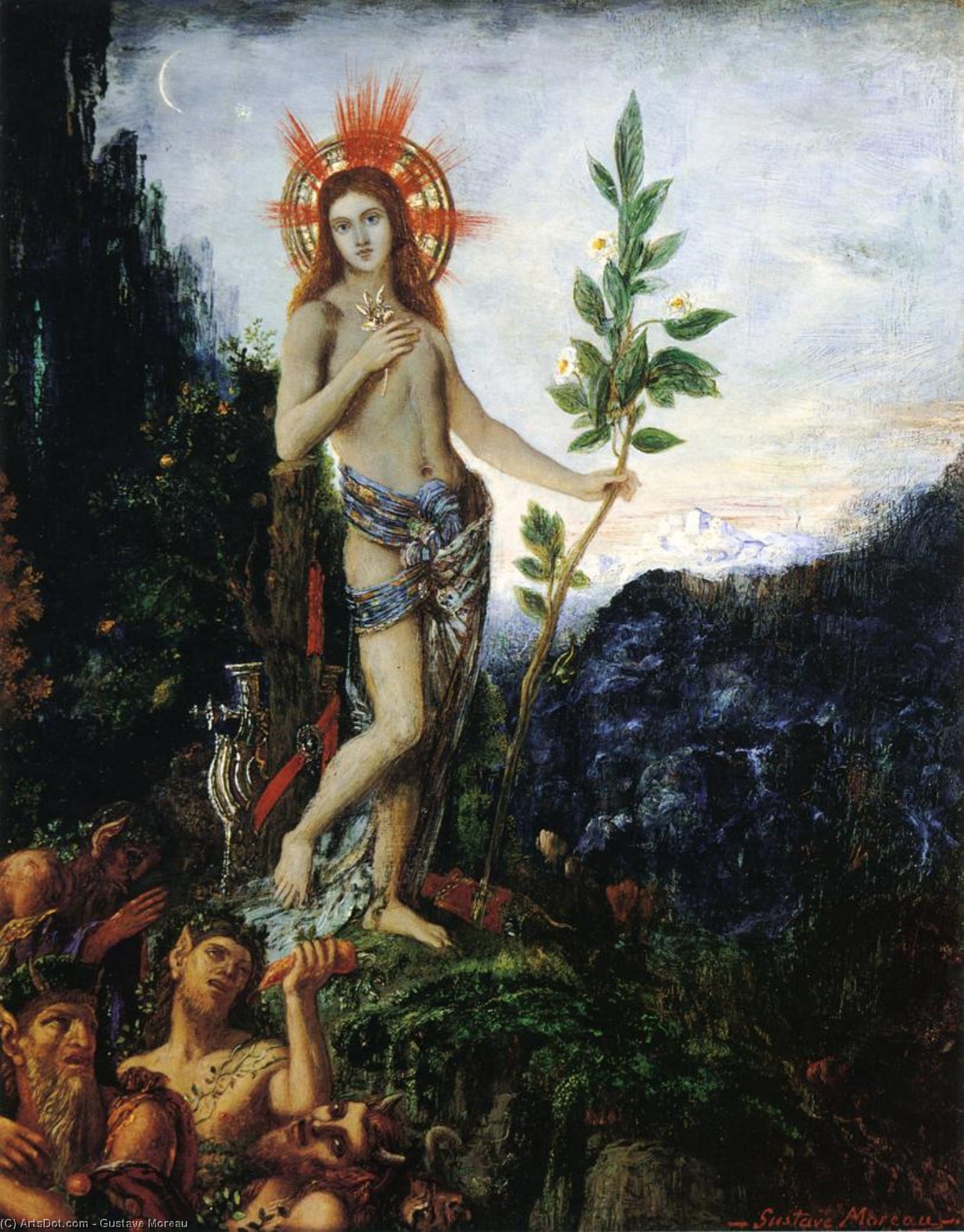
In the twilight of the nineteenth century, Gustave Moreau breathed life into the ethereal realms of the human psyche with his 1895 masterpiece, Apollo Receiving the Shepherds' Offerings. This monumental canvas serves as a cornerstone of the Symbolist movement, standing as a profound rejection of the era's rigid Realism and the fleeting impressions of Impressionism. Instead of capturing the tangible world, Moreau invites us into a dreamscape where the boundaries between divinity and humanity dissolve. The painting depicts a legendary encounter from classical mythology, yet it transcends mere storytelling to become a visual allegory of faith, sacrifice, and the sublime. As Apollo stands at the center of this mythic tableau, he receives offerings of lambs—symbols of purity and devotion—from shepherds whose faces are etched with awe, creating a scene that feels less like a historical record and more like a sacred vision.
The aesthetic power of the work lies in its deliberate, decorative opulence. Moreau employs a flattened perspective and a highly stylized approach that emphasizes ornamentation over anatomical precision. The composition is masterfully vertically oriented, drawing the eye upward toward the towering, luminous figure of Apollo. His presence is anchored by a radiant halo of golds and yellows, which contrasts breathtakingly against the deep, mysterious greens and purpered shadows of the surrounding primordial forest. This interplay of light and shadow, or chiaroscuro, creates a theatrical atmosphere, casting much of the landscape into a misty, enigmatic gloom while spotlighting the divine interaction at the heart of the piece.
Technique and Textural Richness
For the discerning collector or interior designer, the physical presence of this artwork offers an unparalleled sensory experience. Moreau was a master of the impasto technique, layering oil pigments with such meticulous care that the canvas achieves a palpable materiality. The skin of Apollo possesses a smooth, almost pearlescent luminosity, which stands in stark contrast to the rugged, textured foliage of the background. These varied brushstrokes—ranging from flowing, organic lines in the drapery to jagged, energetic marks in the vegetation—create a dynamic surface that catches the light differently from every angle. This textural depth ensures that the painting remains captivating even when viewed from a distance, providing a sophisticated focal point for any high-end gallery or curated living space.
Beyond its visual splendor, the emotional resonance of Apollo Receiving the Shepherds' Offerings is profound. It evokes a sense of spiritual transcendence and quiet mystery, making it an ideal selection for those seeking to infuse their environments with a sense of contemplation and grandeur. The painting does not merely decorate a wall; it commands the room, offering a window into a world of mythic beauty and psychological depth. Whether as a centerpiece in a classical study or a bold statement in a contemporary hall, this reproduction captures the enduring magic of Moreau’s visionary spirit, inviting all who behold it to wander through the lush, golden landscapes of the imagination.