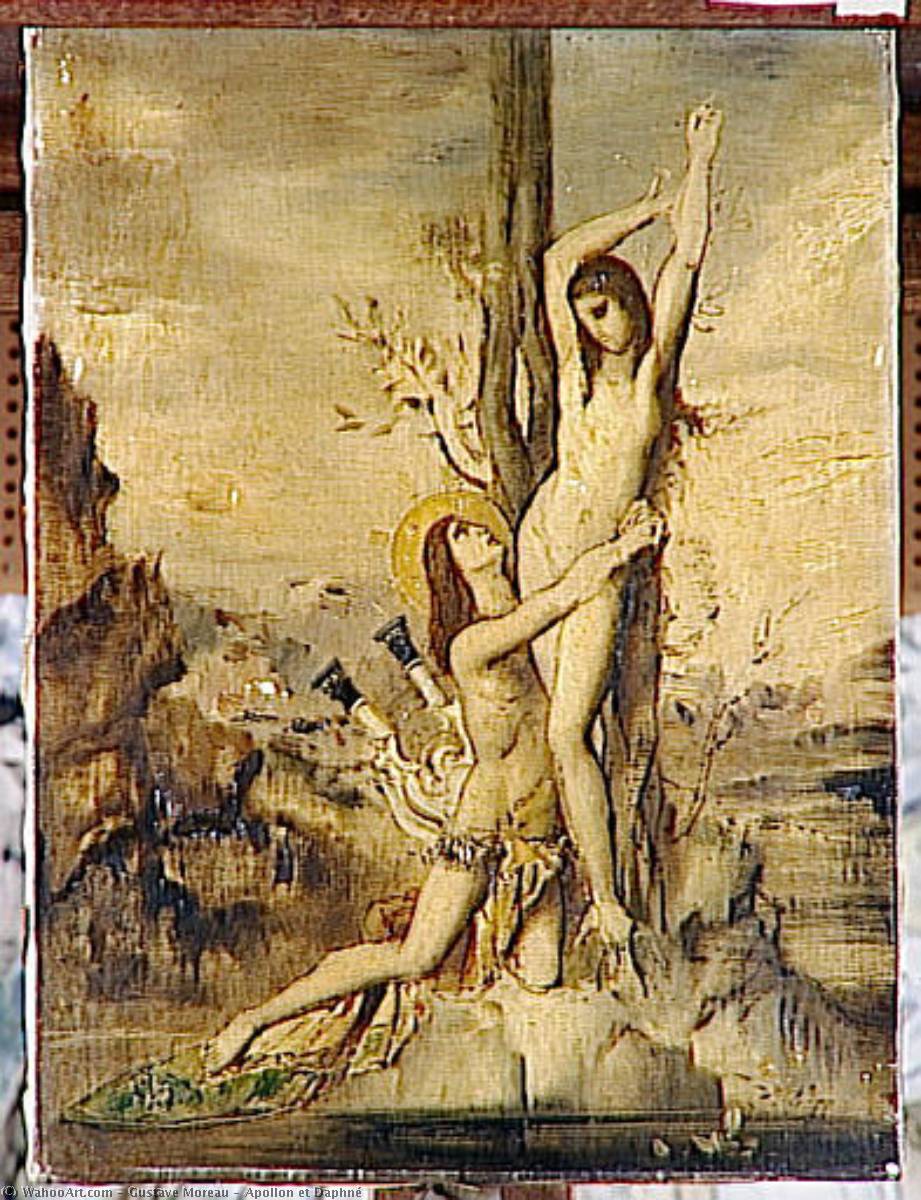
Moreau’s mesmerizing Apollon et Daphné embodies Symbolist artistry—a dreamlike depiction of Apollo and Daphne's mythological struggle—capturing ethereal beauty and profound emotion within a timeless Parisian landscape.
Explore the captivating Symbolist art of Gustave Moreau (1826-1898), famed for mythological & biblical paintings like 'Salome'. Influenced Matisse & Rouault. Discover his dreamlike world!
A Vision of Mythic Resistance: Exploring Gustave Moreau’s Apollon et Daphné
Moreau's *Apollon et Daphné* isn’t merely a depiction of a classical myth; it’s an immersive experience into the artist’s meticulously crafted dreamscape—a cornerstone of Symbolist art and a testament to his unwavering devotion to exploring the subconscious. Painted around 1864, this monumental canvas transcends simple narrative representation, opting instead for a profound meditation on themes of desire, transformation, and spiritual struggle.
The Myth Revisited Through Symbolism
The story itself recounts Apollo’s ardent pursuit of Daphne—a nymph who embodies purity and innocence—and his desperate attempt to prevent her from fleeing his advances. However, Moreau doesn't portray this encounter as a straightforward romantic drama. Instead, he utilizes mythological imagery laden with symbolic significance. Daphne’s metamorphosis into laurel trees represents not just physical change but also the triumph of divine will over earthly longing. Apollo’s futile grasp symbolizes humanity’s inability to control forces beyond our comprehension—the immutable laws of nature and fate. The figures surrounding them – a shadowy male attendant and a woman draped in crimson – amplify these themes, hinting at anxieties about sexuality and mortality within the broader Symbolist framework.
Technique and Atmosphere: Layers of Color and Texture
Moreau’s masterful technique contributes significantly to the painting's haunting beauty. He employed tempera on canvas—a medium favored by Symbolists for its luminosity and ability to achieve rich, velvety textures—creating an atmosphere thick with palpable emotion. The palette is dominated by deep blues and greens, mirroring the verdant landscape of Daphne’s refuge and conveying a sense of melancholy contemplation. Moreau meticulously layered pigments, building up translucent glazes that imbue the surface with an ethereal glow. This painstaking process resulted in an astonishing level of detail—particularly evident in the depiction of Daphne's foliage and Apollo’s anguished expression—further enhancing the painting’s dreamlike quality.
Historical Context: Challenging Academic Conventions
*Apollon et Daphné* emerged during a period of artistic ferment, marking a decisive break from the dominant Realist aesthetic championed by artists like Courbet and Millet. The Impressionists, focused on capturing fleeting sensory impressions, were equally incompatible with Moreau’s ambition to delve into psychological complexities. Symbolism arose as a reaction against these movements, prioritizing subjective experience and spiritual contemplation over objective observation. Artists like Moreau sought inspiration in folklore, mythology, and esoteric traditions—drawing upon sources such as Dante Alighieri's *Divine Comedy* and Nietzsche’s philosophy—to express profound ideas about the human condition.
Emotional Resonance: A Portrait of Inner Turmoil
Ultimately, *Apollon et Daphné* resonates deeply with viewers due to its exploration of universal anxieties concerning desire, loss, and transformation. Moreau doesn't offer easy answers or comforting resolutions; rather, he presents a scene fraught with tension and imbued with an unsettling beauty. The painting compels us to confront the limitations of human ambition and acknowledges the inescapable influence of forces beyond our control. It remains a powerful reminder that art can serve as a conduit for accessing realms of consciousness inaccessible to everyday perception—a legacy firmly rooted in Moreau’s pioneering contribution to Symbolist art.