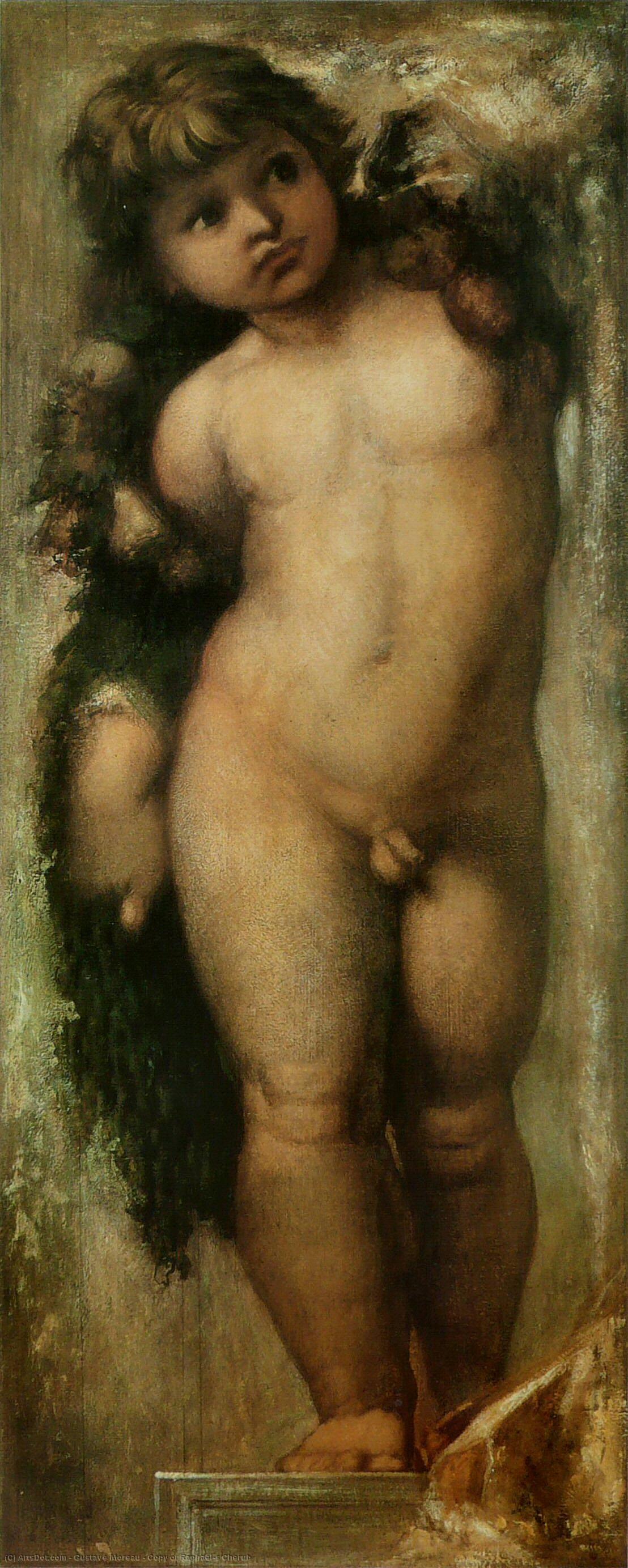
Moreau’s mesmerizing copy of Raphael's Cherub embodies Symbolist artistry—a dreamy depiction of angelic innocence and maternal tenderness within a richly ornamented Parisian studio setting. Gustave Moreau’s evocative painting captures the spiritual essence of Renaissance beauty, inviting viewers to explore its captivating visual narrative.
A Reverie of Innocence: Gustave Moreau’s Echo of Raphael
Moreau's "Copy of Raphael's Cherub," painted in 1858, isn’t merely a reproduction; it’s an immersion into the opulent and psychologically complex world of Symbolist art. Executed with meticulous detail—a testament to Moreau’s unwavering dedication to academic training despite his rebellious artistic spirit—this artwork captures a fragment of Raphael's iconic Madonna della Scala, transforming it into a meditation on motherhood, spirituality, and the elusive beauty of childhood.
- Subject Matter: The painting centers around a cherub – an angelic figure traditionally associated with purity and divine grace – positioned within a richly ornamented interior space reminiscent of Renaissance palaces. This deliberate choice reflects Moreau’s fascination with reviving classical ideals amidst the burgeoning Impressionist movement.
- Style & Technique: Moreau's approach distinguishes itself from its contemporaries through its dense layering of pigment, creating an almost sculptural effect. He employs a glazing technique—applying thin translucent layers of color over underlying opaque pigments—to achieve luminous surfaces and imbue the scene with an otherworldly glow. The artist’s meticulous brushwork contributes to the painting’s textural richness and enhances its expressive power.
The historical context surrounding “Copy of Raphael's Cherub” is crucial to understanding its significance. Moreau emerged during a period of intense intellectual debate concerning the role of art in society, rejecting the utilitarian focus of Realism for a pursuit of emotional truth and spiritual contemplation. Symbolist artists like Moreau sought inspiration from mythology, folklore, and esoteric traditions—drawing upon sources such as Dante’s Inferno and Kabbalah—to explore themes of subconsciousness and psychological drama. Raphael's Madonna della Scala served as an ideal to emulate, representing not just maternal love but also the divine feminine and the promise of redemption.
- Symbolism: Moreau imbues the painting with potent symbolic imagery. The woman nursing the cherub embodies nurturing compassion and spiritual devotion—a cornerstone of Symbolist aesthetics. The ornate architectural setting symbolizes grandeur, permanence, and a connection to sacred history. Furthermore, the cherub’s posture—lying down on its side—suggests vulnerability and repose, mirroring Raphael's depiction of Mary cradling Jesus.
Ultimately, “Copy of Raphael's Cherub” transcends mere visual representation; it aspires to evoke an emotional response in the viewer. Moreau’s masterful manipulation of color and light creates a dreamlike atmosphere—a deliberate strategy designed to bypass rational thought and tap into deeper psychological currents. The painting’s serene beauty belies its underlying contemplation of mortality and transcendence, leaving audiences with a lingering sense of wonder and spiritual yearning. It remains an enduring emblem of Symbolist artistic ambition – a captivating glimpse into Moreau's visionary mind and his profound engagement with the timeless questions of human existence.