A Glimpse into Grandeur: Unveiling Gustave Moreau’s ‘Ebauche pour Le Triomphe d'Alexandre le Grand’
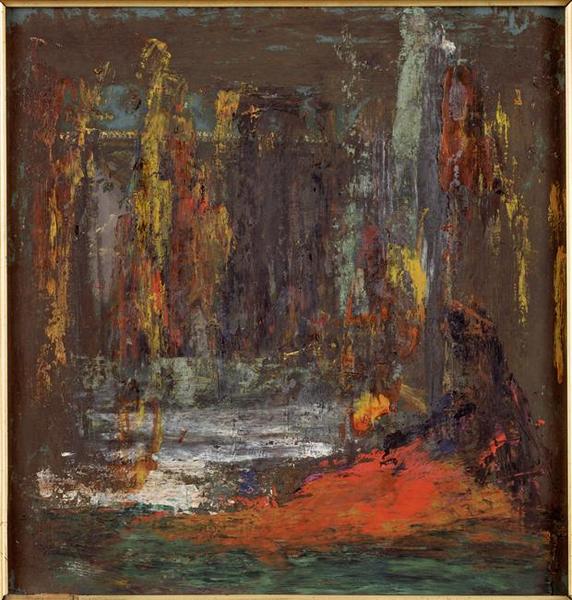
Gustave Moreau, a name synonymous with the Symbolist movement, invites us into a world of opulent fantasy and mythological resonance in his painting, ‘Ebauche pour Le Triomphe d'Alexandre le Grand.’ This isn’t merely a depiction of Alexander the Great’s triumph; it is an *evocation* of triumph itself – a swirling vortex of power, exoticism, and the weight of history. The work exists as a preparatory study, an ‘ebauche,’ hinting at a larger, more fully realized composition that never quite came to fruition in the same form. Yet, within this unfinished state lies a captivating energy, a sense of raw creative force that draws the viewer into its enigmatic embrace.
The Allure of Symbolism and Historical Echoes
Moreau rejected the prevailing artistic currents of Realism and Impressionism, instead forging a path deeply rooted in symbolism. He wasn’t interested in capturing fleeting moments of light or objective reality; he sought to express profound emotional and spiritual truths through evocative imagery. ‘Ebauche pour Le Triomphe d'Alexandre le Grand’ exemplifies this approach. The scene depicts the aftermath of Alexander’s victory over King Porus, a pivotal moment in his campaign across India. However, Moreau doesn’t focus on the brutal realities of warfare. Instead, he presents a dreamlike vision of an imagined India – a land brimming with fantastical architecture, richly adorned figures, and an atmosphere thick with mystery. The painting is less about historical accuracy and more about the *idea* of triumph, the psychological impact of conquest, and the allure of the exotic East.
A Masterful Technique: Layering Color and Detail
Moreau’s technique is characterized by meticulous detail and a lavish use of color. He built up his compositions in layers, creating surfaces that shimmer with an almost jewel-like quality. In this work, we see the beginnings of that signature style – the careful rendering of fabrics, the intricate patterns adorning the figures, and the atmospheric perspective that draws the eye deep into the scene. The composition is dynamic, filled with movement and a sense of controlled chaos. While the central figure of Alexander remains partially obscured, turned away from the viewer, his presence dominates the canvas. Surrounding him are numerous other figures – attendants, captives, onlookers – each contributing to the overall sense of spectacle and grandeur. The use of light is particularly striking, illuminating certain areas while leaving others shrouded in shadow, enhancing the painting’s dramatic effect.
Moreau's Legacy: A Bridge to Modernity
Gustave Moreau stands as a crucial figure in the transition from 19th-century Romanticism to the burgeoning world of modern art. His influence can be seen in the works of artists like Henri Matisse and Georges Rouault, who admired his bold use of color and symbolic imagery. The Musée Gustave Moreau in Paris, housed within his former studio-home, offers a unique opportunity to immerse oneself in his artistic universe – a treasure trove of over 1200 paintings, drawings, and watercolors. ‘Ebauche pour Le Triomphe d'Alexandre le Grand’ is not just a beautiful painting; it is a window into the mind of a visionary artist who dared to explore the depths of human emotion and imagination. A reproduction of this work would bring a touch of that same magic – a sense of timeless beauty, intellectual depth, and captivating mystery – to any interior space.