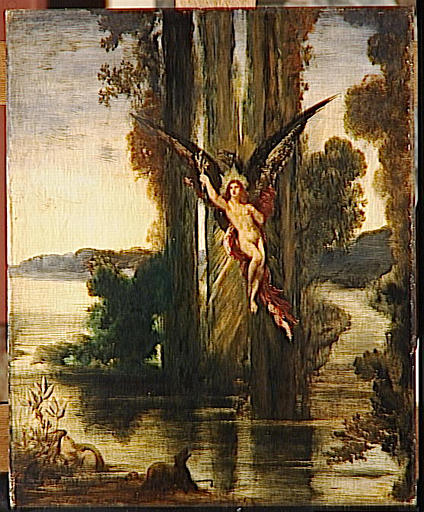
Moreau’s mesmerizing ‘Ganymède,’ a Symbolist masterpiece bathed in serene beauty, depicts a winged woman gazing upon the water—a poignant exploration of myth and spirituality from 1863. Immerse yourself in this evocative artwork and bring its timeless elegance into your home.
A Vision of Mythic Grace: Exploring Gustave Moreau’s Ganymède
Moreau's "Ganymède" stands as a cornerstone of Symbolist art, encapsulating the movement’s preoccupation with dreamlike imagery and profound psychological exploration. Painted around 1890, this monumental canvas transcends mere representation; it strives to evoke an emotional response rooted in ancient mythology and spiritual contemplation. The artwork depicts Ganymede, the Trojan prince abducted by Zeus to serve as his cupbearer—a tale recounted extensively in Homer’s Iliad—standing poised at the edge of a tranquil lake. This deliberate positioning isn't accidental – it symbolizes humanity’s yearning for divine grace and transcendence.
- Subject Matter: The painting centers on Ganymede, a figure revered across cultures as an emblem of innocence and beauty, embodying aspirations toward celestial realms.
- Style: Moreau's style is unmistakably Symbolist, rejecting naturalistic depiction in favor of stylized forms and luminous colors designed to convey mood and emotion rather than factual accuracy. It’s a deliberate departure from the Impressionists’ focus on capturing fleeting visual sensations.
The artist’s meticulous technique—primarily oil paint on canvas—employed a layering process characteristic of Symbolist painters. Moreau utilized glazing techniques, applying thin translucent layers of color over underlying pigments to achieve remarkable depth and luminosity. This painstaking method allowed him to create an atmosphere that feels both ethereal and tangible simultaneously. The use of iridescent pigments further enhances the painting’s otherworldly quality, mirroring the shimmering surface of the lake and capturing the luminescence of Ganymede's wings.
- Technique: Moreau skillfully employed glazing techniques, layering translucent washes of color to build up tonal richness and create an illusionistic depth that defies conventional perspective.
- Materials: Oil paint on canvas—a favored medium for Symbolist artists—provided the ideal substrate for achieving the desired textural qualities and luminous effects.
Historically, "Ganymède" emerged during a period of intellectual ferment in Paris. The Symbolist movement arose as a reaction against the materialism and scientific rationalism dominating Victorian society. Artists like Moreau sought refuge in esoteric traditions—particularly Kabbalah and Dante’s Inferno—drawing inspiration from medieval Christian symbolism to express complex psychological states and spiritual anxieties. Ganymede's gaze downward, combined with the presence of cats and birds – animals imbued with symbolic significance representing vigilance and transformation – reinforces this thematic preoccupation.
- Historical Context: Symbolist art flourished in Paris during the late 1880s and early 1890s, fueled by a desire to escape the constraints of realism and embrace subjective experience.
- Symbolism: Recurring motifs like cats (representing vigilance) and birds (symbolizing ascension) contribute to the painting’s overarching message about spiritual aspiration and transformation.
Ultimately, “Ganymède” resonates with viewers on an emotional level. Its serene composition—characterized by muted blues and greens—creates a contemplative mood that invites reflection on themes of beauty, innocence, and divine grace. More than just a depiction of mythic narrative, it’s a profound meditation on the human condition, capturing the elusive essence of dreams and fantasies. A reproduction captures this captivating atmosphere, offering an opportunity to bring Moreau's visionary aesthetic into any interior space—a testament to the enduring power of Symbolist art.