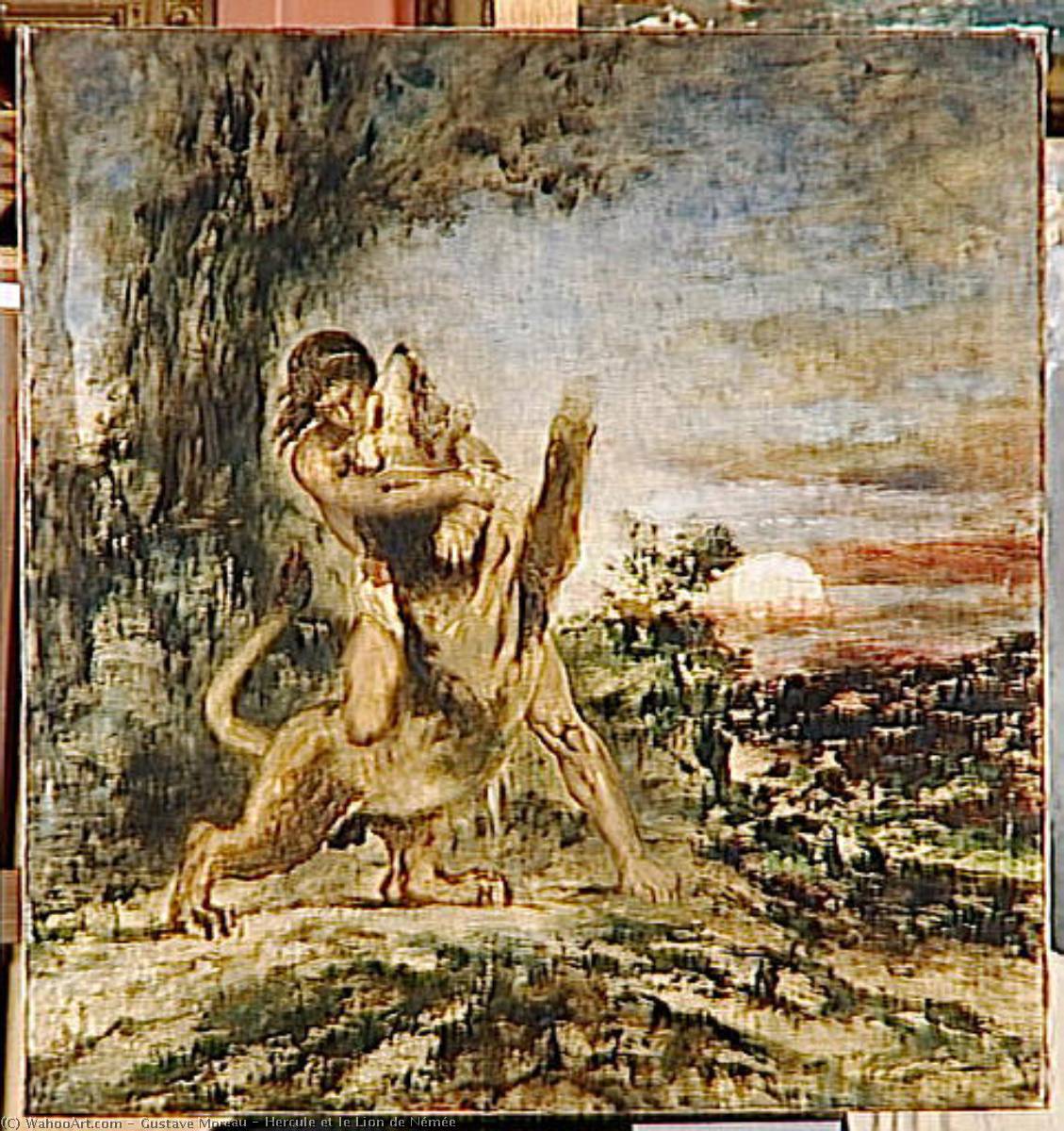
Explore Gustave Moreau’s dramatic "Hercule et le Lion de Némée" – a Baroque tapestry depicting Hercules' legendary battle. A masterpiece of Symbolism!
Explore the captivating Symbolist art of Gustave Moreau (1826-1898), famed for mythological & biblical paintings like 'Salome'. Influenced Matisse & Rouault. Discover his dreamlike world!
A Tapestry of Myth and Majesty: Unveiling Gustave Moreau’s *Hercule et le Lion de Némée*
Gustave Moreau's *Hercule et le Lion de Némée* is not merely a depiction of the legendary first labor of Hercules; it is an immersive encounter with primal forces, a dramatic tableau woven from myth and rendered with a unique artistic vision. The artwork captures the pivotal moment when the hero confronts the fearsome Nemean Lion, renowned for its impenetrable hide – a struggle that transcends simple physical conflict to embody the triumph of civilization over savagery, order over chaos. Moreau doesn’t present us with a straightforward heroic narrative; instead, he invites contemplation on the enduring battle within humanity between reason and instinct, control and untamed nature. The sheer physicality of the encounter is palpable, conveyed not through traditional brushstrokes but through the very texture of the medium itself – an unconventional choice for Moreau, who embraced tapestry as his canvas.
Symbolism Woven into Form
Created during the height of the Symbolist movement in the late 19th century, *Hercule et le Lion de Némée* exemplifies the era’s fascination with mythology, spirituality, and the exploration of the subconscious. Moreau was a pivotal figure in this artistic revolution, rejecting the constraints of Realism and Impressionism to delve into subjective emotions and symbolic imagery. Hercules, in this context, represents human potential – strength, resilience, and the capacity to overcome seemingly insurmountable obstacles. The lion, conversely, embodies primal instincts and untamed nature. Their intertwined forms are not simply locked in combat; they symbolize a fundamental duality within the human condition. The muted color palette—dominated by earthy browns, ochres, and grays—contributes to the somber yet majestic atmosphere, while strategic touches of red and gold subtly highlight the central conflict, drawing the eye towards the heart of the struggle. The artwork resonates with deeper symbolic meaning, serving as a potent allegory for moral courage and the pursuit of virtue.
A Unique Technique: Painting Beyond the Canvas
What truly sets *Hercule et le Lion de Némée* apart is its execution. Moreau boldly departed from traditional painting techniques, choosing instead to create this monumental work as a tapestry or large-scale textile piece. This was not simply a matter of artistic preference; it allowed him to explore new dimensions of texture and physicality. The technique likely involved a collaborative effort between painters applying pigments directly to the fabric and weavers translating the design into tangible form. This fusion results in a rich, tactile quality that enhances the sense of drama and immediacy. The visible weave adds depth and complexity, inviting viewers to engage with the artwork on a visceral level. This unconventional approach demonstrates Moreau’s willingness to experiment and push the boundaries of artistic expression, anticipating aspects of early modern abstraction through its textured surface and nuanced tonal variations.
Legacy and Enduring Appeal
Though initially misunderstood by some contemporaries, Gustave Moreau's influence grew steadily throughout the 20th century, impacting artists as diverse as Henri Matisse and Georges Rouault. Today, he is rightfully recognized as one of the most important figures in Symbolist painting. *Hercule et le Lion de Némée* continues to captivate audiences with its powerful imagery and profound symbolism. Its enduring appeal lies not only in its masterful depiction of a classic myth but also in its ability to tap into universal themes of courage, perseverance, and the eternal conflict between good and evil. For collectors and interior designers alike, this artwork offers a statement of artistic sophistication—a compelling piece that adds depth, drama, and intellectual resonance to any space. It is a testament to Moreau’s genius, a woven narrative that continues to speak across generations.