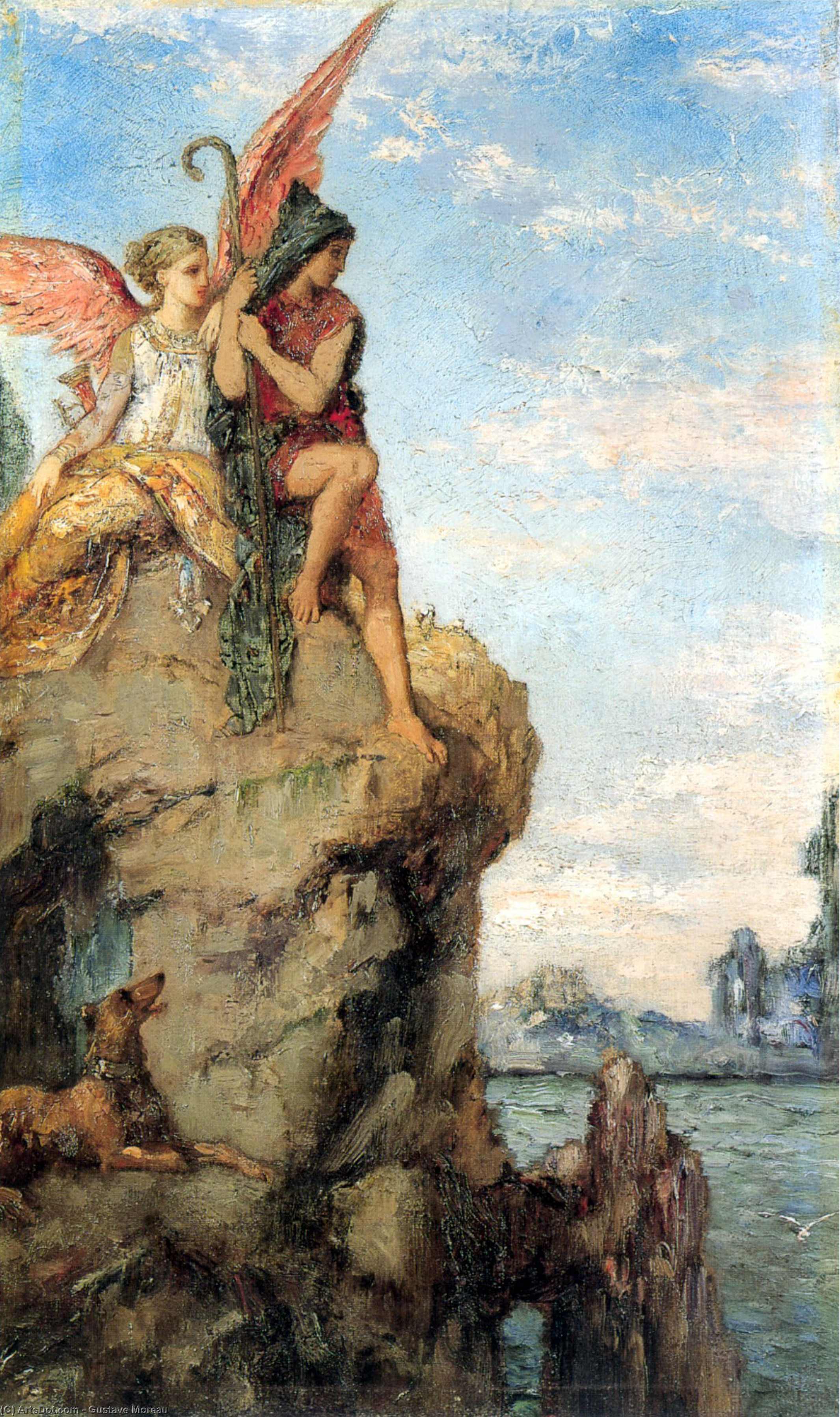
Gustave Moreau’s ‘Hesiod and the Muse’: A Descent into Mythic Reverie
Gustave Moreau's “Hesiod and the Muse,” painted during the height of Symbolism in late 19th-century Paris, is not merely a depiction of figures; it’s an immersive journey into the subconscious, a carefully constructed dreamscape rendered with meticulous detail and imbued with profound symbolic weight. The painting captures a pivotal moment – a communion between the legendary poet Hesiod, author of the *Works and Days*, and a captivating muse, likely representing inspiration itself. Moreau, deeply influenced by Romanticism’s fascination with mythology and the occult, sought to evoke not observable reality but rather the emotional and spiritual truths residing beneath it. This work exemplifies his signature style: opulent, richly colored, and populated with fantastical elements that draw heavily from classical antiquity, medieval iconography, and a distinctly personal symbolic vocabulary.
- Subject Matter: The central figures of Hesiod, traditionally associated with poetry and agriculture, and the Muse, a divine inspiration, are presented in an intimate tableau. Their interaction suggests a moment of profound creative exchange, a dialogue between intellect and intuition.
- Composition: Moreau employs a pyramidal composition, drawing the viewer’s eye upwards towards the luminous figures and the swirling, atmospheric background. The placement of the secondary figures – angels, mythical creatures, and the two dogs – adds layers of complexity and reinforces the painting's symbolic narrative.
A Symphony of Symbolism: Decoding Moreau’s Palette and Technique
Moreau’s technique is characterized by a dense layering of paint, achieved through meticulous brushwork and a masterful understanding of color theory. He favored rich, jewel-toned pigments – deep blues, emerald greens, ruby reds, and gold – to create an atmosphere of otherworldly splendor. The application of the paint itself is almost sculptural in its depth, building up textures that evoke a sense of weight and solidity within the dreamlike setting. Notice the intricate detailing of the figures’ garments, the sculpted rock formation upon which they sit, and the delicate rendering of the surrounding foliage – all hallmarks of Moreau's painstaking approach. This technique contributes significantly to the painting’s overall sense of grandeur and timelessness.
- Color Palette: The dominant use of saturated colors creates a heightened emotional impact, reflecting the symbolic nature of the scene.
- Brushwork: Moreau's deliberate brushstrokes contribute to the painting's textural richness and sense of movement.
Historical Context and the Rise of Symbolism
“Hesiod and the Muse” was created during a period of significant artistic and intellectual ferment in Paris. The rise of Symbolism, as an artistic movement, challenged the dominant Realist and Impressionist styles, seeking instead to express subjective emotions and spiritual truths through symbolic imagery. Moreau’s work aligns perfectly with this trend, reflecting a broader cultural interest in mythology, religion, and the occult – themes that were gaining prominence in literature, philosophy, and art at the time. The painting can be seen as part of a larger effort to create a new visual language capable of conveying profound meaning beyond the limitations of representational accuracy.
Moreau’s association with the *Société des Artistes Indépendants*, a group dedicated to promoting avant-garde art, further solidified his position within the Symbolist movement. This group championed artistic freedom and experimentation, encouraging artists to explore unconventional themes and techniques – qualities that are abundantly evident in “Hesiod and the Muse.”
Emotional Resonance and Artistic Legacy
Ultimately, "Hesiod and the Muse" transcends a simple narrative depiction; it’s an invitation to contemplate the nature of inspiration, creativity, and the human relationship with the divine. The painting's evocative atmosphere and richly symbolic imagery continue to captivate viewers today, solidifying Moreau’s place as one of the most important figures in Symbolist art. A hand-painted reproduction offers a unique opportunity to experience the full power and beauty of this extraordinary work, bringing its dreamlike quality into your home or studio.