A Visionary Encounter: The Ethereal World of Gustave Moreau
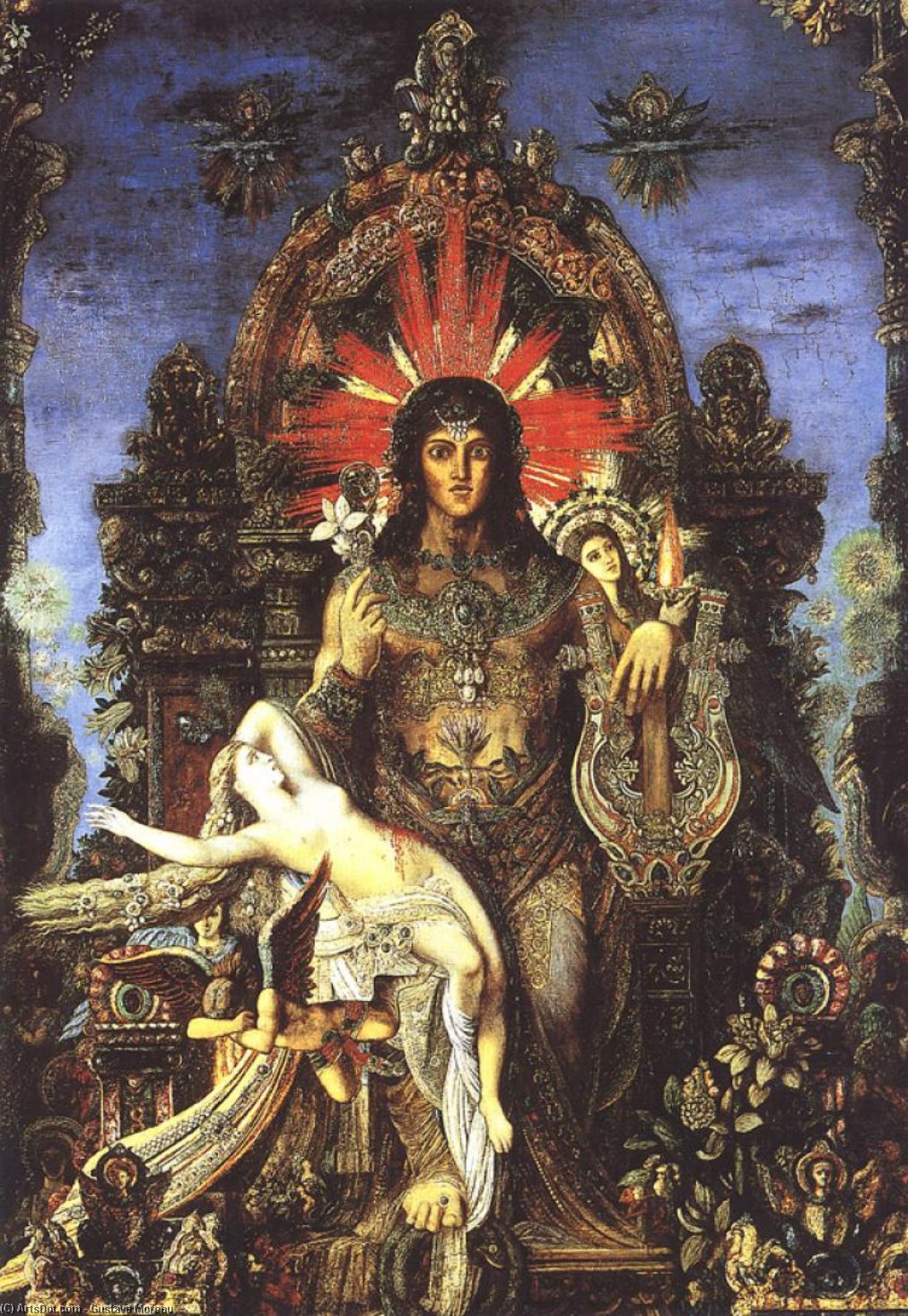
In the twilight of the nineteenth century, as the art world grappled with the fleeting light of Impressionism, Gustave Moreau offered a profound alternative—a descent into the depths of the subconscious and the grandeur of myth. His work does not merely represent reality; it seeks to transmmed it. In this exquisite detail from Jupiter and Semele, we are invited into a realm where the boundaries between the mortal and the divine dissolve. Moreau, a master of the Symbolist movement, rejected the objective observation of nature in favor of an internal, spiritual landscape. Through his meticulous brushwork and an almost architectural approach to composition, he crafts a scene that feels less like a captured moment and more like a sacred vision emerging from a dream.
The painting serves as a breathtaking window into Greek mythology, focusing on the poignant and perilous encounter between the king of the gods and the mortal Semele. At the heart of this intricate composition lies Semele, depicted with a grace that is both vulnerable and regal. As she cradles her child, surrounded by a celestial assembly of figures, the viewer is caught in the tension of a divine revelation. The presence of thirteen distinct figures creates a dense, tapestry-like effect, where every gaze and gesture contributes to the unfolding drama. This is not a scene of simple storytelling, but an exploration of the overwhelming power of the divine when it intersects with human devotion.
Symbolism and the Language of Ornamentation
To behold a Moreau masterpiece is to engage in a complex reading of symbols. The artist utilized a richly ornamented visual vocabulary to evoke psychological and spiritual truths. In this detail, the environment is alive with symbolic life; birds flutter through the composition, acting as messengers between the earthly and the ethereal, while delicate flowers bloom with an almost supernatural intensity. These elements are not merely decorative flourishes but are essential components of Moreau's transmutation technique. The placement of objects—from the subtle presence of a chair to the carefully scattered flora—creates a sense of ritualistic importance, grounding the mythological event in a space that feels both ancient and timeless.
For the discerning collector or interior designer, this piece offers an unparalleled opportunity to introduce a sense of intellectual depth and historical grandeur into a space. The intricate details and the layered meanings within the work provide endless points of contemplation. The painting’s ability to evoke emotion through its complex textures and enigmatic figures makes it a centerpiece capable of transforming a room into a sanctuary of thought and beauty. It is an investment in a legacy of Symbolism, bringing the hauntingly beautiful spirit of late 19th-century Paris into the modern home.
A Masterpiece for the Modern Collector
The enduring allure of Jupiter and Semele lies in its ability to captivate the senses while challenging the mind. Moreau’s technique, characterized by a meticulous attention to detail and a rejection of naturalistic illusion, creates a texture that feels tactile and opulent. This high-quality reproduction preserves the luminous quality of his palette and the profound emotional weight of his subject matter. Whether placed in a curated gallery setting or as a focal point in a sophisticated living space, this artwork serves as a testament to the power of art to transcend time, offering a window into the eternal dance between myth and humanity.