A Vision of Triumph Over Mortality
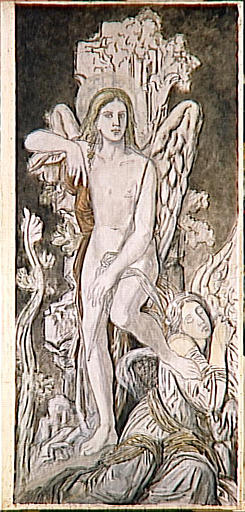
Moreau’s “L'Amour vainqueur de la mort” – Love Conquering Death – stands as a cornerstone of Symbolist art, embodying the movement’s preoccupation with spiritual contemplation and imaginative storytelling. Painted around 1890, this monumental canvas depicts a scene steeped in biblical allusion, specifically referencing Ezekiel chapter 37:1-14, where God instructs Moses to resurrect the dead Israelites. However, Moreau doesn't simply portray a literal resurrection; he presents it as an allegory for spiritual rebirth and overcoming earthly limitations.
- Subject Matter & Composition: The central figure is a naked man seated atop a rocky outcrop, bathed in ethereal light—a deliberate echo of Christ’s ascension. Surrounding him are angels – not idealized figures of angelic benevolence but rather beings imbued with an unsettling beauty and melancholic grace. Their postures vary dramatically; some stand solemnly behind the man, others lie down beside him, creating a dynamic interplay of stillness and movement. To his left is another figure, partially obscured by shadow, adding to the painting’s enigmatic atmosphere.
- Style & Technique: Moreau's distinctive style is characterized by meticulous detail and painstaking layering of pigments—a hallmark of Symbolist craftsmanship. He employs a glazing technique, applying thin washes of color over thicker underlayers, resulting in luminous surfaces that capture subtle tonal variations. The artist’s masterful use of chiaroscuro – dramatic contrasts between light and dark – enhances the painting's expressive power, emphasizing the spiritual significance of the scene.
Symbolism & Biblical Allusion
Moreau deliberately draws upon biblical imagery to convey profound philosophical ideas. The rocky outcrop symbolizes the earthly realm—a place of hardship and decay—while the angelic figures represent divine grace and redemption. The man’s nudity signifies vulnerability and purity, mirroring Christ's sacrifice for humanity. Furthermore, the overarching narrative speaks to the transformative power of faith and the promise of eternal life beyond death. Moreau wasn’t interested in simply illustrating a biblical story; he sought to distill its essence into a visual emblem of spiritual aspiration.
Historical Context & Artistic Influences
“L'Amour vainqueur de la mort” emerged during the Symbolist movement, which flourished in Paris between 1890 and 1905. Rejecting the scientific materialism of Impressionism and Realism, Symbolists prioritized emotion and imagination as pathways to artistic truth. Moreau’s work aligns closely with the aesthetic principles championed by artists like Edvard Munch and James Abbott McNeill Whistler—artists who similarly explored psychological landscapes and employed evocative color palettes to evoke mood and atmosphere. The painting reflects a broader cultural fascination with mysticism and esoteric thought, reflecting anxieties about modernity and yearning for transcendence.
Emotional Impact & Artistic Legacy
The painting’s enduring appeal lies in its ability to inspire contemplation and provoke emotional resonance. Its haunting beauty—characterized by muted colors and unsettling details—captures the sublime terror of confronting mortality while simultaneously conveying a message of hope and spiritual renewal. Moreau's meticulous technique and symbolic richness solidify “L'Amour vainqueur de la mort”’s place as one of Symbolism’s most powerful expressions, continuing to fascinate viewers today with its timeless exploration of faith, death, and the human spirit.