Explore the captivating Symbolist art of Gustave Moreau (1826-1898), famed for mythological & biblical paintings like 'Salome'. Influenced Matisse & Rouault. Discover his dreamlike world!
La Parque et l'Ange de la Mort: A Descent into Mythic Darkness
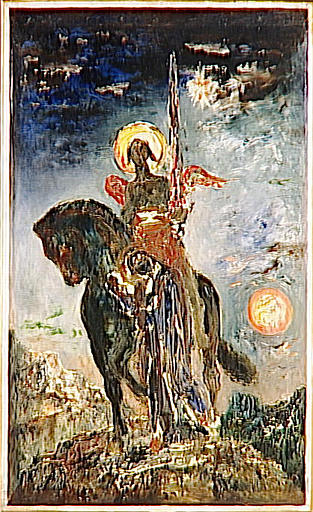
Gustave Moreau’s “La Parque et l’Ange de la Mort” (The Park and the Angel of Death), completed in 1890, stands as a cornerstone of Symbolist painting—a haunting testament to Moreau’s unwavering commitment to exploring the subconscious mind through meticulously crafted imagery rooted in mythology and religion. Held within the Musée national Gustave Moreau, this monumental canvas offers more than just visual splendor; it invites contemplation on mortality, beauty, and the pervasive influence of ancient narratives upon human experience.
A Visionary Synthesis: Style and Technique
Moreau’s distinctive style transcends mere representation, prioritizing atmosphere and emotional resonance above literal accuracy. He eschewed Impressionistic fleetingness for a deliberate layering of paint—often applied thickly—creating textured surfaces that seem to pulsate with inner luminescence. The artist employed a technique known as “grisaille,” utilizing shades of grey to establish the foundational tonal structure before introducing vibrant hues, primarily reds and blues, which heighten the dramatic tension. This masterful manipulation of color and texture contributes significantly to the painting’s unsettling grandeur, mirroring the psychological complexity it seeks to convey. Notice how Moreau's brushstrokes are deliberately loose and expressive, conveying movement and emotion rather than precise detail.
Echoes of Antiquity: Historical Context
Created during a period marked by intellectual ferment—the burgeoning Symbolist movement challenged prevailing artistic conventions—Moreau’s work draws heavily upon Greco-Roman mythology, specifically the myth of Persephone and Hades. The scene depicts Persephone, Queen of the Underworld, traversing a desolate park as she is escorted by Death (represented as an angel), symbolizing the inescapable journey into oblivion. Moreau's fascination with classical iconography reflects the broader Symbolist preoccupation with archetypal images and narratives that tap into universal human anxieties about death and regeneration. The painting emerged from a climate of philosophical debate concerning Nietzsche’s proclamation of “God is dead,” prompting artists like Moreau to grapple with existential questions and explore alternative spiritual perspectives.
Symbolism Unleashed: Decoding the Imagery
The composition itself is laden with symbolic significance. The barren landscape—dominated by a crimson moon and a waning sun—represents the fading vitality of earthly existence, contrasted against the chilling luminescence of Hades’ realm. The angel of death, devoid of facial features, embodies an impersonal force of destruction yet retains a regal bearing, highlighting the inevitability of mortality. Furthermore, the birds circling overhead symbolize hope amidst despair – fleeting glimpses of beauty and transcendence within the face of darkness. Moreau's deliberate use of color—particularly the pervasive red—evokes feelings of passion, terror, and primal instinct, mirroring the psychological turmoil experienced by Persephone as she descends into Hades’ dominion.
Emotional Resonance: An Artistic Meditation
“La Parque et l’Ange de la Mort” transcends mere visual depiction; it aspires to evoke a profound emotional response in the viewer. Moreau's masterful orchestration of light and shadow creates an atmosphere of palpable dread, prompting contemplation on themes of loss, transformation, and the confrontation with mortality. The painting’s haunting beauty lies precisely in its ability to capture the unsettling grandeur of the subconscious—a realm where mythic narratives intertwine with psychological anxieties. It remains a powerful reminder that art can illuminate the darkest recesses of human experience and offer glimpses into timeless truths about our existence.