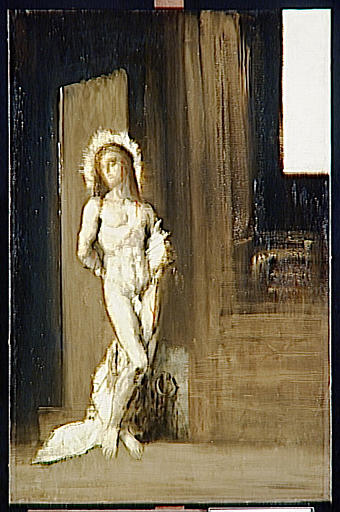
A Vision of Myth and Faith: Exploring Gustave Moreau’s “Le Christ à la colonne”
Gustave Moreau (1826-1898) stands as a singular figure in the annals of Symbolist painting, an artist who deliberately rejected the prevailing trends of his era to pursue a path illuminated by personal vision and profound spiritual contemplation. Unlike Impressionists striving to capture fleeting moments of light and color, Moreau sought to distill the essence of mythic narratives and religious beliefs into meticulously crafted images—images that resonate with an unsettling beauty and invite prolonged observation.
- Subject Matter: The painting depicts Mary Magdalene, positioned before a monumental column – a motif frequently employed by Moreau to symbolize strength, resilience, and divine grace. This deliberate choice reflects Moreau’s fascination with biblical iconography and his desire to convey narratives laden with symbolic significance.
- Style & Technique: Moreau's style is characterized by its opulent ornamentation and meticulous detail. He utilized tempera on canvas—a technique favored for its luminosity and ability to achieve remarkable textural effects—resulting in a surface that appears almost velvety to the touch. The artist’s painstaking layering of pigments created an illusionistic depth, transporting viewers into a dreamlike realm where reality blends seamlessly with fantasy.
Moreau's artistic endeavors were deeply rooted in Symbolist philosophy, which championed the primacy of emotion and intuition over rational observation. Influenced by thinkers like Friedrich Nietzsche and Henri Bergson, Moreau believed that art possessed the power to transcend mere representation and communicate directly with the subconscious mind. He drew inspiration from sources as diverse as Dante Alighieri’s *Divine Comedy*, medieval illuminated manuscripts, and esoteric traditions—elements he skillfully integrated into his compositions.
- Historical Context: Moreau emerged during a period of intellectual ferment in Paris, where Symbolism challenged the dominant aesthetic conventions of Realism and Impressionism. Artists like Edvard Munch and James Abbott McNeill Whistler embraced similar stylistic approaches, prioritizing emotional expression and psychological exploration over objective depiction.
- Symbolism & Emotional Impact: The painting’s symbolism extends beyond its central figure—Mary Magdalene—to encompass broader themes of penitence, redemption, and spiritual transformation. Moreau's masterful use of color—particularly muted reds and golds—creates an atmosphere of solemn grandeur, evoking feelings of melancholy contemplation and reverence.
“Le Christ à la colonne” exemplifies Moreau’s unwavering commitment to artistic integrity and his profound engagement with the spiritual landscape of his time. It remains a testament to the enduring power of Symbolist art—a realm where beauty resides not merely in visual splendor but also in the capacity to stir the soul and provoke contemplation about the mysteries of faith and human experience.