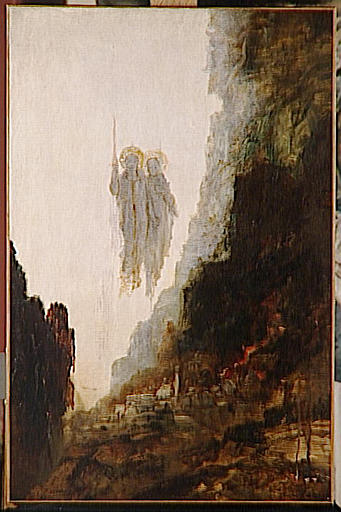
Les Anges de Sodome ou Sodome: A Descent into Mythic Darkness
Gustave Moreau’s “Les Anges de Sodome ou Sodome” (Angels of Sodom) stands as a cornerstone of Symbolist painting, embodying the movement's preoccupation with dreamlike imagery and profound psychological exploration. Painted in 1885, this monumental canvas transcends mere depiction; it plunges viewers into a realm where biblical narrative intertwines with pagan mythology, creating an unsettling yet undeniably beautiful tableau that continues to fascinate scholars and collectors alike. The artwork’s genesis lies within Moreau's fascination with Dante Alighieri’s Inferno, specifically Canto IX, which recounts the harrowing tale of Paolo and Francesca da Rimini—lovers consumed by guilt and doomed to eternal torment. Moreau sought to translate this literary horror into visual form, distilling its essence into a single, arresting scene.
- Subject Matter: The painting portrays three angels hovering above a desolate landscape, gazing downwards upon the tormented figures of Paolo and Francesca. This juxtaposition immediately establishes a tension between divine judgment and human suffering—a central theme within Moreau’s artistic vision.
- Style & Technique: Moreau employed meticulous detail and layering techniques characteristic of Symbolism. He utilized tempera on canvas, applying thin glazes over underdrawings to achieve an ethereal luminosity that contrasts sharply with the dark hues dominating the background. The artist's masterful brushwork contributes to a palpable sense of movement and atmosphere.
Historical Context: Dante’s Inferno and Symbolist Aesthetics
Moreau’s artistic endeavor was firmly rooted in the intellectual fervor of late 19th-century Paris. The Symbolist movement arose as a reaction against Impressionism's focus on capturing fleeting sensory experience, advocating instead for an art that aimed to evoke emotion and convey spiritual truths—often obscured beneath layers of symbolism. Dante’s Inferno served as Moreau’s primary inspiration, prompting him to delve into the darkest recesses of human consciousness and explore themes of sin, redemption, and the afterlife. This preoccupation with psychological depth aligns perfectly with Symbolist principles.
- Symbolism: The angels represent divine authority and judgment, yet their impassive gaze underscores the futility of earthly desires in confronting eternal consequences. The desolate landscape symbolizes purgatory—a realm of suffering and purification—mirroring Francesca and Paolo’s torment.
- Color Palette: Moreau's palette is dominated by muted reds, browns, and blues, reflecting the bleakness of the infernal landscape and conveying a profound sense of melancholy. However, subtle glazes of gold illuminate certain areas, hinting at glimpses of divine grace amidst despair.
Emotional Impact: A Meditation on Guilt and Transcendence
“Les Anges de Sodome ou Sodome” transcends mere narrative representation; it invites contemplation and evokes a powerful emotional response. Moreau’s masterful composition draws the viewer's eye downwards, emphasizing the plight of Paolo and Francesca while simultaneously elevating their gaze towards the heavens—a visual metaphor for striving toward spiritual enlightenment. The painting’s haunting beauty resides in its ability to confront viewers with uncomfortable truths about human nature and the inescapable realities of mortality. It remains a testament to Moreau’s enduring legacy as one of Symbolism's most visionary artists.