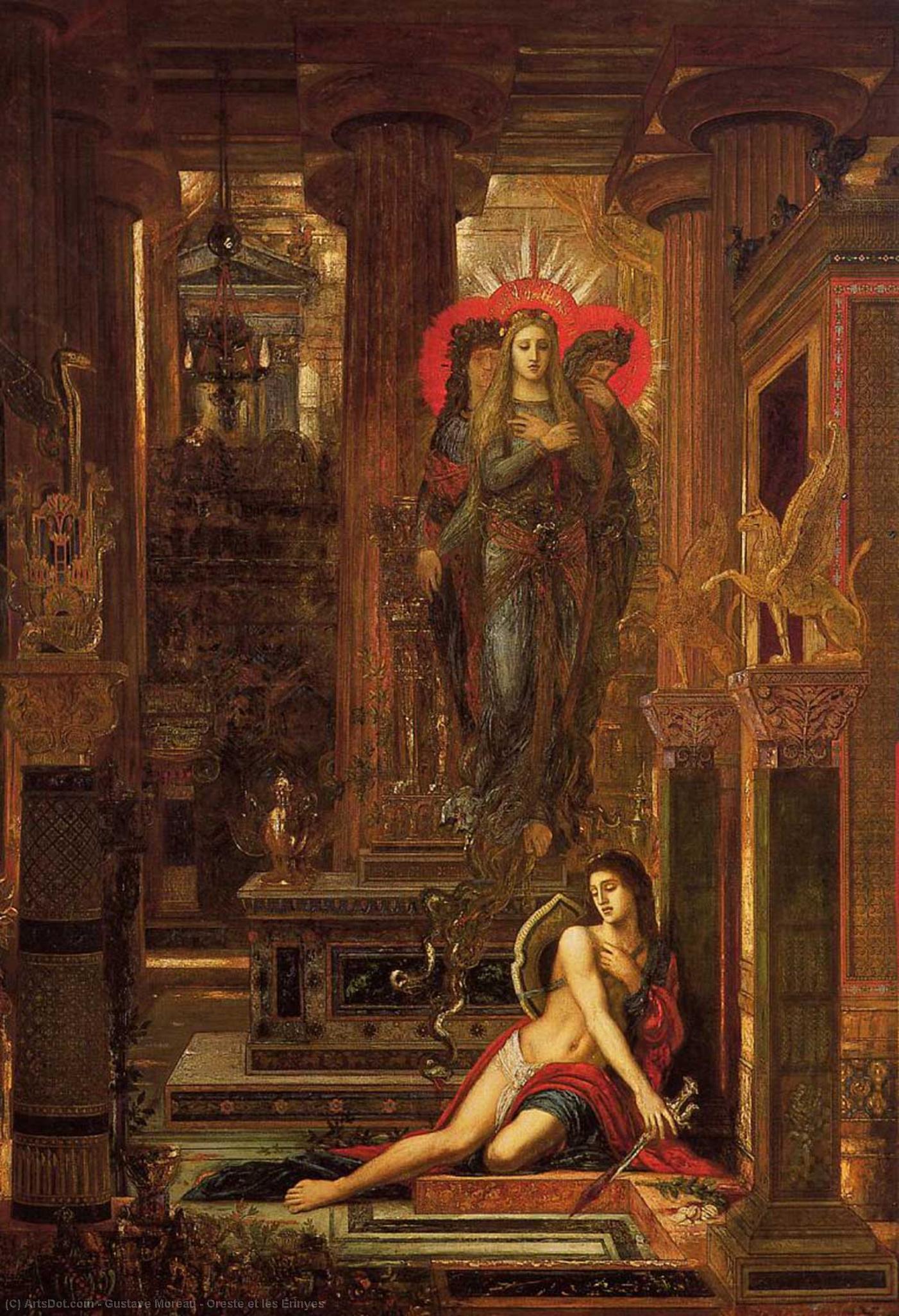
Delve into Gustave Moreau’s Symbolist masterpiece, ‘Oreste et les Erinyes,’ depicting Orestes confronting his mother amidst angelic figures and timeless symbolism. Explore its rich details and captivating atmosphere.
Explore the captivating Symbolist art of Gustave Moreau (1826-1898), famed for mythological & biblical paintings like 'Salome'. Influenced Matisse & Rouault. Discover his dreamlike world!
Oreste et les Erinyes: A Descent Into Mythological Drama
Gustave Moreau’s “Oreste et les Erinyes,” completed in 1891, stands as an arresting emblem of French Symbolism—a movement that prioritized emotion and psychological depth over mere representation. This monumental oil on canvas depicts a chilling tableau from Greek mythology, specifically the confrontation between Orestes and the Erinyes (Furies), goddesses of vengeance who relentlessly pursued him for matricide – the murder of his father by Clytemnestra. Moreau’s masterful execution transcends simple narrative; it plunges viewers into an unsettling realm where terror and divine retribution intertwine.
Composition and Symbolism: Angels Amidst Darkness
Moreau's compositional choices amplify the painting’s dramatic intensity. Dominating the background are three angels, positioned strategically above Orestes—one on his left shoulder and another on his right—creating a palpable sense of celestial judgment. The third angel resides further back, lending an ethereal luminescence to the scene while simultaneously emphasizing Orestes' vulnerability against overwhelming forces. Beneath this angelic presence lies a stark contrast: a chair situated near the bottom-right corner serves as a grounding element, anchoring the composition and subtly hinting at confinement—perhaps mirroring Orestes’ psychological state under siege by his inescapable past. A clock hanging on the wall above adds another layer of symbolism, representing time's relentless march toward inevitable reckoning.
Technique and Artistic Vision
Moreau employed a technique characterized by meticulous detail and luminous glazing – hallmarks of Symbolist painting. Layers upon layers of thin oil paint were applied to build up rich textures and imbue the canvas with an otherworldly glow. The artist’s painstaking attention to surface finish contributes significantly to the painting's emotive power, capturing not just what is seen but also what is felt—a profound sense of dread and inescapable doom. Moreau deliberately eschewed naturalistic rendering, opting instead for expressive brushstrokes that convey psychological turmoil and spiritual apprehension. He sought to evoke a visceral reaction in the viewer, transporting them into the tormented consciousness of Orestes as he confronts his horrific crime.
Historical Context: The Birth of Symbolism
“Oreste et les Erinyes” emerged during the zenith of Symbolism—a reaction against Impressionism’s focus on fleeting sensory experience. Artists like Moreau rejected realism in favor of exploring inner landscapes and delving into subconscious anxieties. Influenced by Nietzschean philosophy and Wagnerian opera, Symbolists aimed to communicate profound ideas through evocative imagery and suggestive symbolism. Moreau's work aligns perfectly with this artistic ethos, reflecting a preoccupation with themes of guilt, retribution, and the confrontation between reason and instinct—issues that resonated deeply within the intellectual climate of late 19th-century Paris.
A Legacy of Psychological Drama
Moreau’s “Oreste et les Erinyes” continues to captivate audiences today due to its masterful depiction of psychological drama and its enduring exploration of fundamental human anxieties. It serves as a testament to Moreau's unwavering commitment to artistic innovation and his ability to transform mythological narratives into emotionally resonant visual experiences. To appreciate the full scope of Gustave Moreau’s oeuvre, visit the Musée National Gustave-Moreau in Paris—a sanctuary for Symbolist art where you can immerse yourself in the haunting beauty of his visionary creations. Explore more at ArtsDot.com and discover similar reproductions available.