A Delicate Echo of Myth and Memory
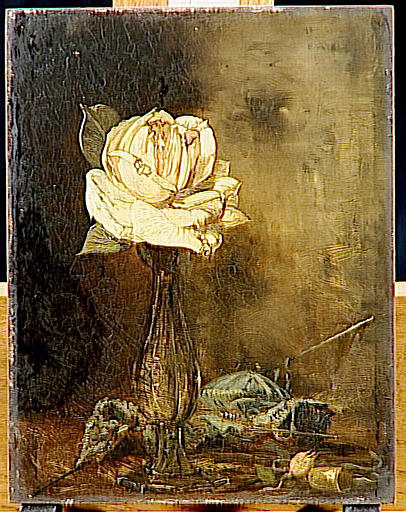
Gustave Moreau’s “Rose thé” – translating to “Tea Rose” – isn't merely a botanical depiction; it’s an immersion into the richly layered aesthetic universe of Symbolism. Painted around 1895, this artwork embodies Moreau’s signature approach: prioritizing emotional resonance over literal representation. Rather than striving for photographic accuracy, he sought to distill the essence of beauty and contemplation into a single, arresting image.
- Subject Matter: The painting centers on a solitary rose petal—a motif frequently employed by Moreau to symbolize purity, fragility, and the fleeting nature of existence.
- Style: Characteristic of Symbolist painters like Jules Bastien-Lepage and Edvard Munch, “Rose thé” eschews Impressionistic spontaneity for a meticulously crafted composition imbued with dreamlike qualities.
Technique and Material Considerations
Moreau’s masterful technique—primarily oil paint on canvas—allowed him to achieve astonishing tonal gradations and textural nuances. He employed glazing techniques, layering translucent washes of color over underlying pigments to create an ethereal luminescence that captures the subtle shimmer of light on petal surfaces. The artist's meticulous attention to detail is evident in every brushstroke, reflecting a profound respect for artistic craftsmanship.
- Color Palette: Moreau’s palette leans heavily into shades of pink and white—colors traditionally associated with femininity, innocence, and spiritual contemplation.
- Texture: The surface of the canvas is treated with considerable care, incorporating subtle impasto (thickly applied paint) to convey a sense of tactile presence and heighten visual impact.
Historical Context: Embracing Symbolism’s Vision
Moreau emerged during a pivotal moment in European art history—the waning years of Impressionism and the ascendance of Symbolism as a reaction against its perceived limitations. Influenced by Nietzschean philosophy and Wagnerian opera, Moreau sought to express inner psychological states through symbolic imagery rooted in mythology and folklore. “Rose thé” speaks directly to this intellectual climate, reflecting the Symbolist preoccupation with exploring the subconscious mind and conveying profound emotional truths.
- Mythological References: The inclusion of birds—particularly doves—references biblical symbolism of peace and divine grace, aligning with Moreau’s broader artistic agenda.
- Compositional Arrangement: The vase positioned centrally serves as a focal point, directing the viewer's gaze towards the rose petal and reinforcing its symbolic significance.
Emotional Resonance and Artistic Legacy
"Rose thé" transcends mere visual representation; it invites contemplation on themes of beauty, mortality, and spiritual yearning. Moreau’s ability to evoke emotion through carefully considered color, texture, and composition solidified his place as one of Symbolism's foremost practitioners. Today, reproductions of this artwork continue to inspire artists and collectors alike—a testament to the enduring power of Symbolist aesthetics and Moreau’s singular artistic vision.