A Visionary Encounter Between Myth and Form
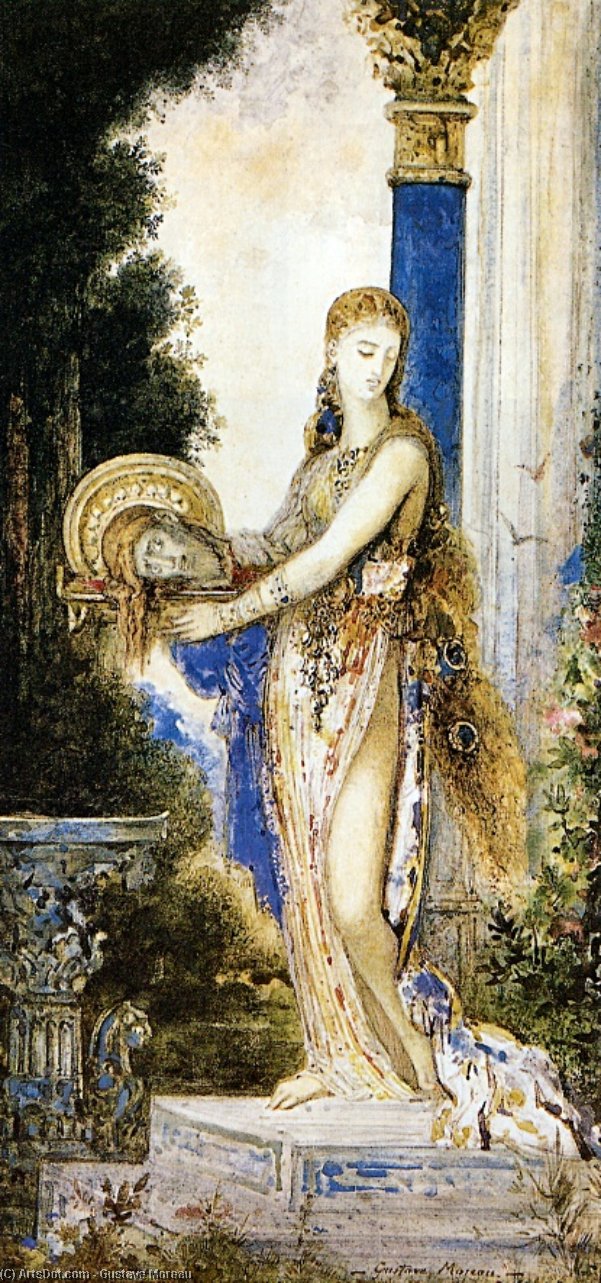
To gaze upon Gustave Moreau’s Salomé à la colonne is to step through a threshold where the boundaries of reality and dream dissolve into a singular, luminous haze. Painted in 1897, this monumental work stands as one of the most profound achievements of the Symbolist movement, offering far more than a mere retelling of biblical legend. Moreau does not simply depict a scene; he conjures an atmosphere, inviting the viewer into a meticulously crafted dreamscape that resonates with the intellectual and spiritual ferment of late 19th-century Paris. The composition immediately arrests the senses, centering on Salomé as she stands atop a pedestal, her figure anchored by a towering column that echoes the grandeur of classical sculpture while serving as a visual conduit for the unfolding psychological drama.
The narrative depth of this piece is layered with complex allegories. While drawing from the dramatic tension surrounding Herod’s daughter and the fate of John the Baptist, Moreau weaves in elements that transcend the literal. The presence of a statue behind Salomé, representing Jesus Christ, introduces a heavy sense of divine judgment and sacrifice, casting a shadow of spiritual torment over the protagonist. This is not a moment of triumph, but one of profound internal struggle. For the discerning collector or lover of fine art, the painting offers an inexhaustable well of contemplation, where every figure and architectural element serves to deepen the mystery of the human psyche.
The Alchemy of Light and Symbolism
Moreau’s technical mastery is nothing short of alchemical. Utilizing tempera on canvas, he employed a sophisticated method of layering translucent glazes to achieve an ethereal luminosity that seems to emanate from within the painting itself. This technique creates a velvety sheen across the surface, capturing the most subtle nuances of light and shadow. The result is a texture that feels almost tactile, as if one could reach into the canvas and touch the opulent fabrics of Salomé’s attire or the cold, weathered stone of the columns. His use of color is equally deliberate; the vibrant blue border of her dress acts as a striking focal point against the more muted, atmospheric tones of the background, guiding the eye through the intricate details of the scene.
Beyond the brushwork, the painting is alive with symbolic movement. Scattered throughout the composition are avian figures—birds that appear to drift through the heavy air like whispers of the subconscious. These are not merely decorative flourishes; in Moreau’s symbolic lexicon, they represent resurrection and spiritual aspiration, mirroring Salomé's own internal conflict between her earthly actions and her spiritual destiny. This interplay between the static, monumental architecture and the delicate, fluttering life of the birds creates a tension that is both haunting and beautiful, making the artwork a captivating centerpiece for any sophisticated interior.
An Eternal Masterpiece for the Modern Collector
For interior designers and art enthusiasts seeking to infuse a space with depth and intellectual gravity, Salomé à la colonne offers unparalleled inspiration. The painting possesses a rare ability to transform a room, acting as an ornate portal into a world of myth and mystery. Its rich textures and jewel-toned pigments provide a sense of luxury, while its profound subject matter ensures it remains a conversation piece that rewards repeated viewing. Whether displayed in a grand gallery or a curated private study, a high-quality reproduction of this Moreau masterpiece brings with it the enduring legacy of Symbolism—a testament to the beauty found in the shadows of the human soul.