Explore the captivating Symbolist art of Gustave Moreau (1826-1898), famed for mythological & biblical paintings like 'Salome'. Influenced Matisse & Rouault. Discover his dreamlike world!
A Vision of Myth and Emotion: Gustave Moreau’s Salome with Column
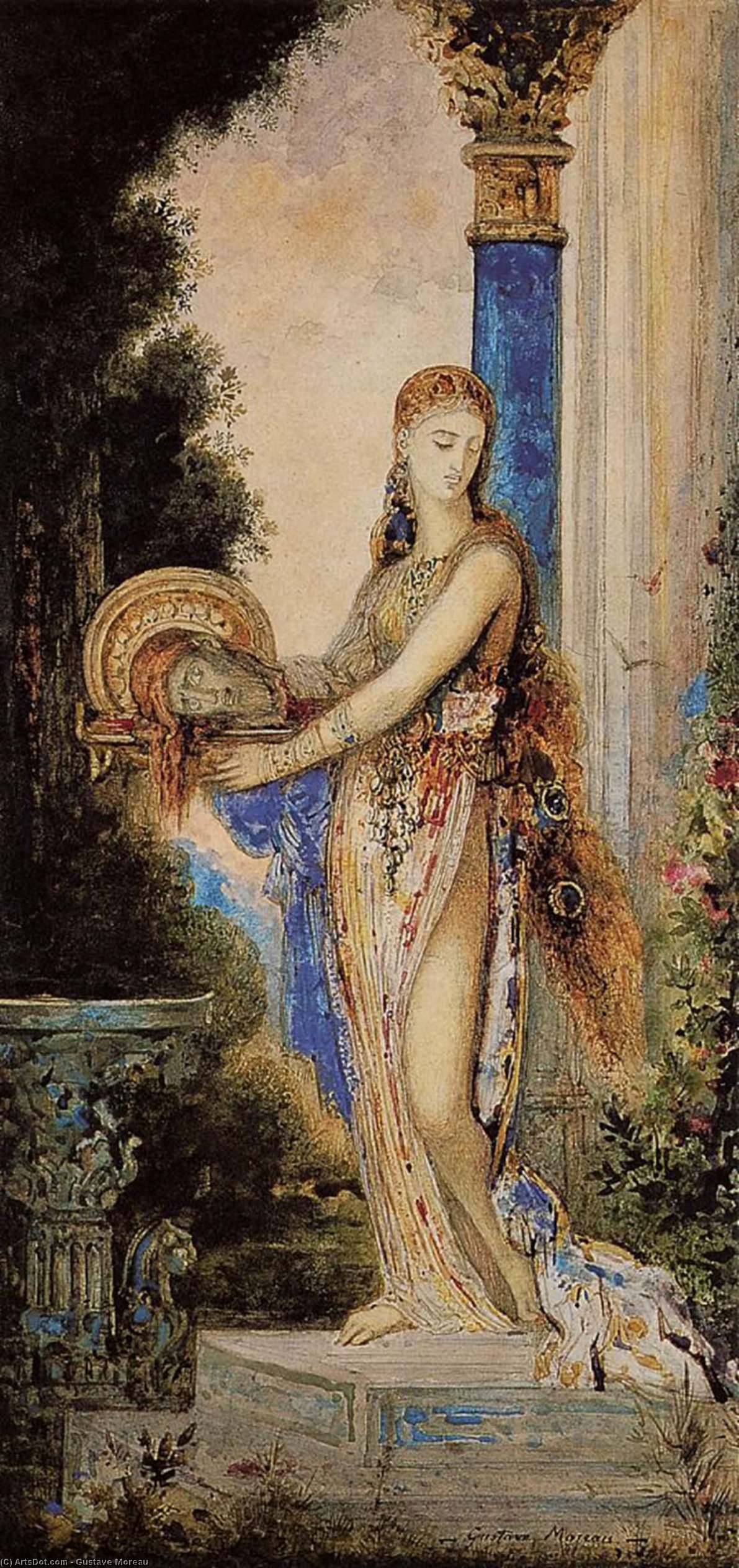
Gustave Moreau's “Salome with Column,” painted in 1890, stands as a cornerstone of Symbolist art—a testament to his unwavering commitment to exploring the depths of human psychology and channeling spiritual contemplation into visual form. More than just a depiction of biblical legend, this watercolor masterpiece is an immersive experience for the viewer, inviting them into a dreamlike realm populated by potent symbols and imbued with palpable emotion. Moreau’s artistic vision wasn't rooted in capturing observable reality; rather, he sought to distill the essence of feeling and belief onto canvas, forging a path distinct from his contemporaries who championed Impressionism’s fleeting impressions of light and color.
The Artist’s Approach: Symbolist Technique
Moreau’s distinctive style is immediately recognizable through his masterful use of watercolor—a medium that lends itself exquisitely to conveying atmosphere and luminescence. Unlike the crispness of oil paints, watercolor allows for subtle gradations of tone and texture, mirroring the hazy contours of memory and imagination. Moreau meticulously layered washes of color upon washes, creating an ethereal surface that captures the elusive beauty of mythic narratives. His technique prioritized mood and suggestion over precise detail, prioritizing emotional resonance above photographic accuracy—a deliberate rejection of the prevailing artistic trends of his era. The artist’s painstaking attention to texture contributes significantly to the painting's overall impact, simulating the velvety sheen of skin and drapery, furthering the sense of opulent grandeur.
A Mythological Landscape: Context and Narrative
Created during the height of Symbolist fervor—a movement that flourished in Paris between 1890 and 1905—Salome with Column resides firmly within a broader intellectual landscape preoccupied with Jungian archetypes and esoteric philosophies. Moreau drew inspiration from classical mythology, specifically the story of Salome and Herodias, reimagining it as an allegory for confronting primal instincts and achieving spiritual transcendence. The column itself serves as a powerful visual motif—representing stability amidst chaos, tradition against barbarism, and perhaps even the divine presence overseeing human drama. Its stark verticality contrasts sharply with the flowing curves of Salome’s dress and hair, emphasizing the tension between feminine allure and masculine authority.
Decoding the Symbols: Birds, Vase, Handbag
The painting is replete with symbolic elements that invite contemplation and interpretation. The birds perched atop the column—positioned strategically in the upper right and left corners—are frequently associated with freedom and aspiration, symbolizing Salome’s yearning for liberation from societal constraints. Conversely, the vase positioned on the left side embodies beauty and fragility—a poignant reminder of mortality and the ephemeral nature of earthly pleasures. Furthermore, the handbag held by Salome speaks to materialism and worldly desires—suggesting a critique of bourgeois values and an insistence on confronting inner demons. Each element contributes to the painting’s overarching narrative, reinforcing its exploration of psychological complexities.
Emotional Resonance: The Painting's Legacy
Moreau’s “Salome with Column” transcends mere visual representation; it aspires to evoke profound emotional responses in the viewer. Its haunting beauty and enigmatic atmosphere linger long after initial observation—capturing the unsettling allure of forbidden desire and the inescapable confrontation with existential anxieties. This artwork continues to inspire artists and designers alike, demonstrating the enduring power of Symbolist art to communicate universal themes of spirituality, psychology, and artistic innovation. A reproduction of this captivating piece offers a glimpse into Moreau’s visionary genius and invites viewers to embark on their own journey of imaginative discovery.