A Haunting Stillness: Decoding Moreau’s *Salome with the Head of John the Baptist*
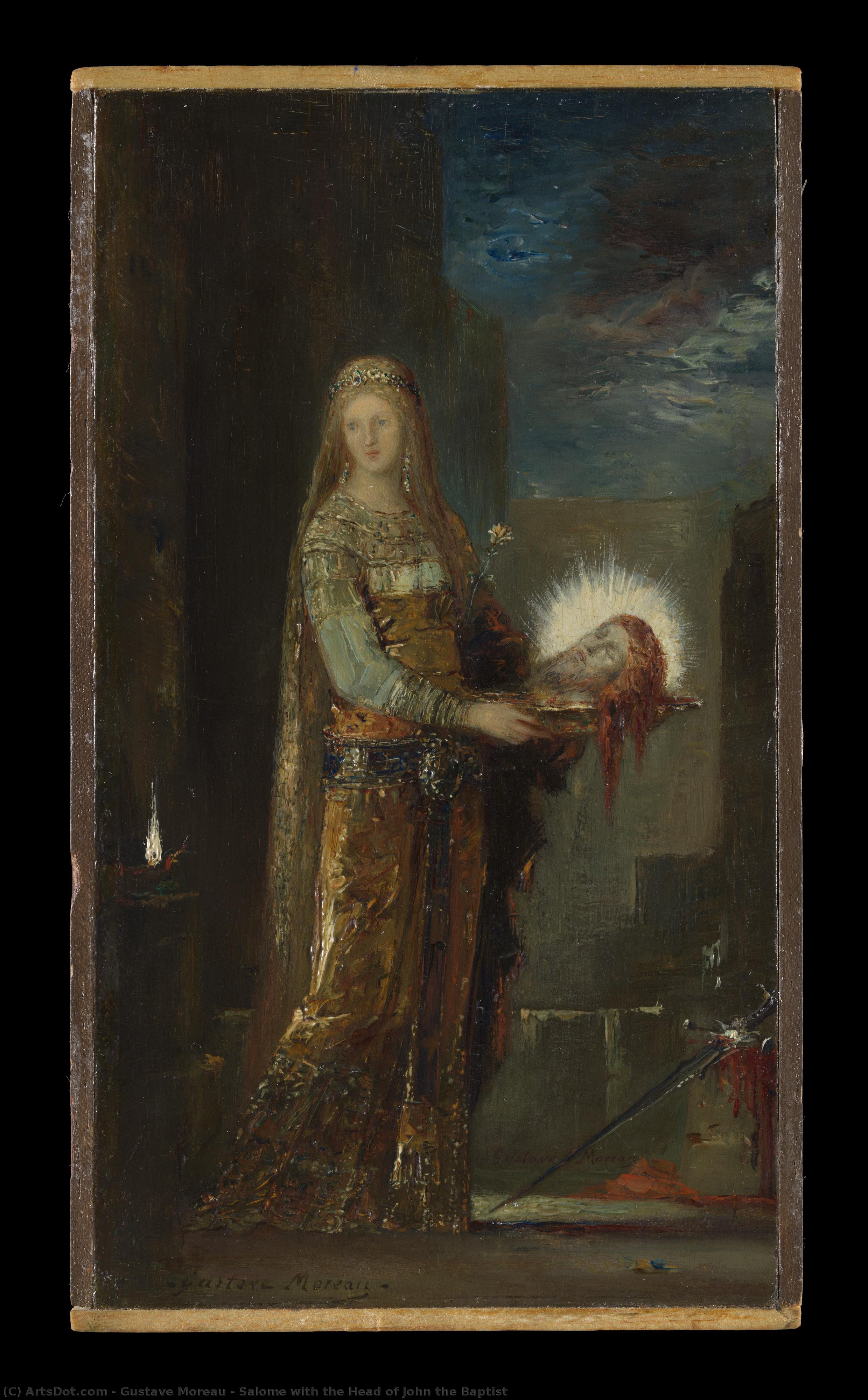
Gustave Moreau's 1876 oil painting, *Salome with the Head of John the Baptist*, is not a spectacle of triumph or gruesome display, but rather an intimate and unsettling exploration of psychological space. Measuring just 22 x 12 cm and executed on wood, this diminutive canvas holds immense power, currently captivating viewers at The Metropolitan Museum of Art in New York. Moreau doesn’t present us with the act itself, nor Salome reveling in her victory; instead, he offers a moment suspended in time – a chilling stillness that invites contemplation rather than shock. The painting transcends a simple biblical narrative, becoming a profound meditation on desire, regret, and the complexities of human morality within the burgeoning Symbolist aesthetic.
Symbolism Woven into Every Detail
Moreau was a master weaver of symbolism, and this work is rich with layered meanings. Salome herself, adorned with a crown and cascading hair, embodies both regal beauty and dangerous allure – a captivating yet unsettling presence. Her detachment from the severed head is key; she doesn’t gaze upon it with pride or malice, but rather stretches away, lost in her own thoughts. This distance immediately complicates our understanding of her motivations. The head of John the Baptist, bathed in an ethereal glow, isn't merely a trophy of vengeance, but a symbol of sanctity and martyrdom, elevating the scene beyond mere brutality. A silent witness to the act, a sword looms on the wall, a stark reminder of the violence that has transpired. Even the turbulent sky swirling in the background contributes to the painting’s emotional weight, evoking a sense of foreboding and unrest. These elements aren't simply decorative; they are integral to unlocking the painting’s deeper psychological resonance.
The Birth of Symbolism and Moreau’s Artistic Vision
Created during the *fin de siècle*, a period marked by religious questioning, artistic experimentation, and a fascination with decadence, *Salome with the Head of John the Baptist* perfectly encapsulates the spirit of its time. Moreau was at the forefront of the Symbolist movement, which rejected Realism’s objective representation in favor of expressing ideas and emotions through symbolic imagery. His technique is characterized by meticulous detail, a vibrant color palette, and an almost dreamlike quality achieved through layered brushstrokes that create rich textures and jewel-toned effects. The influence of Orientalism – prevalent throughout 19th-century art – is evident in the decorative elements and exotic atmosphere, adding to the painting’s otherworldly feel. Moreau's sustained engagement with the Salome myth—he revisited the story numerous times throughout his career—demonstrates its profound importance to his artistic exploration.
A Lasting Legacy: Influence and Emotional Resonance
Moreau’s work profoundly impacted subsequent generations of artists, including luminaries like Henri Matisse and Odilon Redon. His ability to blend mythological narratives with psychological depth paved the way for new forms of artistic expression, influencing the development of modern art. But beyond its historical significance, *Salome with the Head of John the Baptist* continues to resonate with viewers today because it refuses easy answers. It’s a painting that demands contemplation, forcing us to grapple with uncomfortable questions about morality, desire, and the darker aspects of the human psyche. The unsettling stillness, combined with the radiant depiction of death, creates an atmosphere of unease and ambiguity. This is not merely a historical or religious scene; it's a hauntingly beautiful meditation on the complexities of being human—a testament to Moreau’s genius in transforming a violent biblical tale into a work of enduring emotional power.