Explore the captivating Symbolist art of Gustave Moreau (1826-1898), famed for mythological & biblical paintings like 'Salome'. Influenced Matisse & Rouault. Discover his dreamlike world!
Discover Gustave Moreau's enchanting Symbolist world in Paris! Explore over 1200 paintings & drawings within his preserved studio-home, filled with mythological and biblical art. A unique artistic experience awaits!
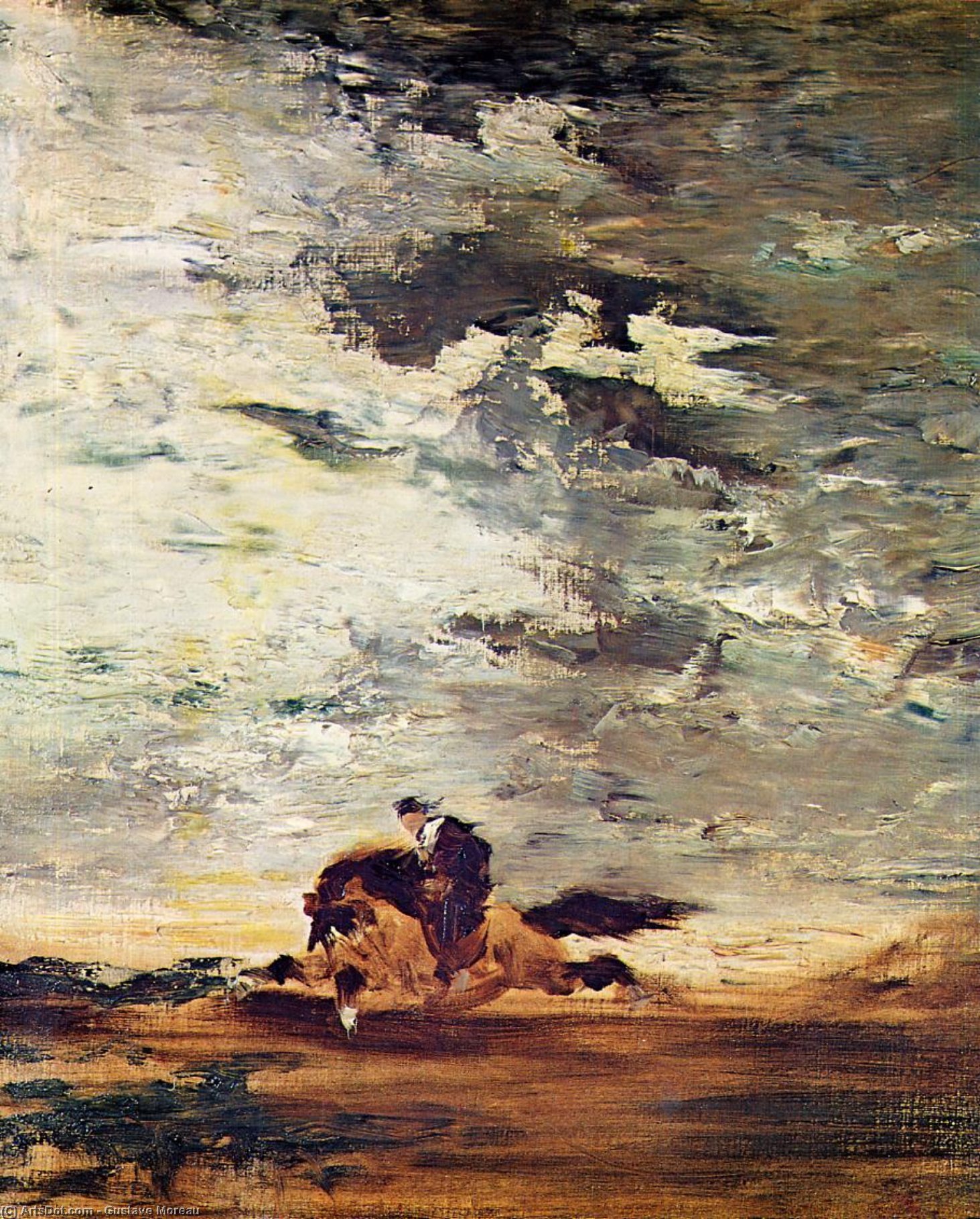
A Vision of Tranquility: Gustave Moreau’s Scottish Horseman
Moreau's Scottish Horseman, completed in 1854, stands as a cornerstone of Symbolist art—a movement dedicated to exploring the subconscious and conveying profound emotional truths through evocative imagery rather than literal representation. Housed within the Musée Gustave Moreau in Paris, this oil on canvas painting transcends mere depiction; it invites contemplation and rewards repeated viewing with layers of meaning rooted in mythology and psychological depth.
The Artist's Vision: Moreau’s Symbolist Influence
Gustave Moreau (1826-1898) rejected the dominant artistic trends of his era, prioritizing a deeply personal aesthetic driven by spiritual inquiry. Influenced profoundly by his studies in Italy—particularly the works of Raphael and Michelangelo—Moreau adopted a style characterized by meticulous detail combined with dreamlike atmosphere. He deliberately eschewed realism, opting instead for symbolic figures and landscapes that functioned as conduits to inner states of mind. This approach aligns perfectly with the Symbolist ethos, which sought to capture intangible emotions and ideas through carefully crafted visual metaphors.
Decoding the Imagery: Mythological Resonance
The painting’s composition immediately establishes a sense of solemn grandeur. A solitary horseman—his face averted from the viewer—dominates the scene, traversing a vast expanse of muted greens and browns. This deliberate obscurity contributes to the artwork's enigmatic quality, prompting viewers to consider themes of isolation and contemplation. Surrounding him are additional horses and birds, meticulously rendered with painstaking accuracy – elements imbued with symbolic significance. Horses traditionally represent nobility, strength, and spiritual aspiration, while birds often symbolize freedom and transcendence. The positioning of these figures reinforces the painting’s overarching message: a quest for inner peace amidst an expansive yet emotionally restrained landscape.
Technique and Texture: Mastering Oil Paint
Moreau's masterful technique exemplifies the meticulous craftsmanship demanded by Symbolist art. He employed oil paints with exceptional care, layering translucent glazes to achieve remarkable luminosity and depth—a hallmark of his style. The textured surface of the canvas captures subtle nuances of light and shadow, enhancing the painting’s ethereal appearance. Notice how Moreau skillfully blends colors to create a harmonious palette that evokes feelings of serenity and melancholy simultaneously. This deliberate textural richness underscores the artist's commitment to conveying emotion beyond mere visual representation.
A Legacy Enduring Inspiration
Scottish Horseman continues to captivate audiences today, serving as an enduring testament to Gustave Moreau’s artistic genius. Its haunting beauty—combined with its profound symbolic content—resonates powerfully within the context of Symbolist art and inspires collectors and interior designers alike. Explore more of Moreau's captivating oeuvre at ArtsDot.com and immerse yourself in the evocative world of Symbolism.