Explore the captivating Symbolist art of Gustave Moreau (1826-1898), famed for mythological & biblical paintings like 'Salome'. Influenced Matisse & Rouault. Discover his dreamlike world!
A Vision of Resurrection: Gustave Moreau’s ‘The Apparition’
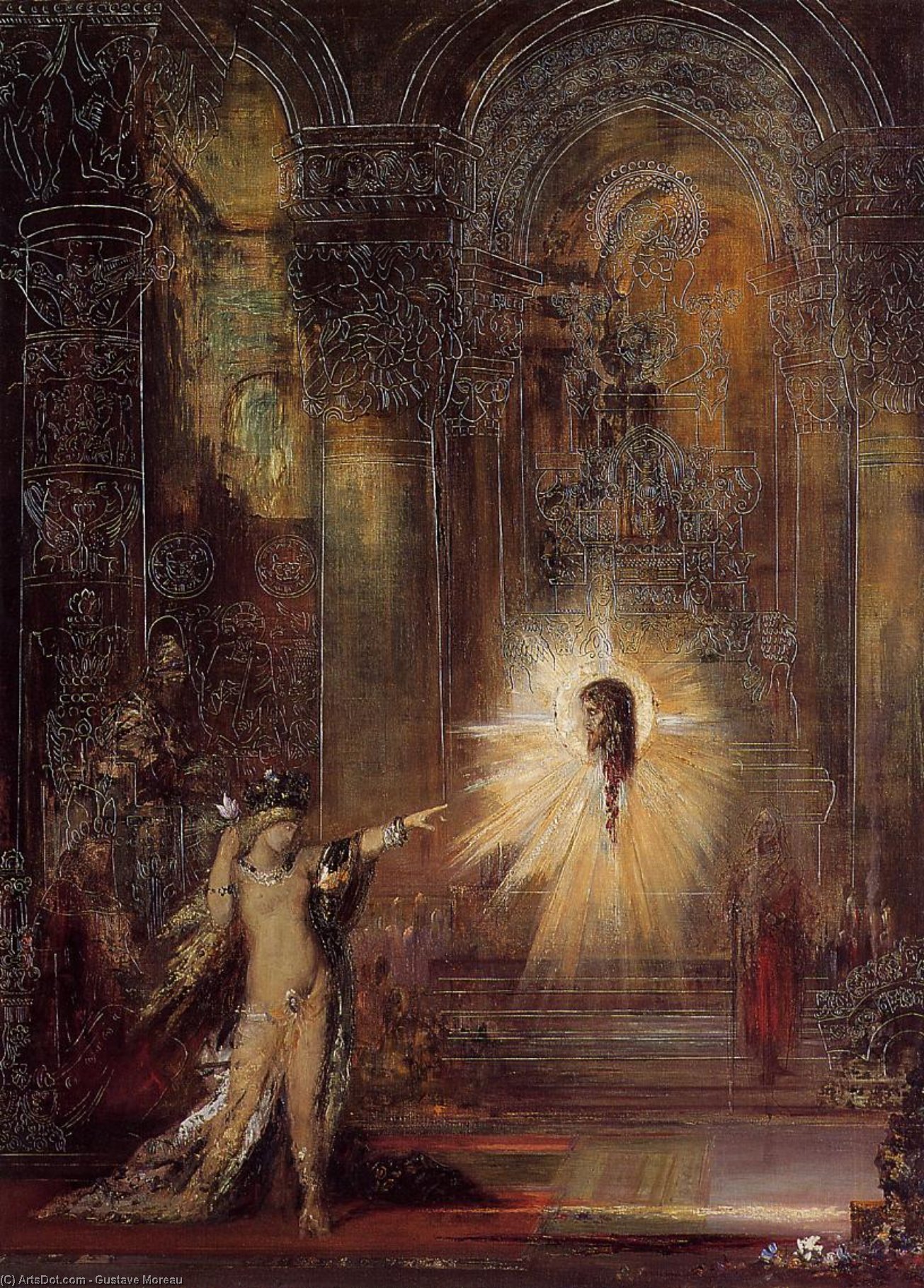
Gustave Moreau's “The Apparition” (1876) stands as a cornerstone of Symbolist painting, embodying the movement’s preoccupation with dreamlike visions and psychological exploration. Painted in watercolor on ivory paper, this monumental artwork transcends mere representation; it strives to evoke an emotional response rooted in mythic narratives and spiritual contemplation—a testament to Moreau's singular artistic vision. The Musée Gustave Moreau in Paris houses a remarkable collection of his works, offering visitors the opportunity to immerse themselves in the artist’s immersive studio-home environment where over 1200 paintings and drawings await discovery.
Subject Matter and Narrative Depth
At its core, “The Apparition” depicts Salome’s hallucinatory experience following Jesus Christ's crucifixion. Moreau meticulously renders Salome’s tormented gaze upward toward the tomb—a focal point of radiant light emanating from within—representing a profound yearning for divine grace and resurrection. The scene unfolds against a backdrop of an opulent architectural structure, reminiscent of Byzantine churches, deliberately chosen to amplify the grandeur and solemnity of the biblical tale. This architectural element isn't merely decorative; it serves as a conduit for conveying spiritual aspiration and reinforcing the narrative’s central theme.
Symbolism: Layers of Meaning
Moreau’s masterful use of symbolism permeates every aspect of “The Apparition.” Angels flanking Jesus—one positioned to the left, the other to the right—represent divine guardianship and offer solace amidst despair. The three figures positioned behind Jesus symbolize faith, hope, and charity – virtues essential for achieving spiritual enlightenment. Furthermore, Salome’s posture embodies vulnerability and supplication, mirroring humanity's inherent desire for redemption. Moreau skillfully employs color palettes dominated by muted blues and golds to create an atmosphere of ethereal beauty and solemn reverence—colors traditionally associated with spirituality and transcendence.
Technique and Artistic Impression
Moreau’s technique is characterized by painstaking detail and a deliberate blurring of boundaries between reality and imagination. Watercolor, chosen for its luminosity and ability to achieve subtle tonal variations, allows Moreau to capture the elusive quality of dreamlike visions. The artist employs glazing techniques—applying thin layers of translucent pigment over previous coats—to build up depth and richness of color, resulting in an image that glows with inner radiance. This meticulous approach reflects Moreau’s commitment to conveying not just what he sees but also how he feels—a hallmark of Symbolist aesthetics.
Historical Context and Artistic Legacy
“The Apparition” emerged during a period of significant intellectual ferment within Europe, coinciding with the rise of Nietzschean philosophy and Freud's psychoanalytic theories. Moreau’s work aligns seamlessly with these developments, reflecting a broader interest in exploring the subconscious mind and confronting existential anxieties. Unlike Impressionists who sought to capture fleeting sensory impressions, Moreau aimed to distill profound spiritual truths into visual form—a bold departure from prevailing artistic conventions. Today, reproductions of “The Apparition” continue to inspire artists and collectors alike, cementing Moreau’s place as a visionary pioneer of Symbolist art and ensuring his masterpiece retains its enduring power to captivate audiences worldwide.