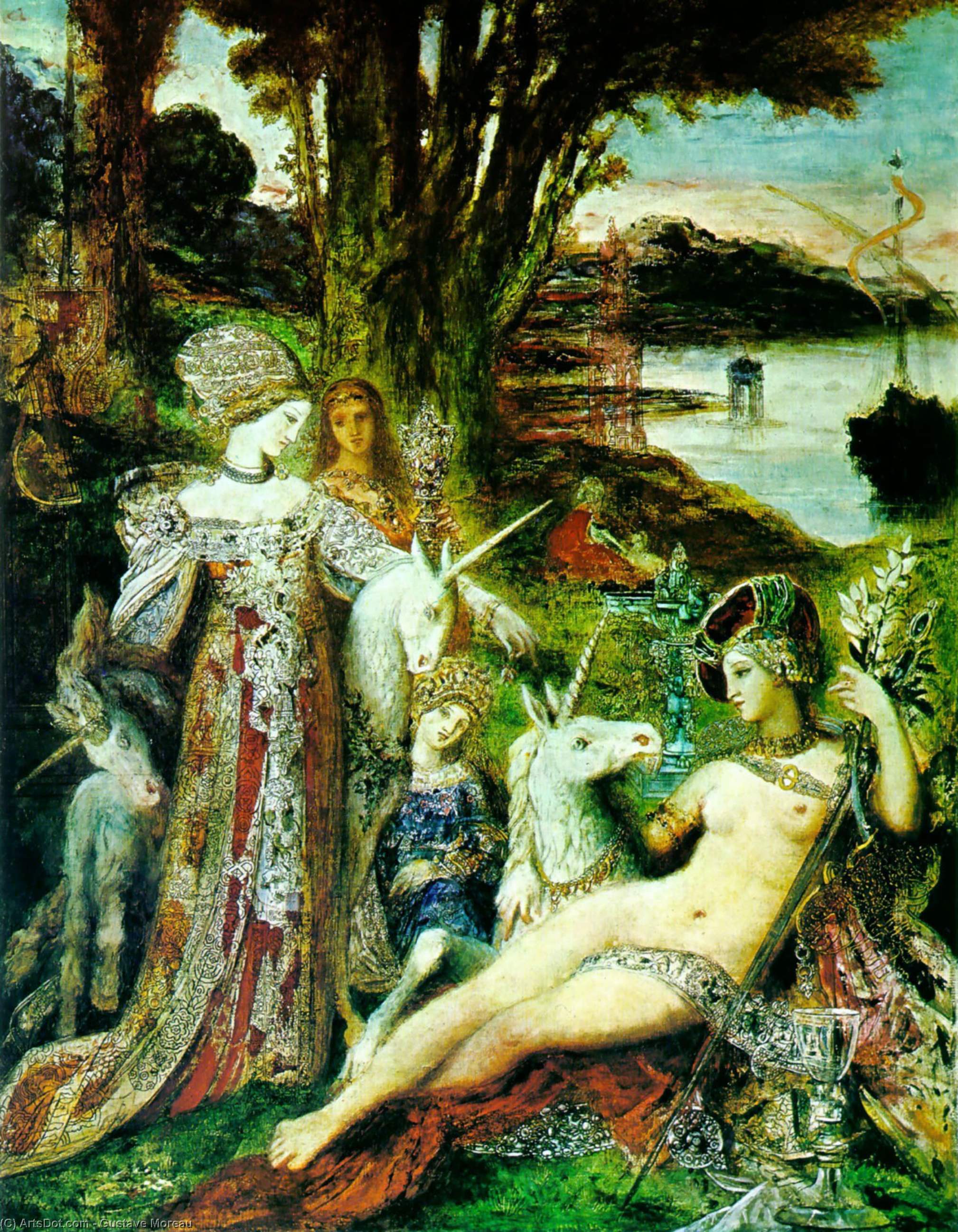
Gustave Moreau’s ‘The Unicorns’ captures a vibrant Symbolist scene with figures and fantastical creatures amidst boats, reflecting the artist's dreamlike style and exploring themes of myth and psychology. Discover this captivating artwork and bring its beauty into your space.
A Vision of Mythic Ecstasy: Exploring Gustave Moreau’s “The Unicorns”
Gustave Moreau's "The Unicorns," a captivating tableau brimming with enigmatic figures and fantastical creatures, stands as a quintessential example of the Symbolist movement’s fascination with dreams, mythology, and the depths of human emotion. Painted during his prolific career (1826-1898), this work embodies Moreau’s unique artistic vision – one that deliberately eschewed the objective realism favored by contemporary movements in favor of constructing intensely personal narratives imbued with symbolic weight. The painting immediately draws the viewer into a vibrant, almost hallucinatory scene, populated by individuals engaged in a multitude of activities around a central female figure, all underscored by the presence of two majestic unicorns.
- Subject Matter and Composition: The core subject is a woman seated on the ground, her posture suggestive of both vulnerability and power. Her attire – a dress worn over her upper body – adds to the painting’s layered symbolism, hinting at modesty alongside an underlying sense of exposure. Surrounding her are various figures, some actively participating in the scene, others observing with apparent detachment. The placement of the two unicorns, one on either side, elevates the entire composition into a realm of mythic significance.
- Technique and Style: Moreau’s meticulous brushwork is immediately apparent, creating a surface texture that is both richly detailed and subtly luminous. He employed a technique characterized by dense layering of color – a hallmark of Symbolist painting – to build up form and atmosphere. The use of iridescent pigments and glazes contributes to the painting's otherworldly quality, enhancing the sense of dreamlike illusion.
The Symbolist Context: A Journey into the Unconscious
Moreau’s work emerged during a period of profound intellectual and artistic ferment in Paris. The Symbolists, reacting against the perceived materialism and scientific rationalism of the 19th century, sought to tap into deeper realms of human experience – the subconscious, spirituality, and the power of imagination. Influenced by writers like Baudelaire and Verlaine, Moreau aimed to translate subjective emotions and spiritual yearnings into visual form. “The Unicorns” reflects this broader Symbolist preoccupation with archetypal imagery and the exploration of the human psyche. The unicorn itself, a creature steeped in medieval legend and Christian symbolism (representing purity, grace, and Christ), becomes a potent emblem within Moreau’s narrative.
- Mythological Allusions: The presence of the unicorns immediately evokes ancient myths and legends, particularly those associated with Celtic and Germanic folklore. These creatures were often seen as symbols of divine power and fertility, adding another layer of meaning to the scene.
- Color and Atmosphere: Moreau’s masterful use of color – rich reds, blues, and golds – contributes significantly to the painting's evocative atmosphere. The colors are not merely descriptive; they are emotionally charged, reflecting the underlying mood of mystery and enchantment.
Emotional Resonance and Lasting Impact
"The Unicorns" is more than just a visually arresting image; it’s an invitation to contemplate profound questions about human nature, spirituality, and the relationship between reality and illusion. Moreau's ability to evoke a sense of both wonder and melancholy resonates deeply with viewers, tapping into our own subconscious desires for transcendence and connection. This painting exemplifies Moreau’s legacy as a “Dream Weaver of Symbolism,” solidifying his place as one of the most important figures in late 19th-century art. A hand-painted reproduction offers an unparalleled opportunity to experience the full impact of this extraordinary work, bringing its captivating beauty and symbolic depth into your home or studio.