Explore the captivating Symbolist art of Gustave Moreau (1826-1898), famed for mythological & biblical paintings like 'Salome'. Influenced Matisse & Rouault. Discover his dreamlike world!
Discover Gustave Moreau's enchanting Symbolist world in Paris! Explore over 1200 paintings & drawings within his preserved studio-home, filled with mythological and biblical art. A unique artistic experience awaits!
A Vision of Contrasts: Gustave Moreau’s “The Wicked Rich and the Poor Lazarus”
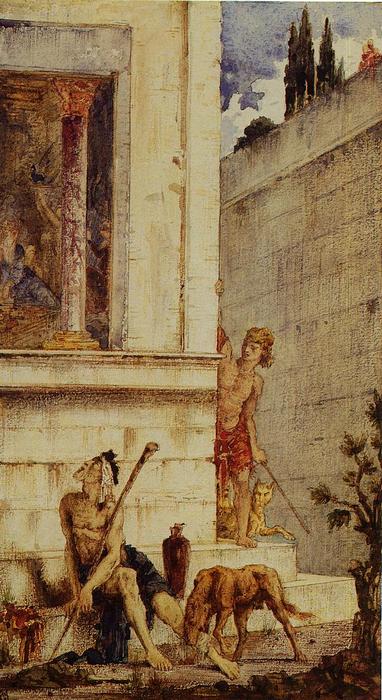
Moreau's "The Wicked Rich and the Poor Lazarus," painted in 1878, isn’t merely a depiction of two figures; it’s an immersion into the heart of Symbolist philosophy—a deliberate rejection of observable reality in favor of exploring inner landscapes and conveying profound spiritual truths. Created during a period marked by intellectual ferment and artistic experimentation, this watercolor captures Moreau's signature style: a haunting blend of meticulous detail and dreamlike abstraction that invites contemplation rather than simple observation. The painting resides within the Musée Gustave Moreau in Paris, ensuring its preservation as a cornerstone of Symbolist art history.
Subject Matter and Composition
The scene unfolds on steps—a deliberate architectural choice that symbolizes ascension and descent—featuring two men positioned against a backdrop teeming with activity. One figure embodies wealth and authority, clutching a stick – a tool for dominion and control – while the other holds a bowl offering sustenance; this juxtaposition immediately establishes the central thematic conflict: the disparity between opulent privilege and desperate poverty. Scattered individuals populate the background, engaged in conversations that seem to fade into obscurity, mirroring the elusive nature of human experience itself. Notably, a bottle sits prominently on one side, hinting at an outdoor setting—a subtle suggestion of vulnerability against the elements.
Technique and Artistic Style
Moreau’s masterful use of watercolor is paramount to conveying the painting's ethereal quality. Unlike Impressionists who sought to capture fleeting light effects, Moreau prioritized layering translucent washes of pigment to build up textures and create an atmosphere imbued with symbolic resonance. The artist meticulously rendered intricate details—the folds of clothing, the expressions on faces—yet simultaneously employed blurring techniques to soften contours and evoke a sense of otherworldly beauty. This deliberate ambiguity aligns perfectly with Symbolist principles, prioritizing emotion and suggestion over literal representation.
Symbolism: Mythic Echoes and Moral Reflection
“The Wicked Rich and the Poor Lazarus” draws heavily upon biblical imagery – referencing the parable of Jesus feeding the hungry—but Moreau transcends mere narrative illustration. The dog between the men serves as a potent symbol of loyalty and guardianship, perhaps representing divine compassion amidst human failings. More broadly, the painting speaks to themes of social justice and moral responsibility. It compels viewers to confront uncomfortable truths about inequality and to consider the ethical implications of power dynamics. Like many Symbolist artworks, it operates on multiple levels—intellectual, emotional, and spiritual—challenging audiences to engage in a deeper understanding of human condition.
Connections to Moreau’s Oeuvre and Beyond
Gustave Moreau's artistic vision extended far beyond this singular masterpiece. Works such as “Dalila Venice Evening Voices” and “Messalina” demonstrate his unwavering commitment to exploring psychological complexities and delving into mythological narratives. These paintings share a similar preoccupation with symbolism and emotional intensity, cementing Moreau’s legacy as one of the foremost practitioners of Symbolist art. To appreciate the full scope of Moreau's artistic achievement, visiting the Musée Gustave Moreau is indispensable—a journey into a world where beauty resides not in surface appearances but in profound inner truths. At ArtsDot.com, you can acquire exceptional reproductions of Moreau’s paintings, bringing his visionary aesthetic into your home or studio.