A Vision of Myth and Sorrow: The Ethereal World of Gustave Moreau
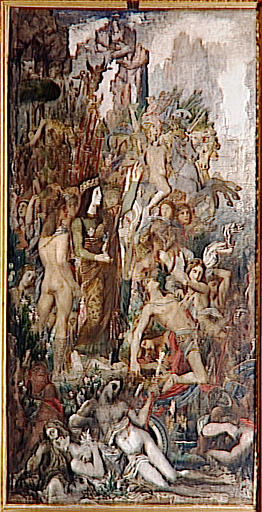
To gaze upon Gustave Moreau’s “Tyrtée chantant pendant le combat” is to step through a portal, leaving the tangible streets of nineteenth-century Paris behind for a realm where the boundaries between reality and dream dissolve into a haze of gold, myth, and mystery. Painted between 1879 and 1880, this monumental canvas serves as a cornerstone of the Symbolist movement, transporting viewers into a psychological landscape rooted in profound emotional response rather than mere literal depiction. The work captures a poignant moment from Virgil’s A and Aeneid—the heroic warrior Tyrtée singing amidst the violent tumult of battle. Yet, Moreau transcends the historical narrative, utilizing the scene to explore the tension between martial struggle and the transcendent power of artistic expression.
The painting’s composition is a masterful tapestry of movement and interaction. While the eye may initially be drawn to the chaotic energy of the conflict, the lower half of the canvas reveals a complex arrangement of figures; naked bodies are scattered throughout the scene, some standing in defiance, others reclining in states of repose or exhaustion. This juxtaposition of clothed and unclothed figures, of stillness and strife, creates a rhythmic vitality that suggests a larger, cosmic struggle. For the discerning collector or interior designer, this piece offers an unparalleled depth, acting as a focal point that commands attention through its sheer narrative complexity and atmospheric weight.
Technique and the Luminescent Dreamscape
Moreau’s technical prowess is central to the painting's otherworldly allure. Eschewing the fleeting light of his Impressionist contemporaries, Moreau employed a meticulous technique involving tempera on canvas, layering pigments to achieve a remarkable depth and textural richness. This method allows for an extraordinary luminescence, as if the light itself were emanating from within the figures rather than reflecting off them. His style is characterized by this very contradiction: a rigorous academic precision in detail combined with a visionary, almost hallucinatory aesthetic.
Every brushstroke contributes to a sense of "symbolist polyvalence," where the surface of the painting feels encrusted with precious jewels and esoteric secrets. This layering creates a tactile quality that makes a high-quality reproduction feel less like a mere copy and more like a window into another dimension. The interplay of light and shadow—the chiaroscuro of the soul—invites the viewer to linger, searching for meaning within the intricate textures and the shimmering, jewel-toned palette that defines Moreau’s unique contribution to art history.
The Language of Symbols and Emotional Resonance
Beyond its visual splendor, “Tyrtée chantant pendant le combat” is a profound exploration of the subconscious. As a leader of the Symbolist movement, Moreau sought to access deeper truths through intuition and imagination, drawing heavily from folklore, mythology, and esoteric traditions. The painting is saturated with recurring motifs that elevate the work beyond storytelling into the realm of the spiritual. The presence of certain elements, such as the symbolic use of doves, serves to weave a complex web of meaning regarding peace, purity, and the enduring nature of the spirit amidst destruction.
For those seeking to infuse a space with intellectual and emotional gravity, this artwork provides a profound sense of introspection. It confronts existential anxieties and celebrates the resilience of the human voice against the backdrop of chaos. To possess a reproduction of such a masterpiece is to bring into one's environment a piece of history that speaks to the eternal struggle between the ephemeral nature of life and the immortality of art. It is an invitation to contemplate the shadows, to embrace the mystery, and to find beauty in the most turbulent of human experiences.