A Vision of Grace and Sacrifice: Unveiling Gustave Moreau’s “Untitled (6371)”
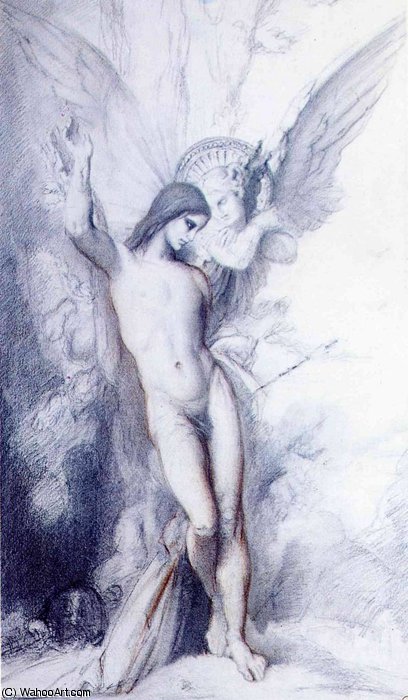
Gustave Moreau's "Untitled (6371)" is not merely a drawing; it’s a portal into a realm of mythic resonance, a carefully constructed dreamscape rendered in the somber tones of charcoal and graphite. Emerging from the heart of 19th-century Paris, Moreau was a pivotal figure in the Symbolist movement—an artist who deliberately rejected the pursuit of photographic realism in favor of exploring the hidden depths of human emotion and spiritual belief. This particular work, though untitled, pulsates with an intensity that speaks volumes about his artistic vision. The composition immediately draws the eye to a powerfully rendered angel, caught mid-flight, cradling a small child within his arms. The dynamism of the pose—a sense of urgent movement against a backdrop of quiet contemplation—suggests a narrative rich in sacrifice and protection, themes deeply ingrained in Moreau’s artistic practice.
Decoding the Symbolism: Myth, Religion, and the Human Psyche
Moreau's work is steeped in symbolism, drawing heavily from classical mythology, religious iconography, and the burgeoning field of psychology. The angel itself represents a potent archetype—a divine messenger, a guardian spirit, or perhaps even a Christ-like figure embodying selfless devotion. The child, vulnerable and innocent, symbolizes purity, innocence, and the future. Their intertwined forms evoke a profound sense of guardianship; the angel’s protective embrace suggests a willingness to endure hardship for the sake of safeguarding this precious life. The monochromatic palette—a deliberate choice by Moreau—amplifies the solemnity and spiritual weight of the scene, stripping away superficial distractions and focusing attention on the core emotional narrative. It's a visual language that speaks directly to the viewer’s subconscious, inviting contemplation on themes of faith, love, and mortality.
The Language of Line and Shadow: Moreau’s Technique
Examining the technique reveals much about Moreau’s artistic philosophy. The drawing is executed with a masterful command of line work—bold, expressive strokes define the muscular form of the angel, while delicate lines delineate the folds of his drapery, creating an illusion of texture and movement. Crucially, he employs a dramatic interplay of light and shadow, utilizing varying pressure to achieve a remarkable range of tonal values. Deep blacks plunge into areas of darkness, suggesting both mystery and profound emotion, while carefully rendered highlights illuminate key features—the angel’s face, the child's form—drawing the viewer’s eye and emphasizing their importance within the composition. The flattened perspective, prioritizing emotional impact over strict realism, is a hallmark of Symbolist art, creating an intimate and immersive experience for the observer. The texture itself, born from the deliberate application of charcoal and graphite, adds to the work's tactile quality, inviting viewers to almost feel the weight of the angel’s gesture.
A Window into a Dreamer’s Soul: Historical Context and Artistic Legacy
Gustave Moreau’s “Untitled (6371)” stands as a testament to his unique artistic vision, firmly rooted in the Symbolist movement of the late 19th century. Rejecting the prevailing Realism and Impressionism, Moreau sought to tap into the realm of dreams, myths, and the subconscious—a pursuit that profoundly influenced artists like Odilon Redon and Aubrey Beardsley. His work was often considered unconventional during his lifetime, yet it has since been recognized as a cornerstone of Symbolist art, celebrated for its evocative imagery, rich symbolism, and profound emotional depth. Reproductions of this piece offer a remarkable opportunity to bring Moreau’s intensely personal vision into any space, adding an element of mystery, reverence, and timeless beauty.