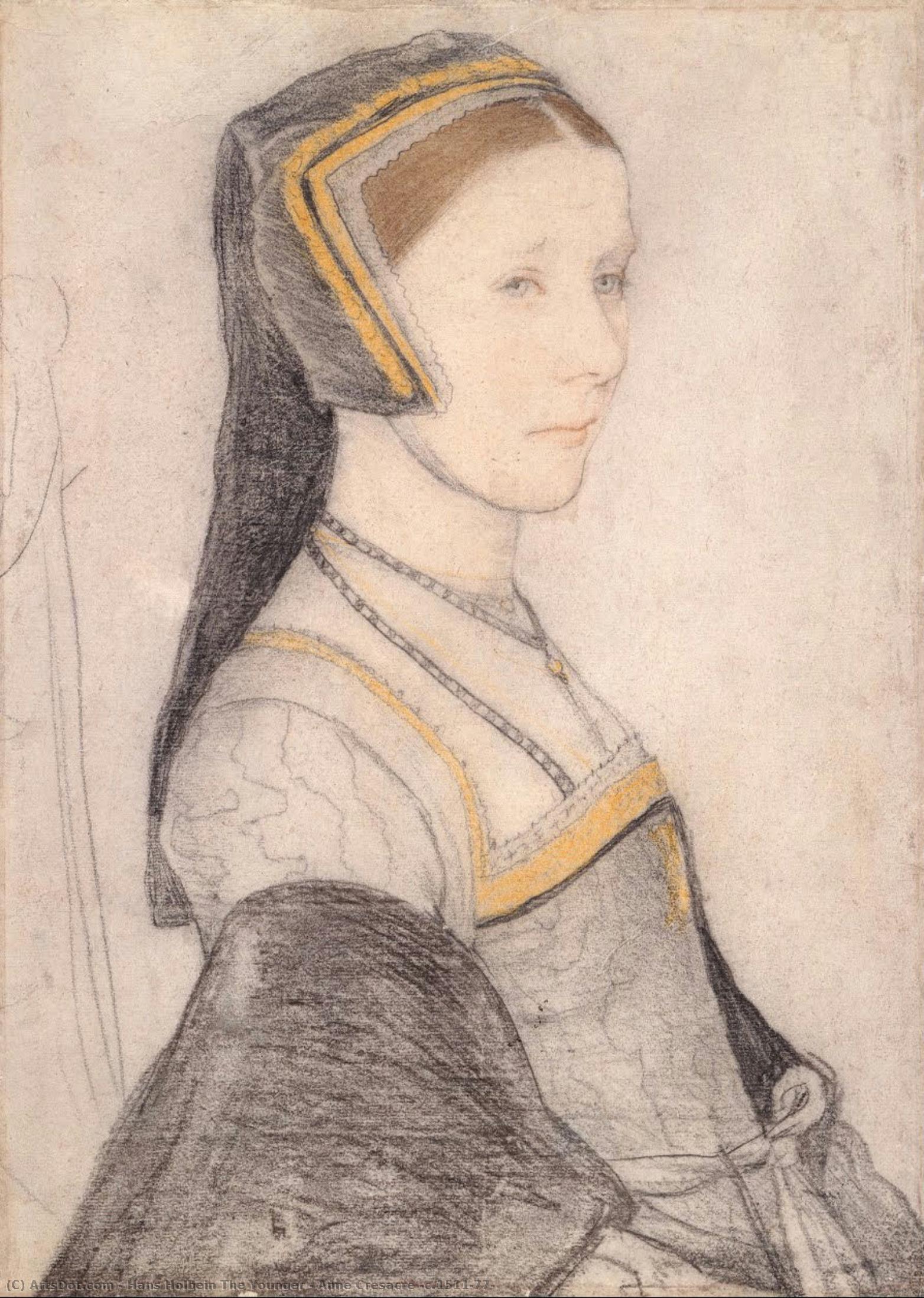
A Glimpse into Tudor Elegance: Hans Holbein the Younger’s Portrait of Anne Cresacre
This exquisite pencil and chalk drawing by Hans Holbein the Younger offers a captivating window into the world of 16th-century England. Completed in 1527, the portrait depicts Anne Cresacre (c.1511-77) with remarkable detail and sensitivity, embodying the refined aesthetic sensibilities of the Tudor court. Measuring 26 x 37 cm, this intimate portrayal showcases Holbein’s mastery of draftsmanship and his ability to capture not just a likeness, but also a sense of personality.
Subject & Historical Context
Anne Cresacre was a member of an influential Cheshire family, and her portrait provides valuable insight into the lives of women within the English aristocracy during the reign of Henry VIII. Holbein, having established himself as a sought-after artist in England, frequently depicted members of the royal circle and prominent families. This work likely served as either a preparatory study for a larger painting or a cherished personal possession – a testament to Anne’s status and beauty. The period was marked by political upheaval and religious change, yet Holbein's portraits often convey an air of stability and dignified composure, reflecting the aspirations of his sitters.
Style & Technique
Holbein’s style is characterized by
exceptional realism, a hallmark of the Northern Renaissance. He meticulously rendered textures and forms, achieving a lifelike quality that set him apart from many of his contemporaries. In this drawing, he skillfully employs pencil and chalk to create subtle gradations of tone and delicate shading. The use of hatching and cross-hatching builds volume in Anne’s clothing and hair, while the soft wash background focuses attention on her face and upper body. The composition is deliberately restrained, emphasizing a frontal view that allows for an intimate connection with the subject.
It's a testament to Holbein’s ability to convey depth and form through line and tone alone.
Symbolism & Details
While seemingly straightforward, the portrait is rich in subtle symbolism. Anne’s elaborate headdress and clothing were not merely fashionable statements; they served as indicators of her social standing and wealth. The intricate details – the folds of fabric, the sheen of her hair, the delicate features of her face – all contribute to a sense of refinement and elegance. The slightly averted gaze suggests a thoughtful nature, inviting viewers to contemplate her inner life.
Emotional Impact & Aesthetic Appeal
This portrait evokes a feeling of quiet dignity and restrained grace. Holbein’s sensitive rendering captures Anne Cresacre not as a distant figure of nobility, but as a real woman with intelligence and poise. The drawing's delicate beauty makes it an ideal piece for collectors seeking works of historical significance or interior designers aiming to add a touch of Renaissance elegance to their projects.
The subtle emotional resonance and technical brilliance ensure that this artwork continues to captivate audiences centuries after its creation.
Key Features at a Glance:
- Artist: Hans Holbein the Younger (1497-1543)
- Date: 1527
- Medium: Pencil and Chalk on Paper
- Dimensions: 26 x 37 cm
- Style: Northern Renaissance, Tudor Portraiture