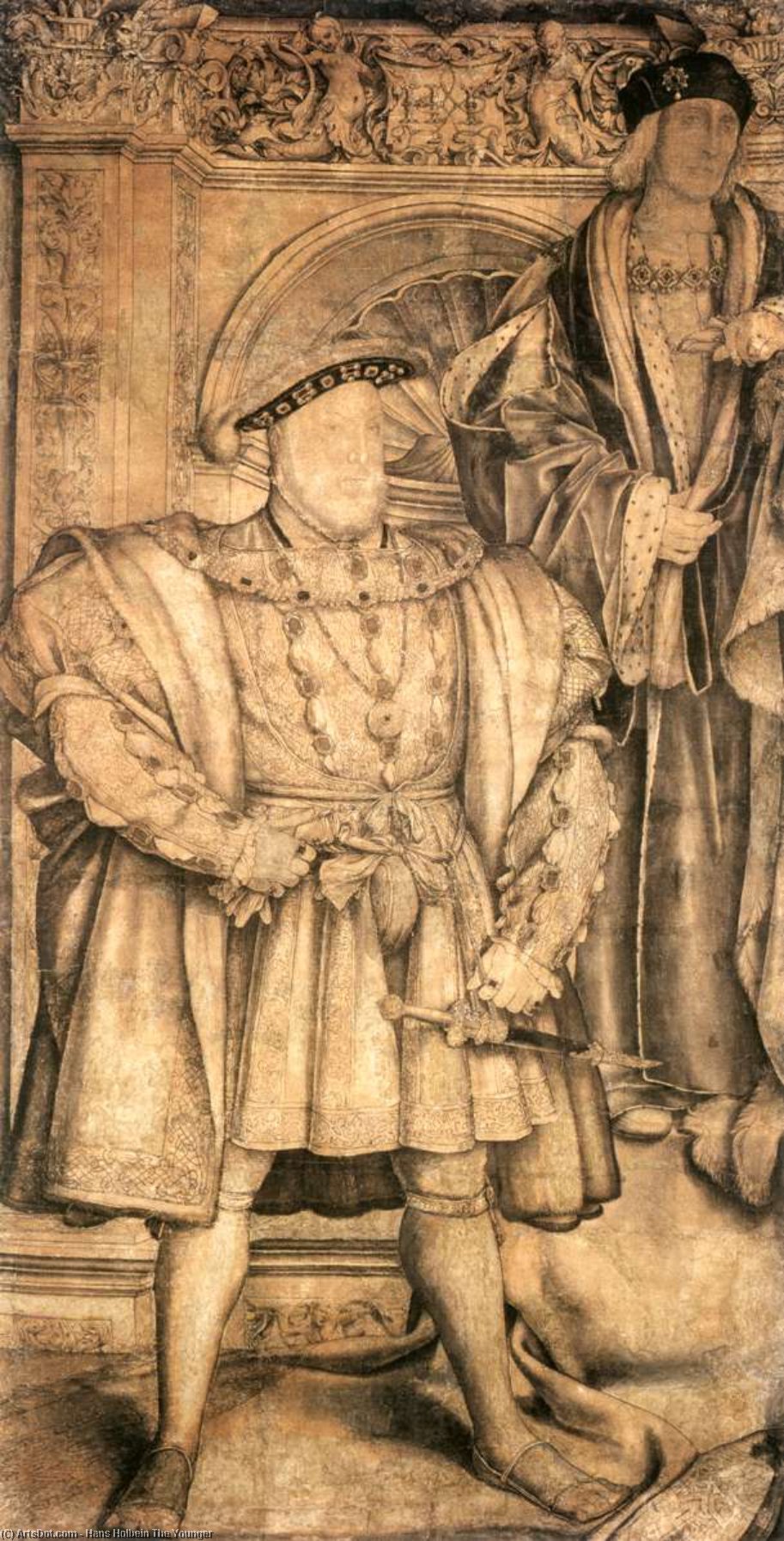
The Majesty of Henry VIII: A Portrait by Hans Holbein the Younger
Hans Holbein the Younger’s “Portrait of Henry VIII” stands as an unparalleled achievement in Tudor portraiture—a testament to both artistic skill and political ambition. Completed in 1537 during the tumultuous reign of England's King Henry VIII, this monumental painting transcends mere likeness; it embodies the very essence of royal authority and serves as a cornerstone of English art history.
- Subject Matter: The portrait depicts Henry VIII alongside his father, Henry VII, symbolizing dynastic continuity and reinforcing the Tudor claim to legitimacy.
- Style: Holbein’s masterful realism—characterized by meticulous detail and subtle shading—elevates the image beyond conventional depictions of monarchs. It exemplifies the Northern Renaissance style's focus on psychological depth and nuanced observation.
- Technique: Executed in ink drawing with extensive use of gold leaf, the painting demonstrates Holbein’s mastery of printmaking techniques and his ability to convey grandeur through opulent materials.
The composition itself is deliberately calculated to project power. Henry VIII dominates the frame, positioned centrally with a commanding gaze directed towards the viewer—a posture that conveys confidence and unwavering resolve. His stance mimics a warrior’s stance, emphasizing strength and dominance.
Historical Context:
Commissioned during Henry VIII's break from Rome and his assertion of papal supremacy, “Portrait of Henry VIII” functioned as potent propaganda—a visual declaration of royal sovereignty intended to inspire awe and solidify the Tudor dynasty’s position. The inclusion of Henry VII underscores the importance of lineage and tradition in legitimizing rule.
- Symbolism: Holbein employs symbolic gestures—such as Henry VIII's outstretched hand clutching a dagger—to convey notions of power, protection, and readiness for defense.
- Color Palette: The restrained palette—primarily black and white—contrasts sharply with the shimmering gold leaf, highlighting the wealth and prestige associated with the monarchy.
“Portrait of Henry VIII” continues to captivate audiences today due to its remarkable blend of artistic innovation and historical significance. Its enduring appeal lies in Holbein’s ability to capture not only Henry VIII's physical appearance but also his inner character—a feat that cements his place as one of the greatest portraitists of all time.
- Relevance Today: The painting remains a source of fascination for art historians and collectors alike, offering insights into Tudor culture and artistic sensibilities.
Reproductions of “Portrait of Henry VIII” adorn galleries worldwide—a testament to Holbein’s enduring legacy and the painting's timeless beauty.