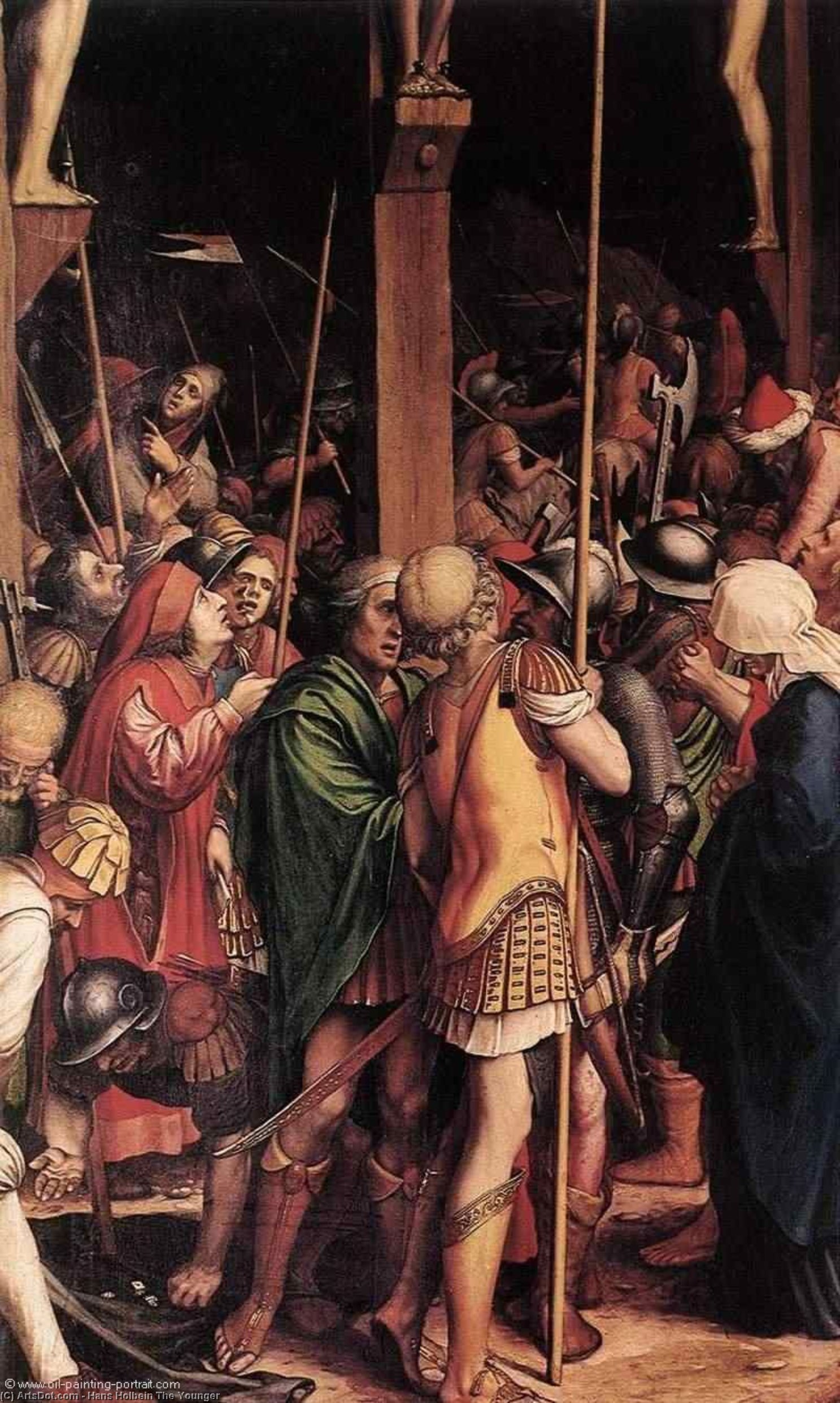
Explore Hans Holbein’s "Passion" – a dramatic Renaissance painting of Christ’s crucifixion. Witness intricate detail, powerful emotion & rich color in this iconic artwork.
Hans Holbein the Younger (1497-1543): Northern Renaissance master of realistic portraiture, famed for painting Tudor royalty like Henry VIII & intricate detail.
A Scene of Devotion and Anguish: Exploring Holbein’s *Passion* (Detail)
This compelling detail from Hans Holbein the Younger's monumental altarpiece, *The Passion*, offers a powerful glimpse into one of the most significant events in Christian history – the crucifixion of Christ. Created around 1525, this work exemplifies the Northern Renaissance’s meticulous realism and profound emotional depth. While only a fragment presented here, it encapsulates the drama and complexity inherent within the larger composition.
Style & Technique: Northern Renaissance Mastery
Holbein, celebrated as one of the greatest portraitists of his era, demonstrates an equally impressive skill in narrative painting with *The Passion*. The detail showcases his signature style – a remarkable commitment to realism. Notice the precise rendering of textures; from the rough weave of fabrics to the gleaming surfaces of armor. This is achieved through masterful oil painting techniques, employing layering and glazing to create depth and luminosity. The composition, even in this fragment, feels densely populated, typical of Northern Renaissance art, with figures tightly grouped within a relatively shallow pictorial space. Lines are predominantly straight and angular, defining forms with clarity and contributing to the overall sense of formality and gravity.
Subject & Historical Context
*The Passion* was commissioned during a period of religious upheaval – the early stages of the Reformation. Holbein navigated this turbulent era by serving both traditional Catholic patrons and those embracing reformist ideals. This detail depicts Roman soldiers observing the crucifixion, their expressions ranging from detached curiosity to subtle disbelief. The scene is not idealized; it’s presented with unflinching honesty, reflecting a shift towards more humanistic interpretations of religious narratives. Holbein's work stands apart from the Italian Renaissance emphasis on ideal beauty, instead focusing on detailed observation and psychological insight.
Symbolism & Emotional Impact
The symbolism within *The Passion* is rich and layered. The cross itself represents sacrifice and redemption, while the soldiers embody earthly power confronted with a spiritual event. The color palette – dominated by browns, ochres, and reds – evokes the materiality of the scene: earth, blood, and metal. These colors contribute to the somber mood and underscore the gravity of Christ’s suffering. The overall effect is one of solemnity and tragedy. Holbein doesn't shy away from depicting the harsh realities of crucifixion; instead, he invites viewers to contemplate the weight of religious significance and the profound emotional impact of this pivotal moment. The detail powerfully conveys a sense of immediacy, drawing the viewer into the heart of the scene.
For Collectors & Designers
A reproduction of this detail from *The Passion* would serve as a striking focal point in any collection or interior design scheme. Its rich textures and dramatic composition lend themselves well to both traditional and contemporary settings. The artwork’s historical significance and artistic merit make it a conversation starter, while its somber beauty adds depth and contemplation to any space. Consider pairing this detail with complementary colors – deep reds, muted golds, and earthy browns – to enhance its visual impact.