Portrait of a Member of the Wedigh Family – A Window into Renaissance Life
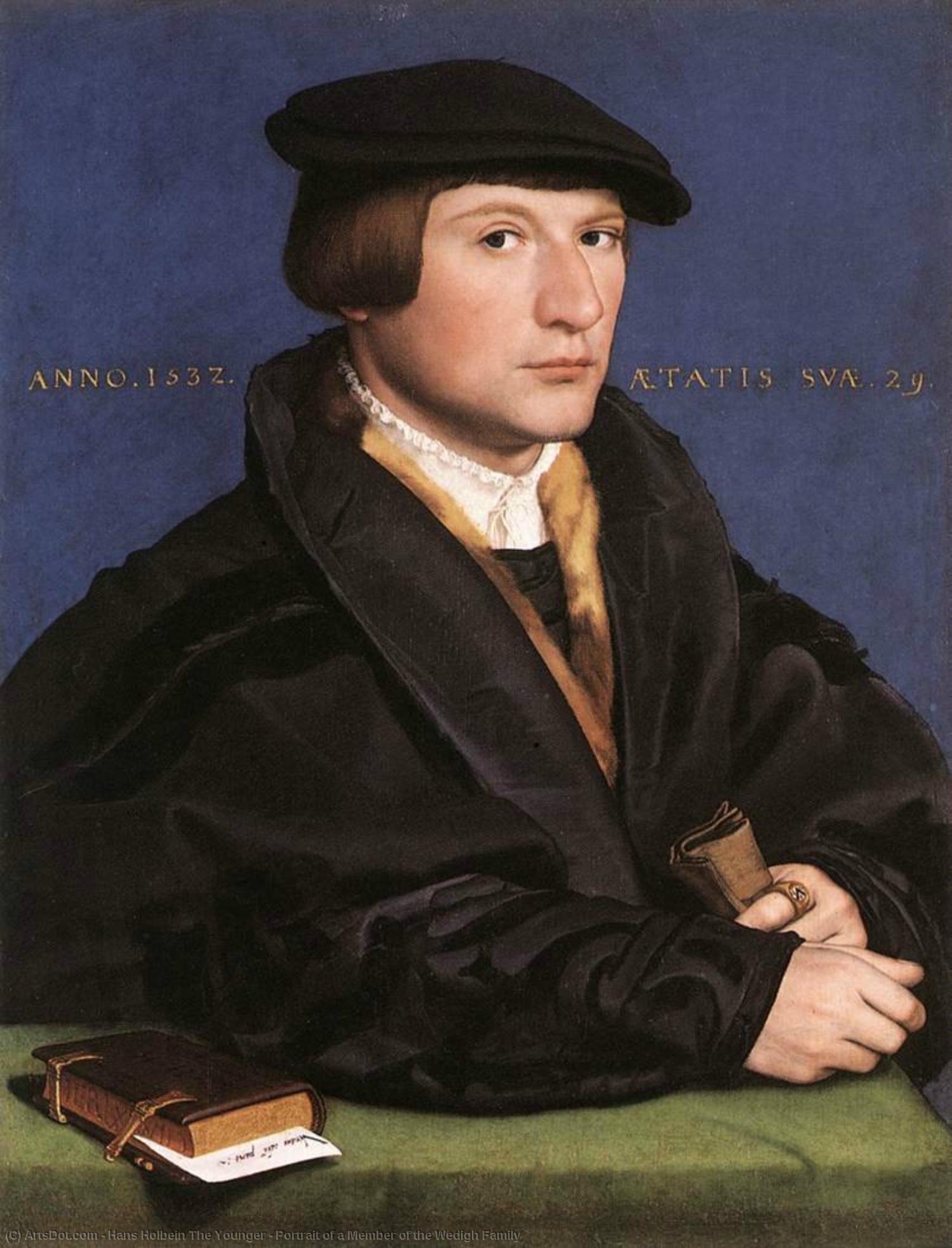
Hans Holbein the Younger’s “Portrait of a Member of the Wedigh Family,” painted in 1532, is more than just a likeness; it's a meticulously crafted snapshot of a man and his world. Housed within the hallowed halls of the Metropolitan Museum of Art in New York, this tempera painting on panel offers a rare glimpse into the refined courtly life of late 16th-century Europe – a period brimming with artistic innovation and burgeoning humanism. Measuring just 42 x 31 cm, its intimate scale belies the profound depth of observation and technical mastery contained within.
The subject himself is presented with an arresting directness. Dressed in a somber black robe accented by a vibrant yellow hood, he commands attention immediately. The careful rendering of his beard and mustache speaks to Holbein’s dedication to realism, a hallmark of the Northern Renaissance style that sought to capture the individual essence of each sitter. His seated posture, holding a book – a potent symbol of learning and status – invites us into his world, while the two additional books on the table subtly reinforce this intellectual aura. The composition is remarkably balanced, drawing our eye across the canvas with an almost hypnotic quality.
Holbein’s genius lies not merely in replicating appearances but in imbuing them with meaning. The painting exemplifies a fascinating synthesis of artistic influences – elements of late Gothic tradition intertwine seamlessly with the burgeoning Renaissance spirit, informed by Italian elegance, French sophistication, and the vibrant experimentation taking place in the Netherlands. This unique blend is particularly evident in the subtle details: the folds of the robe, meticulously rendered to suggest texture and movement; the precise shading that defines his features; and the overall sense of dignified composure. The painting’s palette – dominated by rich browns, deep blues, and vibrant yellows – contributes significantly to its visual impact, creating a harmonious and deeply engaging composition.
Beyond its aesthetic merits, “Portrait of a Member of the Wedigh Family” is profoundly rooted in historical context. Holbein's journey to England in 1526, facilitated by his reputation and recommendation from Erasmus, marked a pivotal moment in his career. He quickly established himself within Thomas More’s humanist circle, later becoming King’s Painter to Henry VIII – a position that afforded him unparalleled access to the royal court and its vibrant intellectual life. This portrait is therefore not simply a depiction of an individual; it's a window into the era of Henry VIII, a time of dramatic political and religious upheaval, and a period when England was rapidly embracing Renaissance ideals. The Wedigh family, likely merchants involved in international trade, represented a segment of this dynamic society – individuals who benefited from the burgeoning wealth and influence of the age.
The painting’s significance extends beyond its historical context to encompass Holbein's broader artistic legacy. It stands as a testament to his unparalleled skill in capturing the psychological depth of his subjects, a quality that cemented his reputation as one of the greatest portraitists of the 16th century. Reproductions of this masterpiece offer an exceptional opportunity to appreciate the nuances of Holbein’s technique and to connect with a pivotal moment in art history. For those seeking to explore further into the world of Hans Holbein, we encourage you to visit Hans Holbein The Younger: Portrait of a Member of the Wedigh Family on ArtsDot, and to consult List of paintings by Hans Holbein the Younger for a comprehensive overview of his remarkable oeuvre.
Key Points:
- Painted in 1532, this portrait exemplifies the Northern Renaissance style.
- It’s housed at the Metropolitan Museum of Art in New York.
- Holbein masterfully blended Gothic and Renaissance influences.
- The subject embodies the intellectual and social life of the era.
Additional Information:
Consider exploring related works by Hans Holbein, such as “Double Portrait of Sir Thomas Godsalve and His Son John” or “Portrait of Duke Antony the Good of Lorraine,” available for reproduction on ArtsDot. Furthermore, examining portraits of Hermann Hillebrandt de Wedigh provides a deeper understanding of the subject depicted in this painting.
Image Description: The image is a painting of a man wearing a black robe with a yellow hood. He has a beard and mustache and appears to be looking at the viewer. The man is holding a book in his hand while sitting down. In addition, there are two books visible on the table next to him.
Size: 42 x 31 cm
Date: 1532