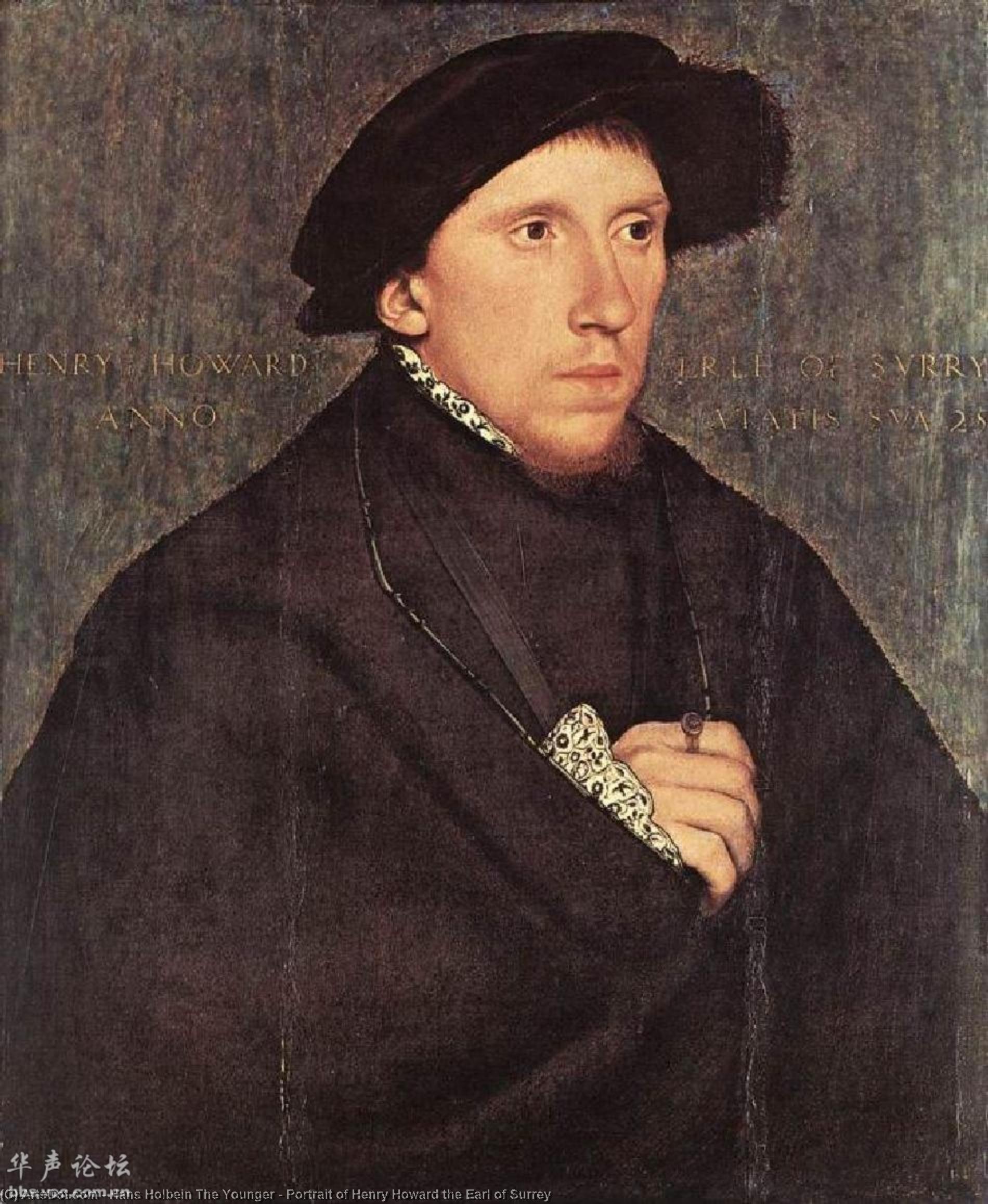
Portrait of Henry Howard the Earl of Surrey

Hans Holbein’s masterful portrait captures Henry Howard, Earl of Surrey, in stunning detail—a testament to the artist's unparalleled realism and psychological insight during the Tudor era. Explore this iconic depiction and bring Renaissance beauty into your home.


Hans Holbein the Younger (1497 - 1543)

Hans Holbein the Younger (1497-1543): Northern Renaissance master of realistic portraiture, famed for painting Tudor royalty like Henry VIII & intricate detail.

A Window Into Tudor England: Exploring Hans Holbein’s Portrait of Henry Howard

  • Subject Matter & Context The painting depicts Henry Howard, Earl of Surrey—a prominent figure in the Elizabethan court and a key supporter of Queen Elizabeth I. Surrey was renowned for his military prowess and diplomatic achievements, representing England's ambition on the European stage during a period marked by religious upheaval and political maneuvering. Holbein’s meticulous portrayal captures not merely physical appearance but also conveys Surrey’s intellectual curiosity and commanding presence—a testament to the artist’s ability to distill character into visual form.
  • Style & Technique: Northern Renaissance Realism Holbein exemplifies the zenith of Northern Renaissance artistic ideals. His signature style is characterized by unparalleled realism, achieved through painstaking observation and anatomical precision. Unlike the idealized depictions prevalent in Italian art, Holbein prioritized accuracy, rendering textures—from the velvet robe to the satin waistcoat—with astonishing detail. The artist’s masterful use of chiaroscuro—the dramatic interplay between light and shadow—creates a palpable sense of depth and dimensionality, drawing viewers into the scene.
  • Color Palette & Composition Holbein employs a restrained yet sophisticated color palette dominated by muted tones—browns, reds, and creams—reflecting the solemn dignity appropriate for royal portraiture. The composition is carefully balanced, positioning Surrey centrally within the frame while subtly incorporating a secondary figure in the background. This arrangement directs the viewer’s gaze towards the subject, emphasizing his importance and conveying an aura of authority.
  • Symbolism & Detail Beyond mere likeness, Holbein imbues the portrait with symbolic elements that speak to Surrey's status and aspirations. The white cross emblazoned on his hat symbolizes piety and royal patronage—a visual reminder of Surrey’s allegiance to the crown and its religious convictions. Furthermore, subtle gestures and facial expressions reveal glimpses into Surrey’s inner life—his gaze fixed intently upon the viewer suggests confidence and engagement, hinting at a mind brimming with ideas.
  • Emotional Impact & Legacy Holbein's Portrait of Henry Howard transcends mere representation; it succeeds in capturing the psychological complexity of its subject. The painting evokes feelings of contemplation and admiration, inviting viewers to consider Surrey’s role as both warrior and statesman. Its enduring influence can be seen in subsequent portraiture traditions—artists throughout history have sought to emulate Holbein's ability to convey character with remarkable subtlety and nuance. Today, reproductions offer a captivating glimpse into Tudor England and celebrate the brilliance of one of the Renaissance’s greatest masters.