A Glimpse into the Tudor Soul
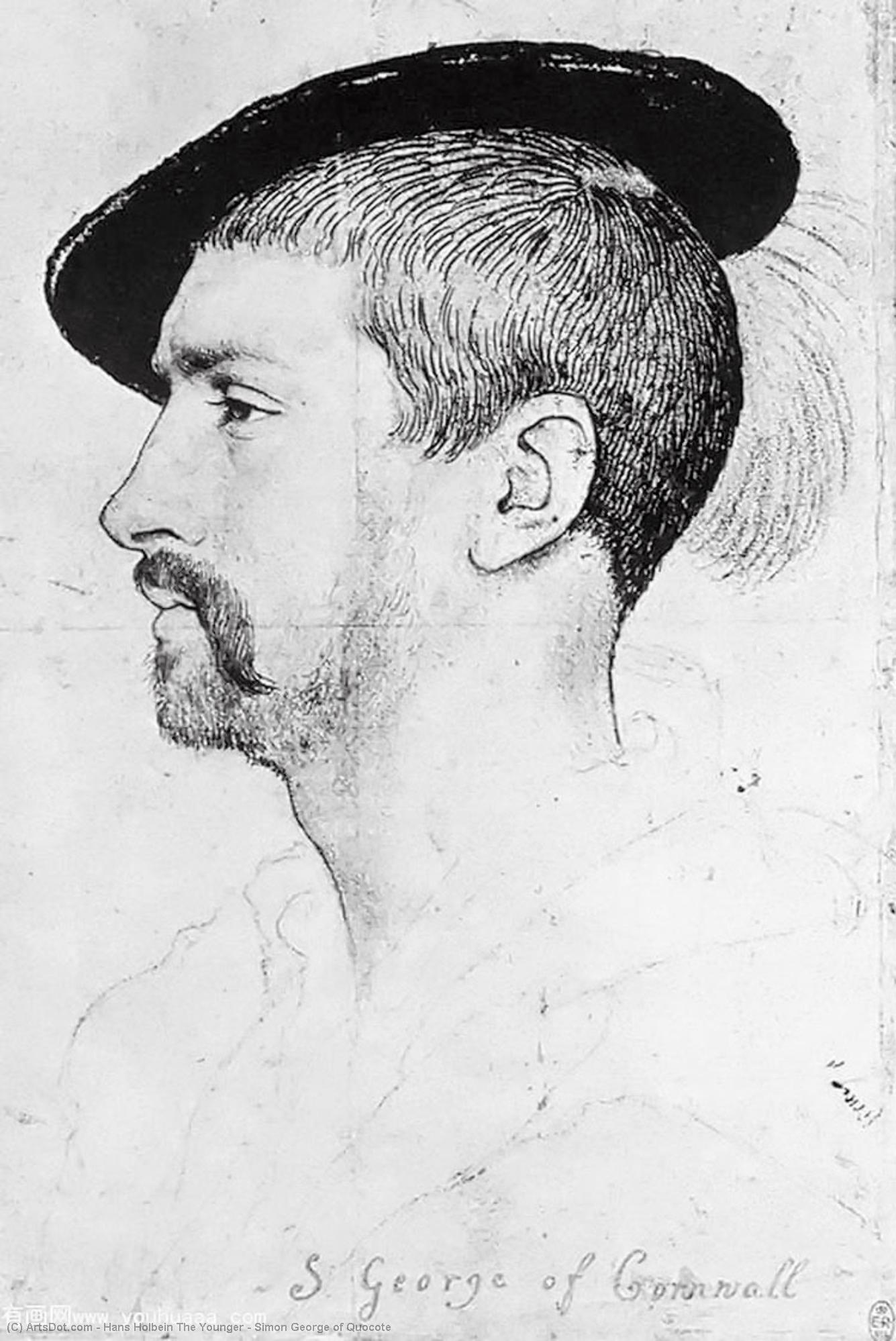
To encounter Hans Holbein the Younger’s Simon George of Quocote is to step through a portal into the heart of the Northern Renaissance, where every line serves as a bridge between the physical world and the profound depths of human character. Created in 1536, this exquisite portrait—rendered here in its evocative black and white chalk form—transcends the mere documentation of a face. It is an intimate encounter with a man whose identity remains shrouded in the mists of history, yet whose presence feels startlingly immediate. As a master of psychological acuity, Holbein does not simply paint a sitter; he captures a lingering gaze, a subtle tension in the jaw, and the quiet dignity of an era defined by both opulence and intense spiritual contemplation.
The composition is a masterclass in focused elegance, presenting the subject in a three-quarter profile that invites the viewer into his personal space. There is a rhythmic grace to the way Holbein utilizes fine hatching and delicate cross-hatching to sculpt the contours of the face. The play of light, appearing to emanate from an unseen source on the left, breathes life into the monochrome palette, creating a sense of three-dimensional volume that makes the subject almost palpable. For the discerning collector or interior designer, this piece offers a sophisticated focal point, bringing a sense of classical weight and intellectual depth to any curated space.
The Language of Hidden Symbols
Beyond the breathtaking realism lies a complex tapestry of symbolism that rewards the patient observer. In the full oil version of this masterpiece, Holbein utilized vibrant colors like the pink of a jerkin to signal betrolam and affection, but even in this monochromatic study, the power of his symbolic intent remains undiminished. The meticulous rendering of the subject's attire—the structured hat and the heavy textures of Renaissance clothing—speaks volumes of his social standing and the material wealth of the Tudor court. Every fold of fabric and every precise stroke of the chalk suggests a world where status was worn as clearly as a badge.
The artistry extends into the subtle nuances of texture, where the artist skillfully differentiates between the softness of skin and the crispness of fine linen. This technical virtuosity creates an emotional resonance; there is a certain melancholy in the shadows and a quiet strength in the highlights. For those seeking to decorate with art that tells a story, this portrait provides endless layers of interpretation, ranging from the mythological references often found in Holbein's work to the more personal, introspective qualities of the sitter himself. It is an artwork that does not merely hang on a wall but actively engages the room, demanding a moment of stillness and reflection.
A Timeless Addition to the Modern Collection
In an age of fleeting digital imagery, the enduring appeal of Holbein’s precision offers a grounding influence. This portrait is more than a historical artifact; it is a testament to the human ability to capture the eternal within the ephemeral. The way the light catches the bridge of the nose or the subtle curve of the lip serves as a reminder of the profound beauty found in meticulous observation. Whether integrated into a contemporary minimalist setting to provide a sense of history, or placed within a traditional gallery-style room to enhance its grandeur, this reproduction brings the prestige of the Royal Collection into the private home.
Owning a piece that embodies the spirit of the Northern Renaissance allows one to surround themselves with the very essence of human intellect and artistic mastery. The Simon George of Quocote is an investment in atmosphere, offering a sophisticated blend of historical narrative and unparalleled aesthetic grace that continues to inspire awe centuries after its creation.