The Plowman: A Testament to Renaissance Rustic Virtue
Hans Holbein the Younger’s “The Plowman,” created around 1525 during the height of German Renaissance artistic fervor, stands as a remarkable achievement in woodcut printmaking and a poignant reflection on humanist ideals. More than just a depiction of agricultural labor—a cornerstone of medieval society—it embodies a profound symbolic message concerning faith, earthly toil, and the enduring connection between humanity and God’s grace.
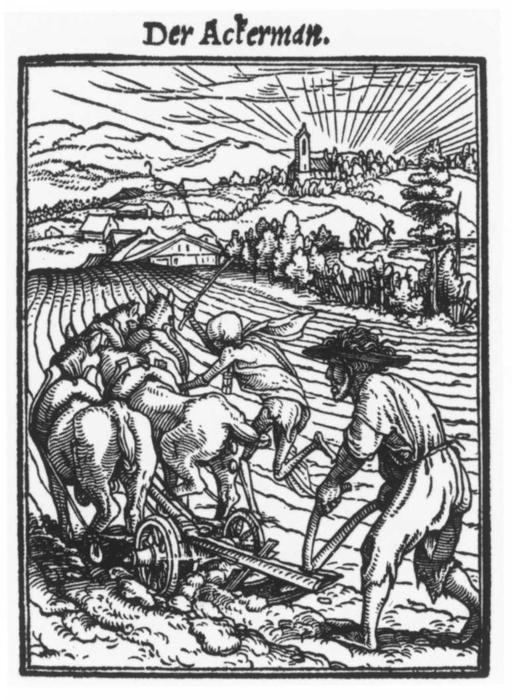
- Subject Matter: The artwork portrays a solitary plowman diligently tending to his oxen-drawn plow in a serene rural landscape. This scene captures the essence of daily life during the Renaissance, emphasizing physical labor as an honorable vocation – a core belief within humanist philosophy that championed reason and observation alongside religious piety.
- Style & Technique: Executed in the distinctive style of German Renaissance woodcuts, “The Plowman” showcases Holbein’s mastery of linear perspective and dramatic chiaroscuro. Bold lines define the forms—the oxen, the plow, and even the clothing of the farmer—creating a palpable sense of movement and conveying an impression of considerable energy. The meticulous hatching and cross-hatching techniques characteristic of woodcuts skillfully simulate textures like soil, fur, and fabric, adding depth and realism to the composition.
- Historical Context: Produced during a period marked by intellectual curiosity and artistic innovation—the Renaissance—Holbein’s print aligns with broader trends promoting human dignity and moral virtue. It reflects the humanist preoccupation with portraying individuals realistically while simultaneously conveying spiritual significance. The artwork's placement within “The Dance of Death,” a series exploring mortality, underscores its thematic resonance.
- Symbolism: Beyond its visual representation of rural life, “The Plowman” carries significant symbolic weight. The plow itself symbolizes perseverance and industriousness—qualities considered essential for achieving spiritual fulfillment. The distant church serves as a reminder of faith and divine providence, highlighting the importance of piety alongside earthly pursuits. Furthermore, the radiant light emanating from above represents God’s illumination guiding humanity toward righteousness.
- Emotional Impact: Holbein's masterful rendering evokes feelings of tranquility, dignity, and contemplation. The artwork’s subdued palette—primarily monochrome—amplifies its solemn mood, inviting viewers to consider themes of humility, faith, and the beauty inherent in simple labor. It serves as a timeless reminder that true virtue resides not merely in intellectual pursuits but also in embracing one's role within the natural order.
The print’s enduring appeal lies in its ability to communicate complex ideas through deceptively straightforward visual language—a hallmark of Renaissance art and a testament to Holbein’s unparalleled artistic vision. Its meticulous detail and expressive use of line continue to inspire admiration for centuries later, cementing “The Plowman”'s place as an iconic masterpiece of German Renaissance printmaking.