A Gaze Across Centuries: The Soul of Hans Holbein’s Untitled (231)
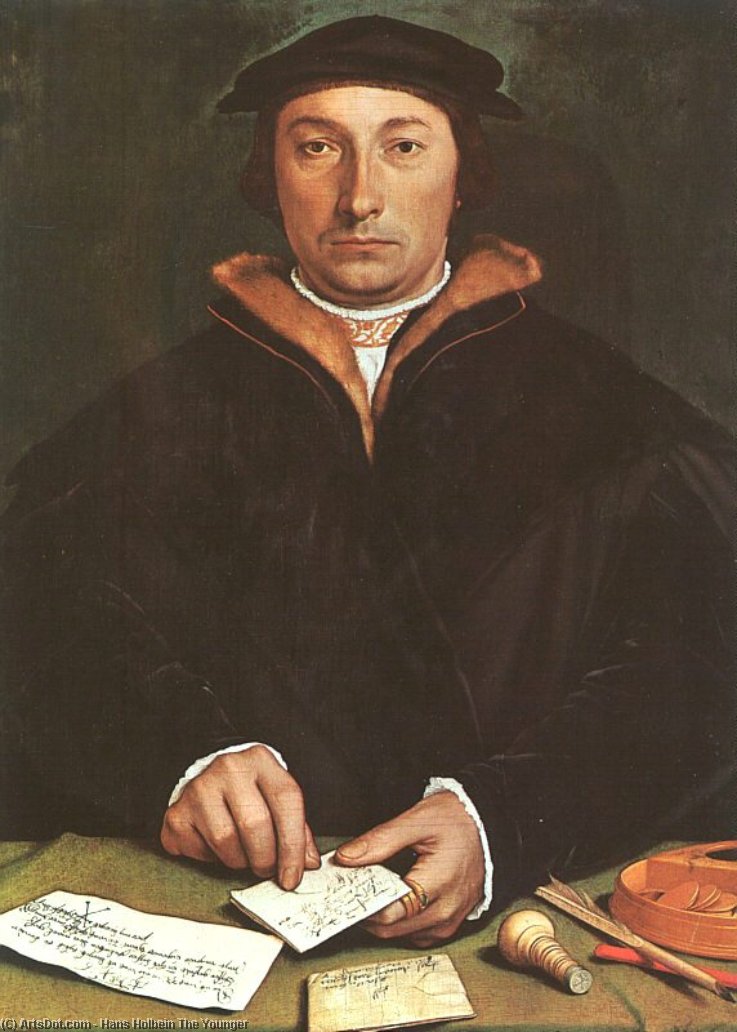
To stand before Hans Holbein the Younger’s Untitled (231) is to enter into a silent, profound dialogue with the past. This portrait, a masterwork of the Northern Renaissance, does far more than merely record the likeness of a man; it captures the very weight of existence. The subject, draped in a somber yet dignified dark robe accented by a crisp white collar, meets the viewer’s eyes with an expression of resolute seriousness. There is no artifice here, only a piercing, contemplative introspection that seems to bridge the gap between the sixteenth century and our modern era. For the discerning collector or lover of fine art, this piece offers more than visual beauty; it provides a window into the psychological depth that Holbein was uniquely capable of rendering.
The composition is a masterclass in balanced storytelling, where every element serves to anchor the central figure within a narrative of status and intellect. While the man’s presence dominates the frame, Holbein subtly surrounds him with objects that whisper of his character and station. A book rests near the lower corner, suggesting a life of learning and scholarly pursuit, while the delicate placement of wine glasses and a bowl in the periphery hints at the refined comforts of his world. These are not mere decorations but symbolic anchors that enrich the portrait's atmosphere, creating a sense of lived experience that invites the viewer to wonder about the man behind the gaze.
The Alchemy of Detail and Technique
What truly distinguishes this work is Holbein’s unparalleled command over the medium of oil on canvas. The artist’s technique is characterized by an almost supernatural precision, a hallmark of the Northern Renaissance tradition that favors meticulous realism over idealized abstraction. One cannot help but be captivated by the way light interacts with the textures presented: the heavy, light-absorbing quality of the dark robe, the sharp brilliance of the white collar, and the subtle, lifelike gradations of skin tone. Through painstaking layering and blending, Holbein achieved a tonal accuracy that makes the fabric appear tactile and the subject’s features remarkably present.
For those looking to integrate such a masterpiece into a curated interior, the painting offers a profound sense of gravitas. The interplay of light and shadow—the chiaroscuro effect—creates a dramatic tension that can serve as a sophisticated focal point in any room. Whether placed in a library, a study, or a formal gallery space, the artwork commands attention through its quiet strength. It is a piece that does not shout for recognition but rather earns it through the sheer quality of its execution and the enduring mystery of its subject.
A Legacy of Renaissance Humanism
Historically, this portrait emerges from an era defined by the burgeoning spirit of humanism, where the individual began to take center stage in the artistic consciousness. Holbein, working within the vibrant artistic hubs of Germany and later the English court, became the preeminent chronicler of this shift. His ability to blend the meticulous, almost scientific observation of his Northern roots with a deep understanding of human emotion allowed him to create portraits that are both historical documents and emotional landscapes. Untitled (231) stands as a testament to this legacy, embodying the dignity, intellect, and quiet resolve of an age that sought to understand the human condition through the lens of truth.