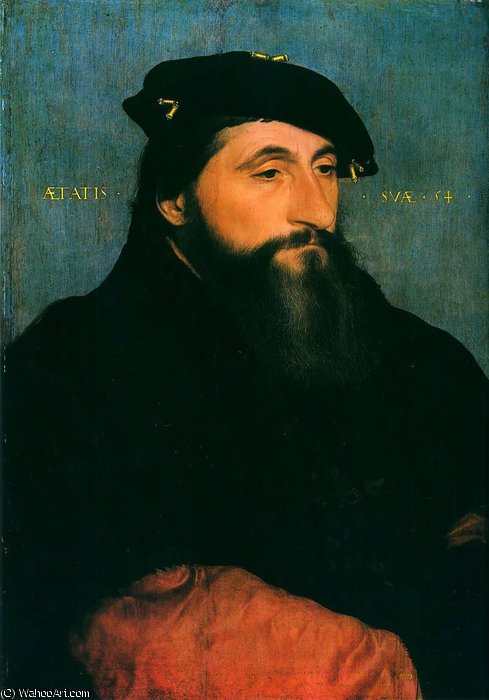
A profound Renaissance portrait of a dignified man by Hans Holbein the Younger captures striking psychological depth and meticulous realism through masterful oil technique, inviting you to explore this timeless masterpiece.
Hans Holbein the Younger (1497-1543): Northern Renaissance master of realistic portraiture, famed for painting Tudor royalty like Henry VIII & intricate detail.
A Portrait of Dignity: Unveiling Hans Holbein the Younger’s “untitled (6668)”
The artwork, titled simply "untitled (6668)," stands as a testament to the enduring power of Renaissance portraiture—a meticulously crafted depiction of a man that transcends mere likeness and delves into psychological complexity. Executed by Hans Holbein the Younger around 1530, this piece exemplifies the artist’s signature style: unwavering realism combined with an astute understanding of human emotion. It's housed within ArtsDot and represents a cornerstone of Northern Renaissance artistic achievement.
Composition & Technique: Mastering Observation
Holbein’s masterful technique—primarily oil painting on panel—allowed him to achieve unparalleled detail, capturing every nuance of facial expression and drapery folds. The composition adheres to the conventions of its era, centering the subject within a rectangular frame and utilizing subtle shading to create depth and dimensionality. Notice how the diffused light emanating from an unseen source illuminates the man’s face, casting delicate shadows that accentuate his features—a deliberate choice reflecting Holbein's dedication to anatomical accuracy and conveying a profound sense of presence. The artist skillfully blended pigments to achieve smooth transitions between tones, creating a surface texture that mimics the natural appearance of skin and fabric.
Historical Context & Symbolism: Tudor Majesty Embodied
Painted during Henry VIII’s reign, “untitled (6668)” speaks volumes about the political landscape of Elizabethan England. The subject is likely an individual of considerable status—perhaps a diplomat or noble—indicated by his opulent attire and dignified posture. Above his head rests an inscription bearing a dedication, highlighting the importance placed on identity and commemoration during this period. Holbein’s meticulous attention to detail extends beyond mere representation; it embodies the humanist ideals prevalent in Renaissance art – striving for intellectual enlightenment and capturing the inner life of his subjects. The dark color palette—dominated by blues, browns, and blacks—contrasts sharply with the vibrant red robe worn by the man, symbolizing power and authority.
Emotional Resonance: A Gaze That Commands Attention
The portrait’s impact lies not only in its technical brilliance but also in its ability to evoke contemplation. The subject’s direct gaze engages the viewer, fostering a connection that transcends time. His expression conveys serenity and composure—a reflection of Holbein's skill in portraying inner states alongside outward appearances. This artwork serves as an enduring reminder of the Renaissance fascination with human psychology and its capacity for capturing profound emotional depth.
Legacy & Inspiration: An Icon of Artistic Excellence
Hans Holbein the Younger’s “untitled (6668)” remains a celebrated exemplar of Renaissance portraiture, influencing generations of artists who followed. Its meticulous realism, masterful technique, and symbolic richness continue to inspire collectors and interior designers alike—a timeless masterpiece that embodies the artistic spirit of its time. Explore this exceptional reproduction at ArtsDot and immerse yourself in the beauty and intellectual rigor of Northern Renaissance art.