Hans Sebald Beham’s “Scenes from the Life of David”: A Window into Reformation Germany
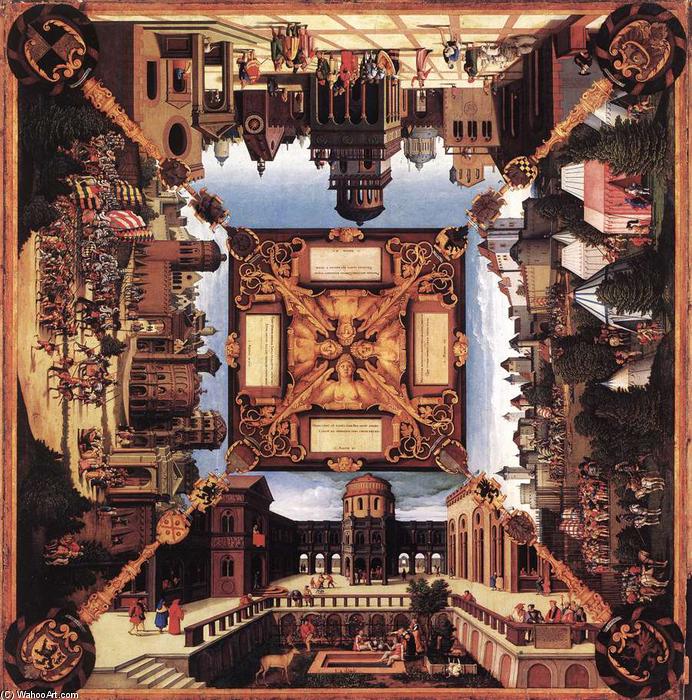
The meticulously rendered cityscape depicted in Hans Sebald Beham's "Scenes from the Life of David," created in 1534, offers a captivating glimpse into the artistic and intellectual landscape of late Renaissance Germany. More than just a depiction of a bustling urban scene, this work is a complex tapestry woven with threads of religious allegory, classical influence, and the burgeoning anxieties of a nation grappling with profound change. Measuring a modest 128 x 131 cm, the painting’s intimate scale belies its rich narrative content – a testament to Beham's skill in distilling complex stories into visually compelling compositions.
Beham, born around 1500 in Nuremberg, was a pivotal figure within the “Little Masters” circle, renowned for his extraordinarily detailed engravings. His work reflects the era’s turbulent currents; he navigated the transition from late Gothic to early Renaissance styles while simultaneously engaging with the radical ideas of the Reformation. This painting exemplifies this duality – it showcases classical elements like architectural detail and humanistic figures alongside a distinctly Protestant sensibility, evident in the moralizing themes explored within the scenes.
A Narrative Unfolding: Scenes from Scripture
The artwork presents four distinct episodes drawn from the biblical narrative of David’s life. The first panel captures a dramatic encounter between Saul and David, with women emerging from Jerusalem to offer assistance – a scene rife with political intrigue and foreshadowing the future conflict between the two kings. The second depicts Bathsheba bathing, an image laden with both sensual beauty and potential transgression, prompting contemplation on temptation and divine judgment. The third panel illustrates David sending Uriah to the siege of Rabbath, highlighting themes of loyalty, honor, and the consequences of human actions. Finally, Nathan confronts David with God’s condemnation, a pivotal moment emphasizing accountability and repentance.
Beham's masterful use of perspective draws the viewer into the scene, creating a sense of immediacy and involvement. The buildings, rendered with meticulous detail, suggest a thriving city – Nuremberg itself, likely – while the figures are depicted with a remarkable degree of realism, capturing their gestures, expressions, and clothing with precision. Note the subtle variations in costume and architecture, indicative of Beham’s careful study of both contemporary trends and classical models.
Technique and Materials: A Study in Detail
Executed in oil on panel, “Scenes from the Life of David” showcases Beham's exceptional technical skill. The artist employed a layering technique, building up color gradually to achieve remarkable depth and luminosity. The use of chiaroscuro – the dramatic interplay of light and shadow – further enhances the sense of realism and adds emotional weight to the scenes. Close examination reveals an astonishing level of detail in every element, from the folds of fabric to the texture of stone.
The composition is carefully balanced, with each panel contributing equally to the overall narrative. The triangular arrangement of the scenes creates a dynamic visual rhythm, guiding the viewer’s eye through the story. Beham's meticulous attention to detail and his command of perspective demonstrate his mastery of the Renaissance artistic principles he had absorbed.
Symbolism and Emotional Resonance
Beyond their biblical subject matter, these scenes resonate with broader symbolic meanings relevant to the Reformation era. The depiction of David’s flaws – his lust for Bathsheba, his deception of Uriah – serves as a cautionary tale against pride and ambition. The emphasis on moral judgment and divine retribution reflects the Protestant critique of papal authority and the call to individual piety.
“Scenes from the Life of David” is not merely a historical record; it’s an invitation to contemplate fundamental questions about human nature, faith, and morality. The painting's enduring appeal lies in its ability to engage viewers on multiple levels – intellectually, emotionally, and spiritually. A high-quality reproduction allows us to appreciate Beham’s artistry and the profound cultural context of this remarkable work, offering a tangible connection to a pivotal moment in European history.