The
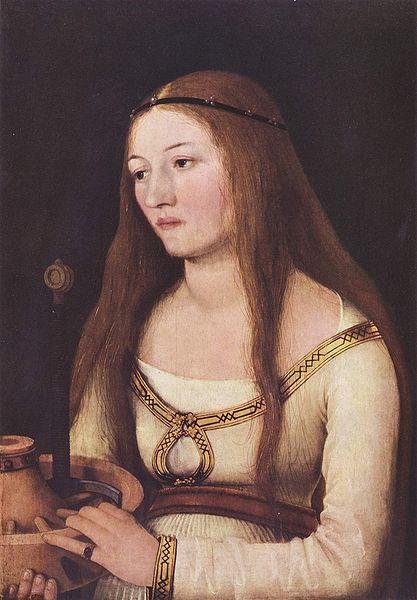
Porträt der Katharina Schwarz mit den Attributen ihrer Nahmensheiligen is a stunning portrait painted by
Hans the Elder Holbein in 1509. This tempera painting, measuring 39 x 28 cm, is currently housed at the
Schlossmuseum Darmstadt in Germany. The subject of the painting, Katharina Schwarz, is depicted with elegance and refinement, showcasing Holbein's exceptional skill as a portrait artist.
The Artist and His Style
Hans the Elder Holbein was a renowned German artist known for his detailed and realistic portraits. His style, which blended elements of Gothic and Renaissance art, is characterized by its attention to detail and use of symbolism. In the
Porträt der Katharina Schwarz mit den Attributen ihrer Nahmensheiligen, Holbein's mastery of composition and color is evident, making this painting a standout example of his work.
Key Features of the Painting
The painting features Katharina Schwarz wearing a crown and holding a musical instrument, surrounded by a black and white background. Her attire, including a long dress and necklace, adds to the overall sense of elegance and sophistication. The use of
tempera as the medium allows for a level of detail and texture that is remarkable for a painting of this era.
- The painting's size, 39 x 28 cm, makes it an intimate and personal portrait.
- The subject's attire and accessories, such as the crown and necklace, signify her status and wealth.
- The musical instrument in her hands may symbolize her love of music or her association with a particular saint.
For art enthusiasts and collectors,
reproductions of this painting are available at ArtsDot, offering a unique opportunity to own a piece of art history. Additionally,
information on the Magic Realism Art Movement and other artistic styles can be found on the ArtsDot website.
The
Porträt der Katharina Schwarz mit den Attributen ihrer Nahmensheiligen is a testament to
Hans the Elder Holbein's skill as an artist and his ability to capture the essence of his subjects. This painting, along with others by Holbein, such as the Sebastiansaltar and
Christus am Kreuz, can be found on ArtsDot, providing a comprehensive look at the artist's oeuvre.