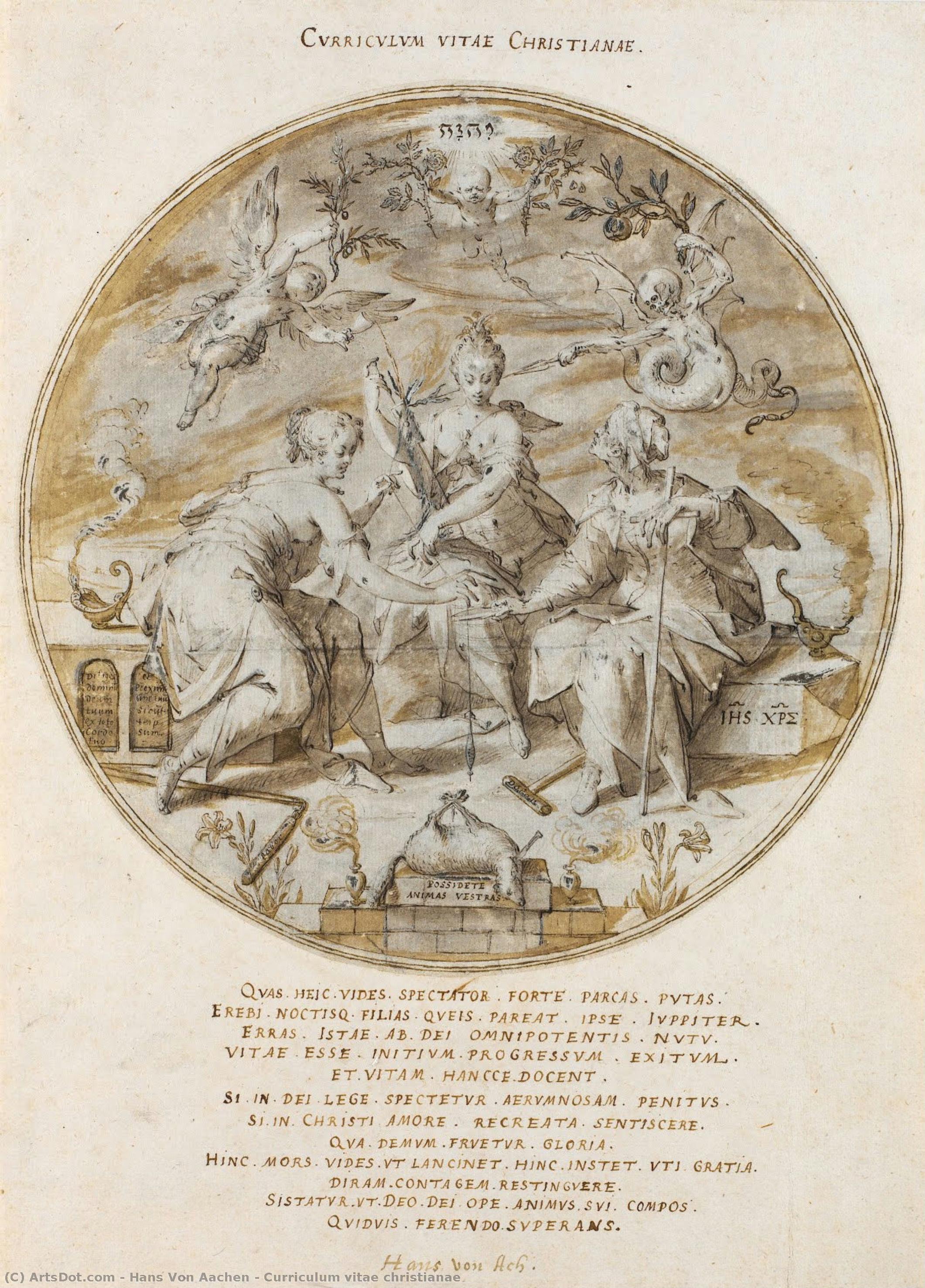
Hans von Aachen’s "Curriculum vitae christianae," a Mannerist drawing from 1589, depicts a group in conversation, showcasing dramatic compositions and vivid colors reminiscent of El Greco. Explore this captivating religious scene and bring art history home.
Curriculum Vitae Christianae by Hans von Aachen: A Window into 16th-Century Spiritual Discourse
Hans von Aachen’s “Curriculum Vitae Christianae,” painted in 1589, offers a captivating glimpse into the burgeoning religious and artistic landscape of late Mannerism. Measuring a modest 28 x 40 cm, this drawing – a deliberate departure from photographic representation – immediately draws the viewer into a scene brimming with intellectual and spiritual engagement. The painting depicts a group of individuals gathered in what appears to be a devotional setting, their postures suggesting animated conversation or participation in a formal ceremony. It’s not merely a depiction of figures; it's an invitation to contemplate the very essence of Christian life and learning.
Mannerist Drama and the Influence of El Greco
Created by a painter trained under Leonardus Sievenhoven, von Aachen’s style is undeniably rooted in the Mannerist movement, a period characterized by its dramatic compositions, elongated figures, and intense emotionality. Heavily influenced by the work of Domenikos Theotokopoulos – better known as El Greco – von Aachen employs bold colors and dynamic perspectives to create a palpable sense of tension and fervor. Notice the subtly distorted proportions of the figures; this isn’t an attempt at realistic representation but rather a deliberate manipulation of form to heighten emotional impact. The artist's skill is evident in his ability to manage multiple figures within a confined space, creating a visual complexity that demands attention.
Symbolism and Social Context
The title itself, “Curriculum Vitae Christianae” – "The Course of a Christian Life" – suggests the painting’s purpose: an exploration of faith through lived experience. The individuals depicted likely represent various roles within the Christian community – scholars, clergy, perhaps even laypeople engaged in theological debate or instruction. Given the historical context of 1589, a period marked by religious reform and intense intellectual inquiry, this scene reflects a desire to articulate and disseminate core Christian beliefs. The act of gathering itself symbolizes communal learning and shared devotion, a vital component of Reformation-era spirituality.
Technique and Materiality
As a drawing, “Curriculum Vitae Christianae” highlights von Aachen’s mastery of line and composition. The artist's use of charcoal and possibly other pigments creates a rich tonal range, emphasizing the textures of clothing and the subtle nuances of facial expressions. The meticulous detail in rendering individual features – particularly the eyes – suggests a deep engagement with human psychology. This intimate portrayal elevates the scene beyond mere illustration, transforming it into a powerful meditation on faith and humanity.