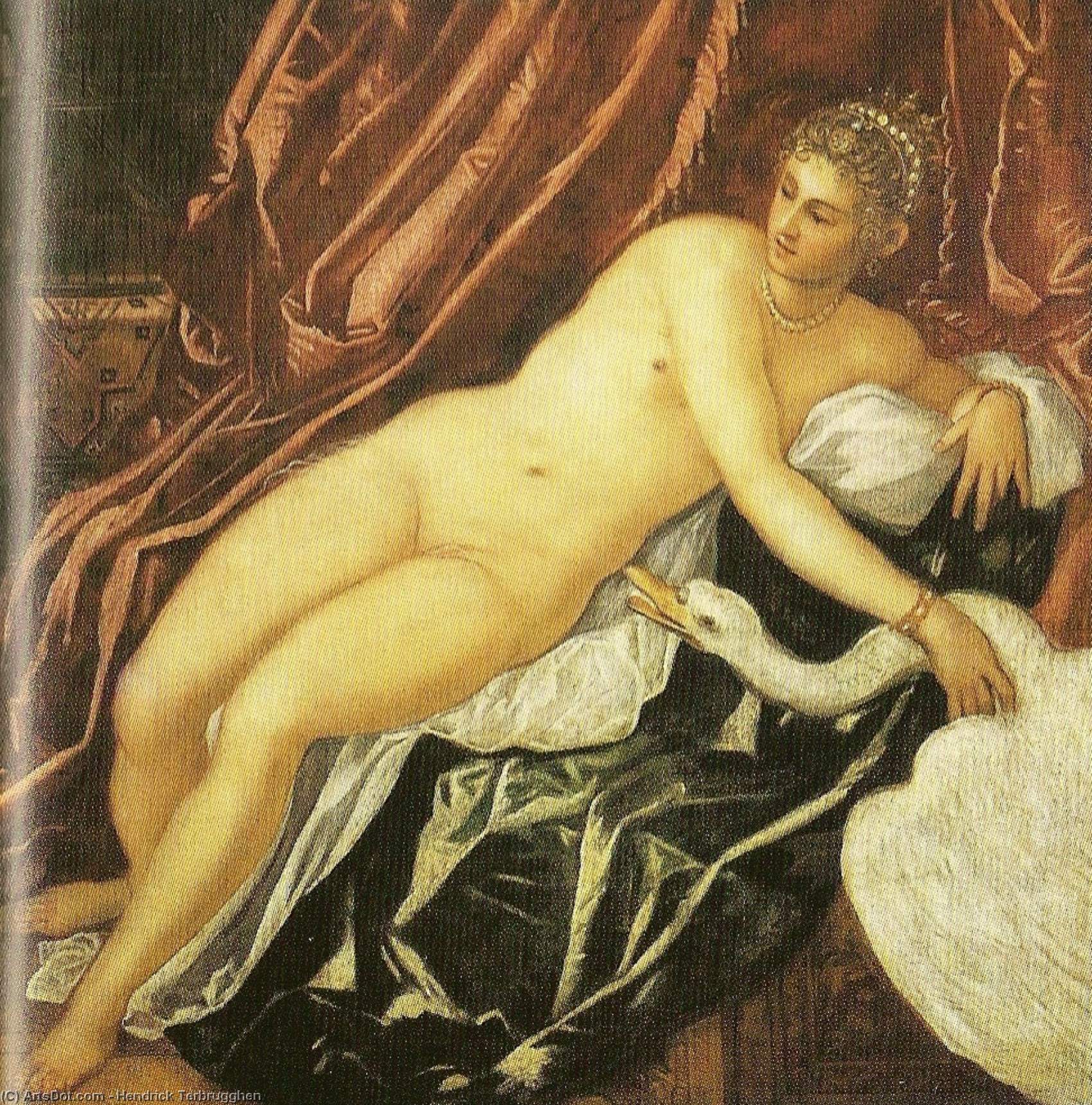
A dramatic scene of intimacy unfolds in Hendrick Terbrugghen's Leda and the Swan, where chiaroscuro light meets mythic grace in this Dutch Golden Age masterpiece, inviting you to explore this timeless classical beauty.
An Intimate Encounter: The Allure of Leda and the Swan
In the quiet, dramatic shadows of the Dutch Golden Age, Hendrick Terbrugghen captured a moment of profound intimacy that transcends the boundaries between the human and the divine. Leda and the Swan is not merely a depiction of mythology; it is a masterclass in atmosphere and emotional resonance. The scene unfolds with a breathtaking sense of stillness, as a woman reclines in a state of serene vulnerability, her form bathed in a soft, directional light that seems to emerge from the very darkness itself. Beside her, the swan—a creature of grace and celestial significance—rests its head against her chest, creating a composition that feels both tender and heavy with unspoken tension. The deep, velvety red curtain that serves as the backdrop provides a theatrical weight to the piece, enveloping the subjects in a private, almost secretive chamber that invites the viewer to peer into a moment of sacred connection.
The technique employed here is a testament to Terbrugghen’s mastery of the Caravaggisti style. Influenced by the dramatic chiaroscuro of Caravaggio, the artist utilizes sharp contrasts between light and shadow to sculpt the anatomy of the woman and the soft plumage of the swan. This interplay of light does more than just define shape; it breathes life into the textures of the skin and the delicate feathers, making the tactile reality of the scene almost palpable. For the discerning collector or interior designer, this painting offers a sophisticated balance of tonal depth and luminous highlights, making it a centerpiece capable of anchoring a room with its quiet, commanding presence.
Symbolism and the Golden Age Legacy
Beyond its visual splendor, the artwork is steeped in the rich mythological symbolism prevalent during the 17th century. The myth of Leda and the Swan—where Zeus assumes the form of a swan to seduce the mortal queen—carries themes of transformation, destiny, and the intersection of the earthly and the divine. Terbruggemon avoids the overt violence or chaos often found in later interpretations, choosing instead to focus on the serenity and the quietude of the encounter. This choice reflects a profound psychological depth, suggesting that true power and divinity can be found in moments of absolute stillness and connection with nature.
For those looking to integrate such a masterpiece into a curated collection, this reproduction serves as more than just decoration; it is an invitation to contemplate the eternal dance between passion and peace. The rich color palette, dominated by the dramatic crimson of the drapery and the pearlescent tones of the swan, provides a versatile aesthetic that complements both classical and contemporary interior settings. It is a piece that evokes a sense of mystery and intrigue, perfect for creating an atmosphere of intellectual depth and timeless elegance in any high-end gallery or private residence.