A Moment of Divine Repose
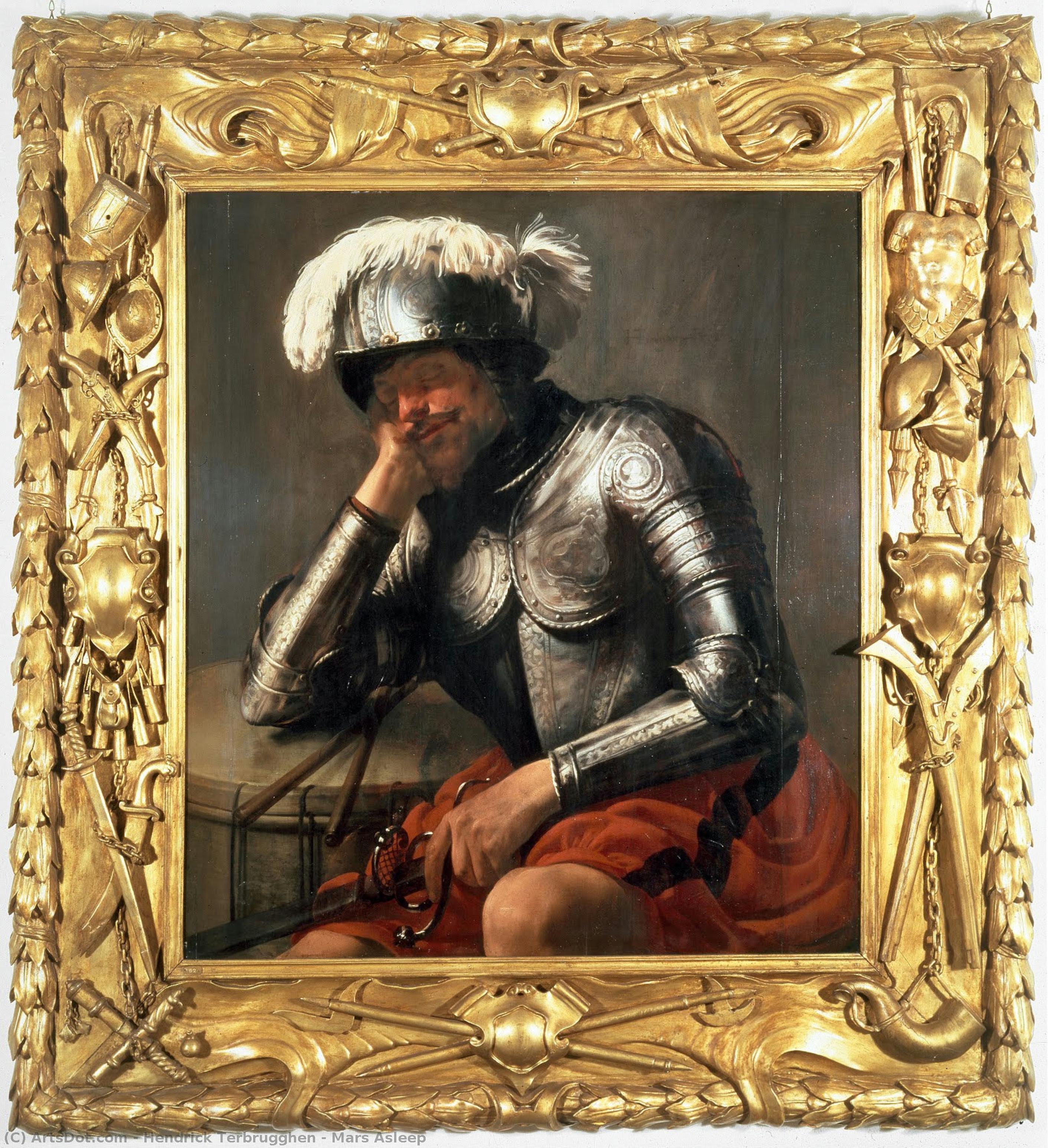
In the quietude of Hendrick Terbrugghen’s Mars Asleep, we find a profound departure from the typical ferocity associated with the god of war. Painted in 1629, this masterpiece captures a rare, vulnerable stillness that transcends the boundaries of mere mythology. The scene presents a figure clad in heavy, gleaming armor, yet his posture is one of complete surrender to slumber. His head tilts softly to the side, lost in a dream, while the weight of his metallic mantle seems to press him into a state of deep contemplation or exhaustion. This is not the Mars of battle-cries and clashing steel, but a deity momentarily stripped of his martial purpose, inviting the viewer into a space of silent reflection.
The artistry of Terbrugghen, a prominent figure among the Utrecht Caravaggisti, shines through in the masterful manipulation of light and shadow. The painting utilizes a dramatic chiaroscuro that breathes life into the textures of the scene; one can almost feel the cold, hard surface of the breastplate contrasting with the soft, heavy atmosphere surrounding the sleeping figure. The artist’s ability to render the subtle glints of light reflecting off the armor creates a sense of three-dimensional depth, pulling the observer into the intimate, shadowed world of the subject. This technique does more than showcase skill; it heightens the emotional gravity of the moment, making the silence of the painting feel palpable.
Symbolism and the Echoes of Peace
Beyond its aesthetic beauty, Mars Asleep serves as a poignant historical document, deeply embedded in the political landscape of the seventeenth-century Netherlands. Created around the time of the Treaty of Munster, which concluded the Eighty Years’ War, the painting carries an unmistakable message of peace. The symbolism is woven into the very fabric of the composition: notice how the weapons and tools of war are chained together, rendered intentionally unusable. This deliberate immobilization of martial instruments mirrors the cessation of hostilities between Spain and the Netherlands. The sleeping god becomes a metaphor for a continent finally finding rest after decades of grueling conflict.
For the discerning collector or interior designer, this piece offers more than just visual splendor; it provides a narrative of transformation and tranquility. The presence of books near the figure suggests that in the absence of war, intellectual and spiritual pursuits may flourish. This layer of meaning makes the artwork an exceptional choice for spaces designed for study, libraries, or sophisticated living areas where one wishes to evoke a sense of cultured calm. A high-quality reproduction of this work allows the dramatic interplay of light and the profound historical weight of Terbrugghen’s vision to become a focal point of any curated collection, offering a timeless window into an era of hard-won peace.