A Divine Encounter in Shadow and Light
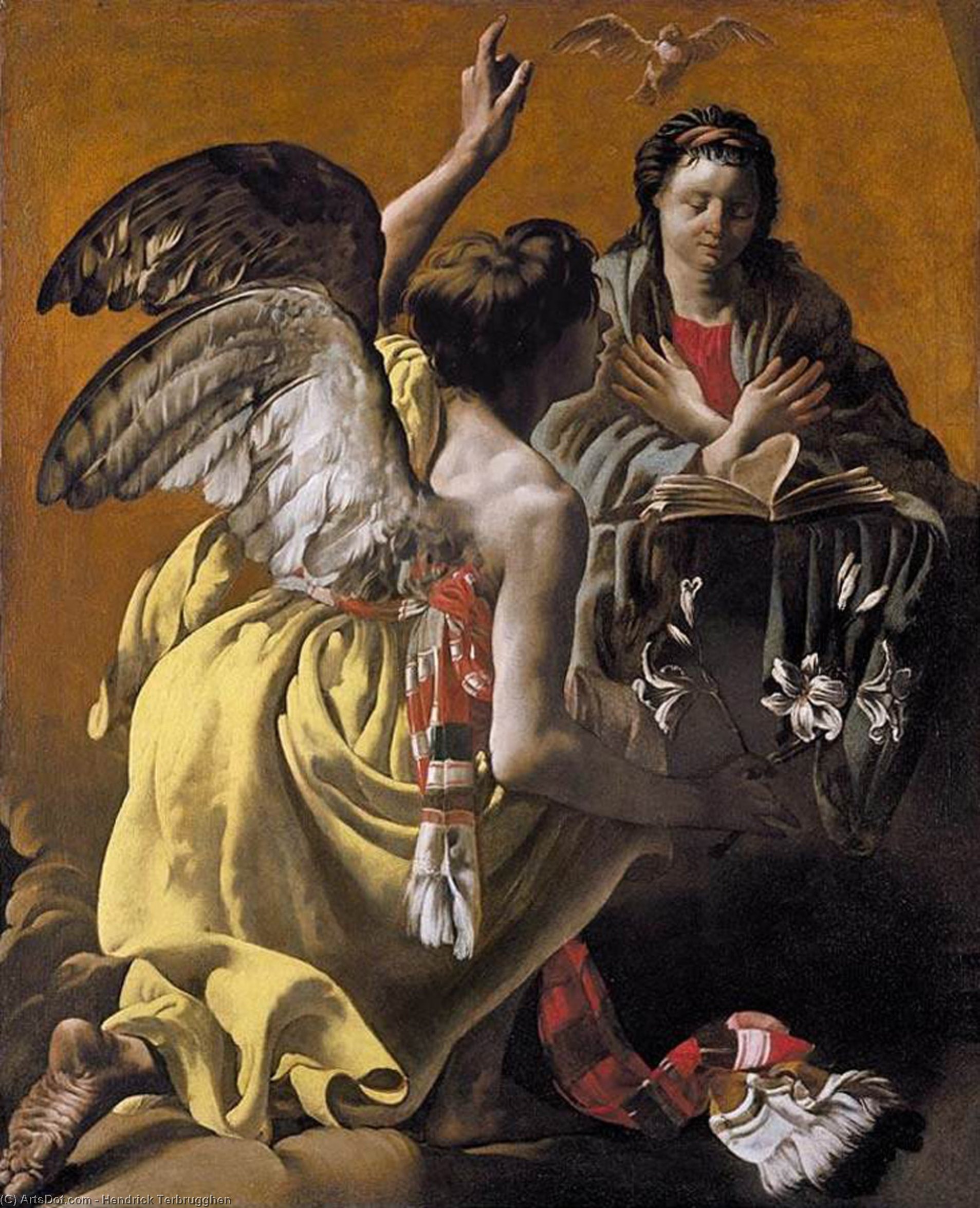
In the quiet, hallowed atmosphere of Hendrick Terbrugghen’s The Annunciation, time seems to suspend itself, capturing a singular moment of celestial intersection. Created in 1624, this masterpiece serves as a profound meditation on the moment the divine touched the earthly. The scene unfolds with the Virgin Mary seated in a posture of deep, contemplative prayer, her hands folded in a gesture of humble acceptance. She is not alone in this sacred space; she is flanked by two ethereal angels whose presence bridges the gap between the heavens and the mortal realm. One angel spreads its wings wide, a dramatic flourish of movement that contrasts with the more subdued, partially closed wings of its companion, creating a rhythmic visual tension that draws the eye across the canvas.
The composition is enriched by the deliberate placement of books scattered throughout the scene—symbols of wisdom, prophecy, and the weight of scripture. These objects are not merely decorative; they ground the spiritual event in a scholarly, contemplative reality, suggesting that the message being delivered is one of profound theological significance. For the discerning collector or interior designer, this painting offers more than just a religious narrative; it provides a sophisticated focal point that invites deep introspection and adds a layer of historical gravity to any curated space.
The Mastery of the Utrecht Caravaggisti
As a prominent figure within the Utrecht Caravaggisti movement, Terbrugghen employs a technique defined by its dramatic use of chiaroscuro. This mastery of light and shadow is what breathes life into the figures, carving them out of the darkness with a visceral, tactile quality. The light does not merely illuminate; it sanctifies, catching the folds of fabric, the delicate texture of angelic wings, and the weathered surfaces of the scattered books. This interplay of brilliance and obscurity creates a sense of three-dimensional depth that is both captivating and emotionally resonant.
The artist’s ability to manipulate light allows for a subtle emotional spectrum to emerge from the canvas. There is a palpable stillness in Mary’s expression, a quietude that is interrupted by the sudden, luminous arrival of the divine messengers. This technique ensures that the viewer is not just an observer of a historical event, but a participant in its hushed, monumental atmosphere. For those seeking to adorn a room with art that possesses both movement and stillness, Terbrugghen’s approach offers an unparalleled aesthetic experience.
A Timeless Addition to the Sophisticated Interior
Beyond its technical brilliance, The Annunciation carries an emotional weight that transcends the centuries. It is a work of profound grace, suitable for spaces designed for reflection, study, or grand reception. The rich, earthy tones and the dramatic lighting characteristic of the Dutch Golden Age provide a versatile palette that complements both classical and contemporary decor. Whether placed in a library, a formal dining hall, or a private gallery, a high-quality reproduction of this work serves as a testament to one's appreciation for the complexities of human faith and artistic innovation.
Owning a piece that evokes such intense spiritual and visual drama allows an interior to tell a story of heritage and depth. Terbrugghen’s legacy, rooted in the dramatic shadows of Caravaggio but refined through a Dutch sensibility, ensures that this painting remains a cornerstone of art history—a timeless treasure for those who value art that speaks to the soul as much as it delights the eye.