A Celestial Messenger in Oil: The Divine Presence of Mercury
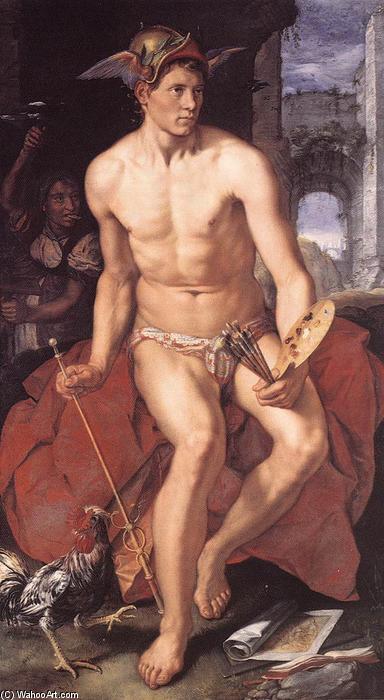
In the grand tapestry of the Dutch Golden Age, few works capture the ethereal transition between the mortal and the divine as masterfully as Hendrick Goltzius’s 1611 masterpiece, Mercury. This breathtaking oil on panel, measuring an imposing 214 x 120 cm, serves as a window into the mythological splendor of antiquity. The painting presents us with the Roman god of commerce, eloquence, and travel, frozen in a moment of profound kinetic energy. As the messenger of the gods, Mercury is depicted with a youthful, luminous vitality, his fair skin catching the light in a way that suggests he has just descended from the heavens. With wings adorning his head and feet, he embodies the very essence of flight and swiftness, his muscular form rendered with a precision that celebrates both human anatomy and divine grace.
The composition is a triumph of Baroque drama, utilizing the technique of chiaroscuro to sculpt the figure out of the surrounding shadows. Goltzius employs a sophisticated interplay of light and dark, creating a sense of immense volume and three-dimensional depth that draws the viewer into his immediate orbit. The way the light grazes his bare shoulder and illuminates the intricate details of his light-colored tunic creates a tactile sensation, making the fabric feel almost tangible. This dramatic lighting does more than just highlight the subject; it heightens the tension within the scene, suggesting a world where the boundary between the physical and the spiritual is thin and permeable.
Symbolism and the Language of the Baroque
Beyond its visual splendor, Mercury is a profound narrative encoded with classical symbolism. At the heart of the composition lies the caduceus, the iconic staff entwined by two serpents, which serves as a potent emblem of Mercury’s authority and his role as a mediator between opposing forces. Every element in the frame contributes to this rich iconographic program. At the god's feet, a rooster stands as a grounded, realistic counterpoint to the celestial subject, perhaps symbolizing vigilance or the dawn of a new era. The architectural backdrop, featuring classical columns and arches, anchors the mythological event within a structured, Greco-Roman reality, lending the scene an air of timeless dignity.
For the discerning collector or interior designer, this painting offers more than mere decoration; it provides a focal point of intellectual and emotional depth. The presence of a secondary figure in profile adds a layer of mystery, inviting the observer to contemplate the relationships between deities and mortals. Whether one is drawn to the technical virtuosity of Goltzius’s brushwork or the evocative power of his mythological storytelling, this work remains an enduring testament to the ability of art to transcend time. A high-quality hand-painted reproduction of this piece allows the grandeur of the Frans Halsmuseum to be brought into a private collection, offering a sophisticated touch of history and classical elegance to any curated space.