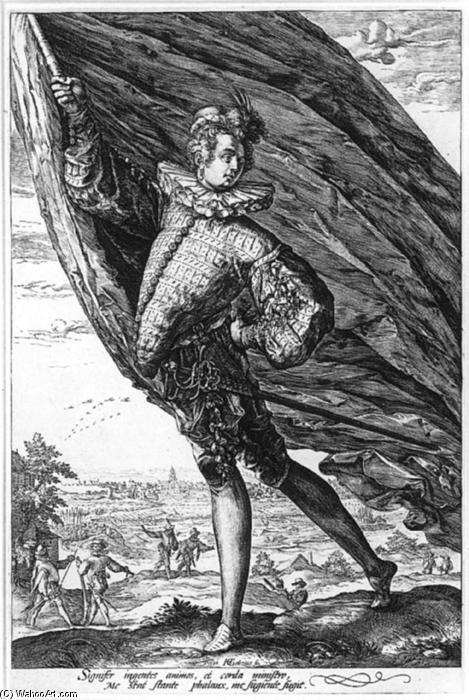
Explore the engravings & paintings of Hendrik Goltzius (1558-1617), a master of Northern Mannerism. Discover his dynamic compositions, innovative techniques like 'swelling line,' and influence on Baroque art.
Rijksmuseum
(Amsterdam, Netherlands)
Explore Dutch art & history at the Rijksmuseum Amsterdam! Marvel at Rembrandt, Vermeer & Van Gogh masterpieces in an iconic landmark – a journey through 800 years of culture.
Hendrik Goltzius: A Master of Northern Mannerism
Hendrik Goltzius (1558–1617) stands as one of the most influential figures in Dutch art history, a titan whose legacy continues to resonate through centuries. Born in Bracht or Millebrecht near Duisburg, his early life was marked by tragedy – a devastating fire claimed his infant brother’s life and left him with a debilitating deformity in his right hand. Ironically, this physical limitation proved instrumental in shaping his artistic genius; the forceful movements required to manipulate the burin honed a technique that would become synonymous with Goltzius's distinctive style: the “swelling line.” This revolutionary approach, championed by luminaries like Albrecht Dürer, involved subtly thickening and thinning lines to achieve tonal shading from afar—a feat unheard of at the time and one that cemented Goltzius’s reputation as a visionary innovator.
- Early Training & Influence: Goltzius's formative years were spent under the tutelage of Dirck Volckertszoon Coornhert, a renowned humanist scholar and printmaker who instilled in him a profound appreciation for classical ideals and artistic rigor. This influence would permeate his entire oeuvre, shaping his compositions and informing his meticulous attention to detail.
- The Haarlem Workshop: Moving to Haarlem in 1577 alongside Coornhert marked the beginning of Goltzius’s prolific artistic career. He established a thriving workshop where he mentored younger artists and collaborated on ambitious projects, notably the engraving set depicting the history of Lucretia commissioned by Philip Galle—a testament to his ability to synthesize humanist scholarship with artistic virtuosity.
The Great Standard Bearer: Symbolism and Technique
“The Great Standard Bearer,” created in 1587, exemplifies Goltzius’s mastery of engraving and embodies the spirit of Northern Mannerism—a stylistic movement characterized by dramatic contrasts of light and dark, stylized figures, and an obsession with anatomical precision. The artwork depicts a military officer holding aloft a flag emblazoned with a lion emblem, symbolizing strength and royalty – potent symbols reflecting the anxieties surrounding Spain’s dominance in Europe during this turbulent period. Goltzius's technique is breathtakingly complex; he employed burins and other engraving tools to create an astonishing level of detail, utilizing hatching and cross-hatching extensively to render the armor, flag, and landscape with unparalleled realism. The swelling line technique—a hallmark of his style—transforms the image into a dynamic interplay of tonal variations, capturing not only the visual appearance but also conveying a palpable sense of movement and urgency.
- Composition & Perspective: The central figure dominates the foreground, positioned dynamically against a mountainous landscape receding into the distance – a deliberate compositional choice that reinforces the impression of grandeur and conveys a profound respect for classical perspective.
- Material & Process: The engraving was produced on copper plate using meticulous burin techniques, resulting in an exceptionally durable print with remarkable tonal range and textural richness.
Legacy and Emotional Impact
Goltzius’s influence extended far beyond his own lifetime, shaping the artistic sensibilities of subsequent generations and establishing him as a cornerstone of Dutch Baroque art. His unwavering dedication to anatomical accuracy—evident in portraits like “Self-Portrait”—demonstrates an intellectual curiosity that transcended mere technical skill. More importantly, Goltzius's work speaks to fundamental human concerns: courage, loyalty, and the pursuit of excellence. "The Great Standard Bearer" remains a powerful reminder of the transformative potential of art—its ability to capture not only visual beauty but also the deepest emotions and aspirations of its time. It is a testament to Goltzius’s genius that his engravings continue to inspire awe and admiration centuries after their creation, securing his place as one of the greatest printmakers in European history.